
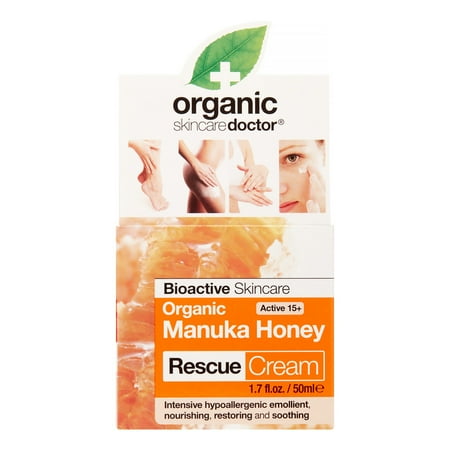


Organic Doctor Manuka Honey Rescue Cream, 1.7 Fl Oz
Analysis updated September 2026 · How Scout scores
At a glance
Summary
This body lotion contains a variety of beneficial ingredients such as zinc oxide, manuka honey, and cocoa butter, which provide protective, moisturizing, and healing properties. The presence of parfum, which can cause irritation and allergic reactions, slightly detracts from the overall safety profile. However, the product largely consists of natural and skin-friendly components, contributing to its high rating.
Key ingredients 23
Rosa Moschata Seed OilVery Good
Rosa Moschata Seed Oil is rich in essential fatty acids and vitamins, promoting skin regeneration and hydration. It is known for its anti-inflammatory and antioxidant properties. This oil helps improve skin texture and elasticity.
Risks
There is a low risk of allergic reactions, but it is generally well-tolerated.
Benefits
It supports skin repair and hydration, making it beneficial for dry or mature skin.
Mel (Manuka Honey)Very Good
Manuka honey is renowned for its antibacterial and healing properties. It helps to retain moisture and soothe irritated skin. Its unique composition makes it effective in promoting skin health and healing.
Risks
There is a minimal risk of allergic reactions, especially for those allergic to bee products.
Benefits
It provides natural antibacterial protection and enhances skin hydration and healing.
Theobroma Cacao (Cocoa) ButterVery Good
Cocoa butter is a natural fat extracted from cocoa beans, known for its moisturizing properties. It forms a protective barrier over the skin to lock in moisture. It is rich in antioxidants, which help fight free radicals.
Risks
There is a low risk of pore clogging for acne-prone skin.
Benefits
It deeply moisturizes and nourishes the skin, improving elasticity and texture.
Aloe Barbadensis Leaf JuiceVery Good
Aloe vera is known for its soothing and hydrating properties. It helps to calm irritated skin and provides moisture without a greasy feel. It is rich in vitamins and antioxidants, promoting skin health.
Risks
There is a minimal risk of allergic reactions, but it is generally safe for topical use.
Benefits
It soothes and hydrates the skin, making it ideal for sensitive or sun-exposed skin.
Butyrospermum Parkii (Shea Butter)Very Good
Shea butter is a natural fat extracted from the nuts of the shea tree. It is highly moisturizing and helps to improve skin elasticity. It contains vitamins A and E, which provide antioxidant protection.
Risks
There is a low risk of allergic reactions, but it is generally well-tolerated.
Benefits
It deeply nourishes and moisturizes the skin, improving its texture and appearance.
Borago Officinalis (Borage) Seed OilVery Good
Borage seed oil is rich in gamma-linolenic acid (GLA), an essential fatty acid that helps to maintain healthy skin. It has anti-inflammatory properties and supports skin barrier function. It is beneficial for dry and sensitive skin.
Risks
There is a low risk of allergic reactions, but it is generally well-tolerated.
Benefits
It helps to soothe and hydrate the skin, improving its barrier function.
Cera Alba (Beeswax)Very Good
Beeswax is a natural wax produced by honeybees, used as an emollient and thickening agent. It forms a protective barrier on the skin, locking in moisture. It also has anti-inflammatory and antibacterial properties.
Risks
There is a minimal risk of allergic reactions, especially for those allergic to bee products.
Benefits
It provides a protective barrier and helps to retain skin moisture.
Prunus Amygdalus Dulcis (Sweet Almond) OilVery Good
Sweet almond oil is a natural oil rich in vitamins A and E, known for its moisturizing and nourishing properties. It helps to improve skin tone and texture. It is easily absorbed and suitable for all skin types.
Risks
There is a low risk of allergic reactions, but it is generally well-tolerated.
Benefits
It nourishes and moisturizes the skin, enhancing its softness and radiance.
Zinc OxideGood
Zinc oxide is a mineral used in creams and lotions for its protective properties against UV radiation. It is non-irritating and suitable for sensitive skin. It acts as a physical barrier on the skin, reflecting and scattering UV rays.
Risks
There are minimal risks associated with zinc oxide when used in topical applications.
Benefits
It provides broad-spectrum sun protection and is often used in formulations for sensitive skin.
Sodium HyaluronateGood
Sodium hyaluronate is a salt form of hyaluronic acid, known for its ability to retain moisture. It penetrates the skin easily, providing deep hydration. It helps to plump the skin and reduce the appearance of fine lines.
Risks
There are minimal risks, as it is generally well-tolerated by all skin types.
Benefits
It enhances skin hydration and elasticity, making it appear smoother and more youthful.
Glycyrrhetinic AcidGood
Glycyrrhetinic acid is derived from licorice root and is known for its anti-inflammatory properties. It helps to soothe irritated skin and reduce redness. It is also used for its skin-brightening effects.
Risks
There is a low risk of irritation, but it is generally safe for topical use.
Benefits
It calms inflammation and can help improve the appearance of hyperpigmentation.
Glyceryl CaprylateGood
Glyceryl caprylate is an emollient and emulsifier derived from glycerin and caprylic acid. It helps to stabilize formulations and improve skin hydration. It also has antimicrobial properties, which help preserve the product.
Risks
There are minimal risks, as it is generally considered safe for use in cosmetics.
Benefits
It enhances skin moisture and helps maintain the integrity of the product.
Tocopheryl AcetateGood
Tocopheryl acetate is a form of vitamin E, known for its antioxidant properties. It helps protect the skin from free radical damage and supports skin healing. It also acts as a moisturizer, improving skin texture.
Risks
There is a low risk of skin irritation, but it is generally well-tolerated.
Benefits
It provides antioxidant protection and enhances skin moisture and repair.
GlycerinGood
Glycerin is a humectant that attracts moisture to the skin, helping to keep it hydrated. It is a common ingredient in skincare products due to its moisturizing properties. It is non-irritating and suitable for all skin types.
Risks
There are minimal risks, as it is generally considered safe for use in cosmetics.
Benefits
It helps to maintain skin hydration and improve its smoothness.
Sodium PhytateNeutral
Sodium phytate is a chelating agent used to stabilize formulations by binding metal ions. It helps to prevent discoloration and degradation of the product. It is derived from phytic acid, found in plant seeds.
Risks
There are minimal risks associated with its use in cosmetics.
Benefits
It helps maintain product stability and prolongs shelf life.
Xanthan GumNeutral
Xanthan gum is a natural thickening agent used to improve the texture and consistency of products. It is derived from the fermentation of sugars. It helps to stabilize emulsions and suspensions.
Risks
There are minimal risks, as it is generally considered safe for use in cosmetics.
Benefits
It enhances the texture and stability of cosmetic formulations.
Citric AcidNeutral
Citric acid is used to adjust the pH of cosmetic formulations. It is derived from citrus fruits and helps to maintain product stability. It also acts as a mild exfoliant, promoting skin renewal.
Risks
There is a low risk of irritation, especially for sensitive skin.
Benefits
It helps balance the pH and can improve skin texture through mild exfoliation.
Cetearyl AlcoholNeutral
Cetearyl alcohol is a fatty alcohol used as an emollient and emulsifier in cosmetics. It helps to stabilize formulations and improve texture. It is derived from natural oils and is non-irritating to the skin.
Risks
There are minimal risks, as it is generally considered safe for use in cosmetics.
Benefits
It enhances the texture and stability of cosmetic products.
Cetearyl GlucosideNeutral
Cetearyl glucoside is an emulsifier derived from coconut oil and glucose. It helps to blend oil and water components in formulations. It is mild and non-irritating, suitable for sensitive skin.
Risks
There are minimal risks, as it is generally considered safe for use in cosmetics.
Benefits
It stabilizes emulsions and enhances the texture of cosmetic products.
Brassica Campestris (Rapeseed) SterolsNeutral
Rapeseed sterols are derived from rapeseed oil and used as an emollient in cosmetics. They help to improve skin barrier function and hydration. They are considered safe and non-irritating.
Risks
There are minimal risks, as they are generally considered safe for use in cosmetics.
Benefits
They enhance skin hydration and support barrier function.
ParfumBad
Parfum, or fragrance, is a mixture of aromatic compounds used to impart scent to products. It can cause skin irritation and allergic reactions in sensitive individuals. The exact composition is often undisclosed, leading to concerns about potential allergens.
Risks
It poses a risk of skin irritation and allergic reactions, especially for sensitive skin.
Benefits
It provides a pleasant scent to the product, enhancing user experience.
Sodium BenzoateBad
Synthetic preservative that can form benzene in the presence of vitamin C.
Risks
There is a low risk of irritation, but it is generally considered safe for use.
Benefits
It helps preserve the product by preventing microbial contamination.
Potassium SorbateBad
Synthetic preservative — flagged in daily-use products.
Risks
There is a low risk of skin irritation, but it is generally well-tolerated.
Benefits
It extends the shelf life of the product by preventing microbial growth.
Get the full breakdown in the Scout appTake Scout shopping
Scan any product to see lab results, healthy alternatives, and your personalized analysis.
Download on theApp Store GET IT ONGoogle PlayAmazon pricing & content
Amazon price as of . Product prices and availability are accurate as of the date/time indicated and are subject to change. Any price and availability information displayed on Amazon.com at the time of purchase will apply to the purchase of this product.
CERTAIN CONTENT THAT APPEARS ON THIS SITE COMES FROM AMAZON. THIS CONTENT IS PROVIDED “AS IS” AND IS SUBJECT TO CHANGE OR REMOVAL AT ANY TIME.