
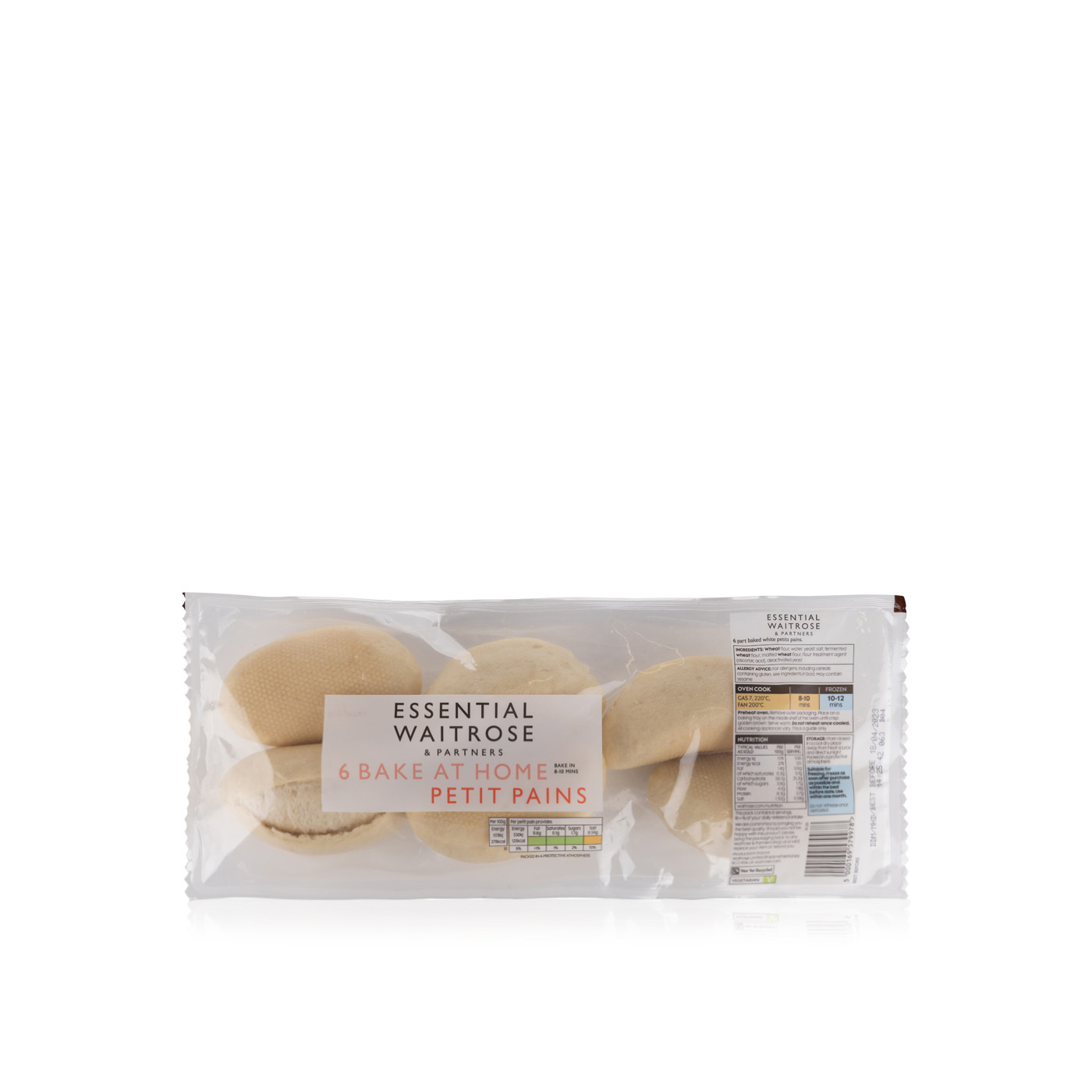


Waitrose & Partners Bake At Home Petit Pain
Analysis updated August 2026 · How Scout scores
At a glance
Summary
This bread is made with a relatively simple ingredient list, including wheat flour, water, yeast, and salt, which are typical for bread. It avoids harmful additives like high-fructose corn syrup and seed oils, contributing to a cleaner label. However, it is still a processed product, which limits its score potential compared to minimally processed or whole food options.
Key ingredients 8
WaterNeutral
Water is a fundamental ingredient in bread making, hydrating the flour and activating yeast. It is essential for the dough formation process. Water itself does not provide nutritional value but is crucial for the texture and rise of the bread.
Benefits
Essential for dough formation and yeast activation, but provides no direct nutritional benefits.
YeastNeutral
Yeast is a microorganism used in bread making to ferment sugars, producing carbon dioxide that helps the dough rise. It is a natural leavening agent. While yeast contributes to the bread's texture, it does not offer significant nutritional benefits.
Benefits
Facilitates dough rising and contributes to bread texture, but offers minimal nutritional benefits.
SaltNeutral
Salt is used in bread to enhance flavor and control yeast activity. It is a refined ingredient that does not provide trace minerals. Excessive consumption of salt can lead to health issues such as hypertension.
Risks
Excessive salt intake can contribute to high blood pressure and cardiovascular issues.
Benefits
Enhances flavor and controls yeast activity in bread making.
Fermented wheat flourNeutral
Fermented wheat flour is used to improve the flavor and texture of bread. The fermentation process can enhance digestibility and nutrient absorption. However, it still contains gluten, which may be problematic for sensitive individuals.
Risks
Contains gluten, which can be problematic for those with celiac disease or gluten sensitivity.
Benefits
Fermentation can improve digestibility and enhance flavor.
Malted wheat flourNeutral
Malted wheat flour is used to enhance the flavor and color of bread. It is made by sprouting wheat grains, which can increase enzyme activity. While it adds flavor, it does not significantly enhance the nutritional profile of the bread.
Risks
Contains gluten and may contribute to blood sugar spikes.
Benefits
Enhances flavor and color of bread through natural enzymatic processes.
Flour treatment agent (ascorbic acid)Neutral
Ascorbic acid is used as a flour treatment agent to improve dough strength and volume. It is a form of vitamin C, but in this context, it serves a functional rather than nutritional purpose. It is generally recognized as safe in food applications.
Benefits
Improves dough strength and volume, enhancing bread quality.
Deactivated yeastNeutral
Deactivated yeast is used to enhance flavor without contributing to leavening. It is inactive and does not ferment sugars. While it adds flavor, it does not provide nutritional benefits.
Benefits
Enhances flavor without affecting the leavening process.
Wheat flourBad
Refined grain flour stripped of bran and germ.
Risks
May cause blood sugar spikes and is a common allergen for those with gluten sensitivity or celiac disease.
Benefits
Provides essential carbohydrates for energy but lacks significant nutritional benefits due to processing.
Processing
Processed Foods
Get the full breakdown in the Scout appTake Scout shopping
Scan any product to see lab results, healthy alternatives, and your personalized analysis.
Download on theApp Store GET IT ONGoogle Play