


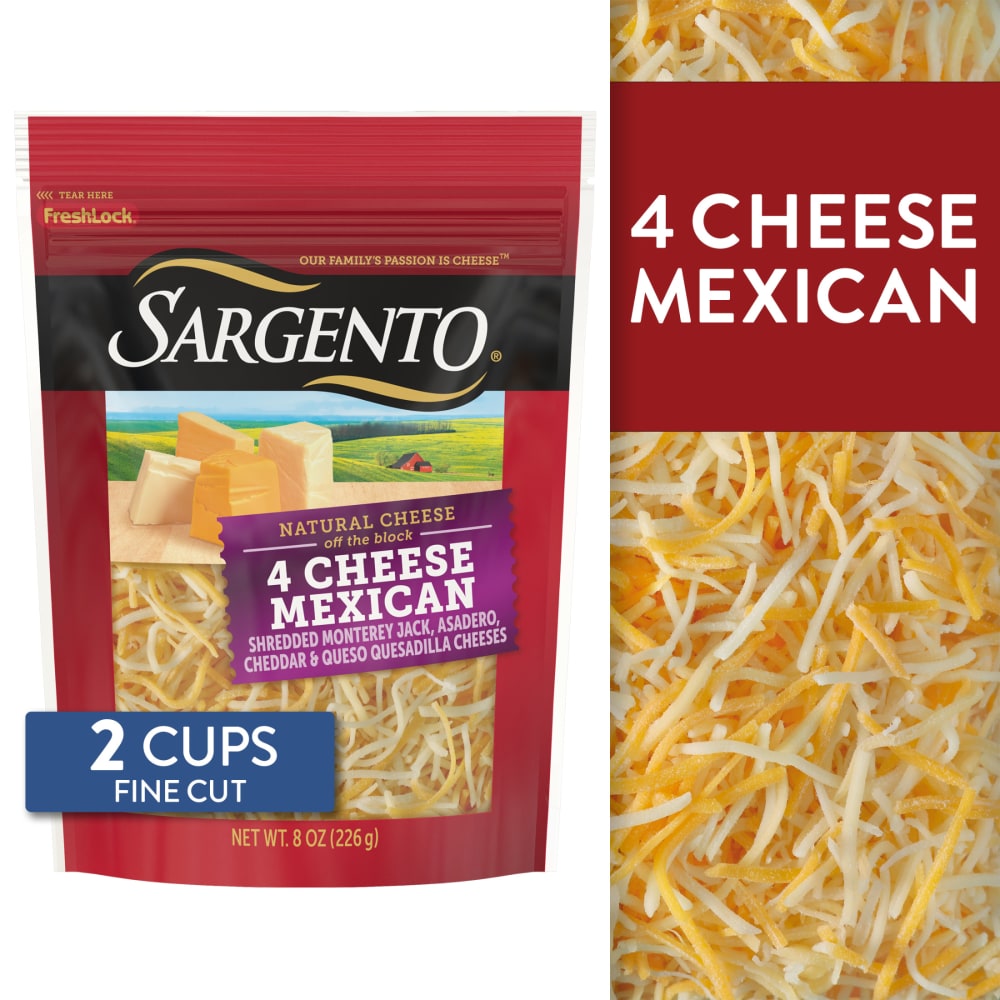


Mexican Blend
Summary
This cheese blend contains multiple types of cheese, which are generally nutritious, but it also includes powdered cellulose and microcrystalline cellulose as anti-caking agents, indicating a higher level of processing. While these additives are considered safe, they add no nutritional value and contribute to the product's ultra-processed nature, which limits its overall health score.
At a glance
Key ingredients 7
Monterey Jack CheeseNeutral
Monterey Jack Cheese is a dairy product made from pasteurized cultured milk, salt, and enzymes. It is a source of protein and calcium but also contains saturated fats. The cheese is processed but does not contain harmful additives.
Risks
High in saturated fats which may contribute to heart disease if consumed in excess.
Benefits
Provides protein and calcium, essential for bone health and muscle function.
Cheddar CheeseNeutral
Cheddar Cheese is made from pasteurized cultured milk, salt, and enzymes, with annatto for color. It is a good source of protein and calcium but contains saturated fats. The annatto used for coloring is natural and generally considered safe.
Risks
Contains saturated fats which may increase cholesterol levels if consumed excessively.
Benefits
Rich in protein and calcium, supporting bone health and muscle maintenance.
Asadero CheeseNeutral
Asadero Cheese is a traditional Mexican cheese made from pasteurized cultured milk, salt, and enzymes. It is a source of protein and calcium but also contains saturated fats. The cheese is processed but does not include harmful additives.
Risks
High in saturated fats which can contribute to cardiovascular issues if overconsumed.
Benefits
Provides essential nutrients like protein and calcium, beneficial for bone and muscle health.
Powdered CelluloseBad
Powdered Cellulose is used to prevent caking in shredded cheese products. It is derived from plant fibers and is considered a processed additive. While generally recognized as safe, it adds no nutritional value and is a sign of processing.
Risks
May indicate a higher level of processing in the product, which can be a concern for those seeking minimally processed foods.
SaltNeutral
Salt is used in cheese production for flavor and preservation. It is a common ingredient in many foods but contributes to sodium intake. Excessive consumption can lead to health issues such as hypertension.
Risks
High sodium intake is associated with increased risk of high blood pressure and cardiovascular diseases.
Benefits
Essential for flavor and acts as a preservative in cheese.
EnzymesNeutral
Enzymes are used in cheese making to aid in the coagulation of milk. They are necessary for the cheese production process and are generally considered safe. Enzymes do not contribute any nutritional value but are crucial for texture and flavor development.
Benefits
Essential for the cheese-making process, contributing to texture and flavor.
E460Bad
E460, also known as microcrystalline cellulose, is used as an anti-caking agent in food products. It is a processed additive derived from plant fibers. While it is generally recognized as safe, it provides no nutritional benefits and indicates a higher level of processing.
Risks
May contribute to a perception of over-processing in food products.
Processing
Ultra-Processed Foods
Get the full breakdown in the Scout app
Scan any product to see lab results, healthy alternatives, and your personalized analysis.
Download on theApp Store