
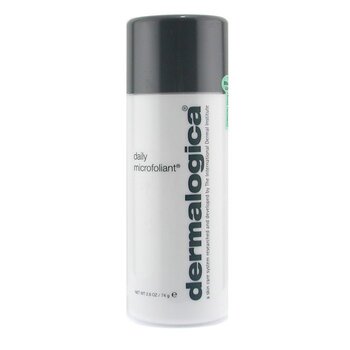

Dermalogica Daily Microfoliant 2.6 Oz
Analysis updated August 2026 · How Scout scores
At a glance
Summary
This face wash contains several beneficial ingredients such as colloidal oatmeal, rice bran extract, and green tea extract, which provide soothing, antioxidant, and anti-inflammatory benefits. However, the presence of limonene, a potential skin irritant, and the inclusion of some synthetic components contribute to a moderate processing level, which affects the overall score. The product balances natural and effective ingredients with some less desirable elements, resulting in a mixed evaluation.
Key ingredients 29
Colloidal OatmealVery Good
Colloidal Oatmeal is well-known for its soothing and anti-inflammatory properties. It is often used to relieve dry, itchy, or irritated skin. It forms a protective barrier on the skin, helping to retain moisture.
Risks
There are minimal risks, though rare allergic reactions can occur.
Benefits
It is highly beneficial for calming and moisturizing sensitive or irritated skin.
AllantoinVery Good
Allantoin is known for its soothing and skin-conditioning properties. It helps to promote skin healing and improve moisture retention. It is widely used in skincare for its ability to calm irritated skin.
Risks
There are minimal risks, though rare allergic reactions can occur.
Benefits
It is highly beneficial for soothing and moisturizing sensitive or irritated skin.
Camellia Sinensis Leaf ExtractVery Good
Camellia Sinensis Leaf Extract, commonly known as green tea extract, is rich in antioxidants and has anti-inflammatory properties. It helps to protect the skin from environmental damage and soothe irritation. It is widely used in skincare for its anti-aging and calming benefits.
Risks
There are minimal risks, though rare allergic reactions can occur.
Benefits
It provides strong antioxidant protection and helps to calm and soothe the skin.
Glycyrrhiza Glabra (Licorice) Root ExtractVery Good
Licorice Root Extract is known for its skin-brightening and anti-inflammatory properties. It helps to reduce hyperpigmentation and soothe irritated skin. It is often used in skincare for its ability to even out skin tone.
Risks
There are minimal risks, though rare allergic reactions can occur.
Benefits
It helps to brighten the skin and reduce the appearance of dark spots.
TocopherolVery Good
Tocopherol, or Vitamin E, is a powerful antioxidant that helps to protect the skin from environmental damage. It is known for its moisturizing and skin-conditioning properties. It is widely used in skincare for its ability to improve skin health and appearance.
Risks
There are minimal risks, though rare allergic reactions can occur.
Benefits
It provides antioxidant protection and helps to moisturize and condition the skin.
Oryza Sativa (Rice) Bran ExtractGood
Rice Bran Extract is rich in antioxidants and nutrients beneficial for the skin. It helps to nourish and protect the skin from environmental damage. It is also known for its moisturizing properties.
Risks
There are minimal risks, though rare allergic reactions can occur.
Benefits
It provides antioxidant protection and helps to maintain skin hydration.
PapainGood
Papain is an enzyme derived from papaya that helps to gently exfoliate the skin. It aids in the removal of dead skin cells, promoting a smoother complexion. It is considered a natural and effective exfoliant.
Risks
There is a risk of irritation or allergic reaction, particularly for sensitive skin.
Benefits
It provides gentle exfoliation, improving skin texture and radiance.
Salicylic AcidGood
Salicylic Acid is a beta hydroxy acid known for its exfoliating and acne-fighting properties. It penetrates into pores to help clear out impurities and reduce acne. It is widely used in skincare for its effectiveness in treating acne-prone skin.
Risks
Overuse can lead to dryness or irritation, especially in sensitive skin.
Benefits
It helps to clear acne and improve skin texture by exfoliating and unclogging pores.
Ginkgo Biloba Leaf ExtractGood
Ginkgo Biloba Leaf Extract is rich in antioxidants and has anti-inflammatory properties. It helps to protect the skin from environmental damage and reduce inflammation. It is often used in skincare for its anti-aging benefits.
Risks
There are minimal risks, though rare allergic reactions can occur.
Benefits
It provides antioxidant protection and helps to reduce signs of aging.
Melaleuca Alternifolia (Tea Tree) Leaf OilGood
Tea Tree Oil is known for its antimicrobial and anti-inflammatory properties. It helps to reduce acne and soothe irritated skin. It is widely used in skincare for its effectiveness in treating acne-prone skin.
Risks
Overuse can lead to dryness or irritation, especially in sensitive skin.
Benefits
It helps to reduce acne and soothe inflammation, promoting clearer skin.
Microcrystalline CelluloseNeutral
Microcrystalline Cellulose is a common bulking agent and exfoliant in cosmetics. It is generally considered safe and non-irritating for most skin types. It helps to physically exfoliate the skin, removing dead skin cells.
Risks
There are minimal risks associated with Microcrystalline Cellulose, though over-exfoliation can lead to skin irritation.
Benefits
It provides gentle exfoliation, which can help improve skin texture and appearance.
Magnesium OxideNeutral
Magnesium Oxide is used as a pH adjuster and absorbent in skincare products. It is generally considered safe for topical use. It helps to absorb excess oil and impurities from the skin.
Risks
Excessive use may lead to dryness or irritation in sensitive skin.
Benefits
It can help control oiliness and improve the overall texture of the skin.
Sodium Cocoyl IsethionateNeutral
Sodium Cocoyl Isethionate is a mild surfactant derived from coconut oil. It is known for its gentle cleansing properties and is less irritating than traditional sulfates. It helps to cleanse the skin without stripping natural oils.
Risks
There is a low risk of irritation, especially for sensitive skin types.
Benefits
It provides a gentle cleansing action, making it suitable for sensitive skin.
Disodium Lauryl SulfosuccinateNeutral
Disodium Lauryl Sulfosuccinate is a mild surfactant used in cleansing products. It is less irritating than traditional sulfates like SLS. It helps to create a lather and cleanse the skin effectively.
Risks
May cause mild irritation in very sensitive skin types.
Benefits
It provides effective cleansing with a lower risk of irritation compared to harsher surfactants.
Sodium Lauroyl GlutamateNeutral
Sodium Lauroyl Glutamate is a mild surfactant derived from amino acids. It is known for its gentle cleansing properties and is suitable for sensitive skin. It helps to cleanse the skin without causing dryness.
Risks
There is a low risk of irritation, particularly for those with very sensitive skin.
Benefits
It provides gentle cleansing, making it ideal for sensitive or dry skin types.
Oryza Sativa (Rice) StarchNeutral
Rice Starch is used as an absorbent and texture enhancer in skincare products. It helps to absorb excess oil and improve the feel of the product on the skin. It is generally considered safe and non-irritating.
Risks
There are minimal risks associated with its use.
Benefits
It helps to control oiliness and improve the texture of the skin.
Hydrogenated Coconut AcidNeutral
Hydrogenated Coconut Acid is used as an emollient and surfactant in skincare products. It helps to soften and condition the skin. It is derived from coconut oil and is generally considered safe.
Risks
There is a low risk of irritation, especially for those with coconut allergies.
Benefits
It provides moisturizing benefits and helps to improve skin texture.
PCANeutral
PCA, or Pyrrolidone Carboxylic Acid, is a humectant that helps to retain moisture in the skin. It is naturally found in the skin and is considered safe for use in cosmetics. It helps to improve skin hydration and texture.
Risks
There are minimal risks associated with its use.
Benefits
It helps to maintain skin hydration and improve overall skin texture.
Populus Tremuloides Bark ExtractNeutral
Populus Tremuloides Bark Extract is used as a natural preservative and has mild astringent properties. It helps to protect the product from microbial growth. It is considered safe for use in cosmetics.
Risks
There are minimal risks, though rare allergic reactions can occur.
Benefits
It acts as a natural preservative, helping to extend the shelf life of the product.
CyclodextrinNeutral
Cyclodextrin is used as a stabilizer and carrier for active ingredients in cosmetics. It helps to improve the delivery and stability of active compounds. It is generally considered safe for use in skincare products.
Risks
There are minimal risks associated with its use.
Benefits
It enhances the stability and effectiveness of active ingredients in the formulation.
Sodium IsethionateNeutral
Sodium Isethionate is a mild surfactant used in cleansing products. It is known for its gentle cleansing properties and is suitable for sensitive skin. It helps to cleanse the skin without causing dryness.
Risks
There is a low risk of irritation, particularly for those with very sensitive skin.
Benefits
It provides gentle cleansing, making it ideal for sensitive or dry skin types.
Lauryl Methacrylate/Glycol Dimethacrylate CopolymerNeutral
This copolymer is used as a film-forming agent and texture enhancer in cosmetics. It helps to improve the feel and application of the product on the skin. It is generally considered safe for use in skincare products.
Risks
There are minimal risks associated with its use.
Benefits
It enhances the texture and application of the product, providing a smooth finish.
MaltodextrinNeutral
Maltodextrin is used as a binding agent and texture enhancer in cosmetics. It helps to improve the consistency and stability of the product. It is generally considered safe for use in skincare products.
Risks
There are minimal risks associated with its use.
Benefits
It helps to improve the texture and stability of the product.
Citrus Paradisi (Grapefruit) Peel OilNeutral
Grapefruit Peel Oil is used for its fragrance and potential antioxidant properties. It helps to provide a refreshing scent to the product. It is generally considered safe for use in cosmetics.
Risks
There is a risk of photosensitivity, especially when exposed to sunlight.
Benefits
It provides a refreshing scent and may offer antioxidant benefits.
Sodium DehydroacetateNeutral
Sodium Dehydroacetate is used as a preservative in cosmetics. It helps to prevent microbial growth and extend the shelf life of the product. It is generally considered safe for use in skincare products.
Risks
There are minimal risks associated with its use.
Benefits
It acts as a preservative, helping to maintain the product's integrity and safety.
Hydrolyzed Corn Starch Hydroxyethyl EtherNeutral
This ingredient is used as a thickening agent and texture enhancer in cosmetics. It helps to improve the consistency and feel of the product. It is generally considered safe for use in skincare products.
Risks
There are minimal risks associated with its use.
Benefits
It helps to improve the texture and application of the product.
Water/Aqua/EauNeutral
Water is a common solvent used in cosmetics to dissolve other ingredients. It is essential for the formulation and application of many skincare products. It is generally considered safe and non-irritating.
Risks
There are minimal risks associated with its use.
Benefits
It acts as a solvent, helping to dissolve and distribute other ingredients in the formulation.
Citric AcidNeutral
Citric Acid is used as a pH adjuster and exfoliant in skincare products. It helps to balance the acidity of the product and can gently exfoliate the skin. It is generally considered safe for use in cosmetics.
Risks
Overuse can lead to skin irritation, particularly in sensitive skin.
Benefits
It helps to balance the product's pH and can improve skin texture through gentle exfoliation.
LimoneneBad
Limonene is a fragrance component that can cause skin irritation and sensitization. It is often used for its citrus scent in cosmetics. It can oxidize and become a skin irritant over time.
Risks
There is a risk of skin irritation and allergic reactions, especially in sensitive individuals.
Benefits
It provides a pleasant citrus scent to the product.
Get the full breakdown in the Scout appTake Scout shopping
Scan any product to see lab results, healthy alternatives, and your personalized analysis.
Download on theApp Store GET IT ONGoogle PlayAmazon pricing & content
Amazon price as of . Product prices and availability are accurate as of the date/time indicated and are subject to change. Any price and availability information displayed on Amazon.com at the time of purchase will apply to the purchase of this product.
CERTAIN CONTENT THAT APPEARS ON THIS SITE COMES FROM AMAZON. THIS CONTENT IS PROVIDED “AS IS” AND IS SUBJECT TO CHANGE OR REMOVAL AT ANY TIME.