
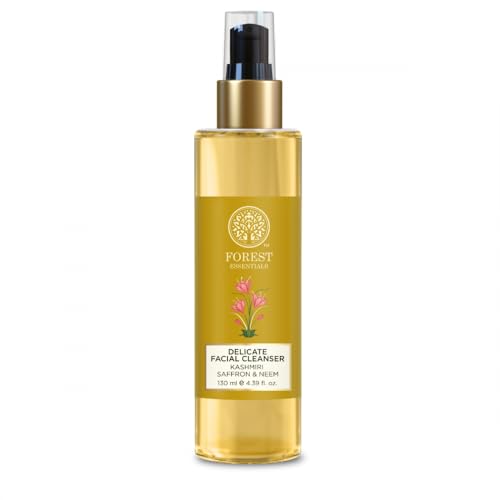

Forest Essentials Kashmiri Saffron And Neem Delicate Facial Cleanser, 200ml. Shi
Analysis updated August 2026 · How Scout scores
At a glance
Summary
This facial cleanser contains beneficial ingredients like glycerin, salicylic acid, and niacinamide, which are known for their hydrating and exfoliating properties. However, the presence of phenoxyethanol, a preservative that can cause irritation, and the use of PEG compounds, which are synthetic emulsifiers, slightly lower its score. The product is moderately processed, which also impacts its overall rating.
Key ingredients 34
PanthenolVery Good
Panthenol, also known as provitamin B5, is a moisturizing and soothing agent. It helps to improve skin hydration and reduce inflammation.
Risks
There are minimal risks associated with panthenol, though it can cause mild irritation in rare cases.
Benefits
Panthenol enhances skin hydration, reduces inflammation, and promotes healing.
AllantoinVery Good
Allantoin is a skin-soothing and conditioning agent known for its ability to promote skin healing. It helps to reduce irritation and improve skin texture.
Risks
There are minimal risks associated with allantoin, though it can cause mild irritation in rare cases.
Benefits
Allantoin soothes the skin, promotes healing, and improves skin texture.
Kashmiri SaffronVery Good
Kashmiri Saffron is a natural ingredient known for its antioxidant and anti-inflammatory properties. It helps to brighten the skin and reduce pigmentation.
Risks
There are minimal risks, though it can cause mild irritation in rare cases.
Benefits
It provides antioxidant benefits and helps to improve skin tone and texture.
NeemVery Good
Neem is a natural ingredient with antibacterial and anti-inflammatory properties. It helps to treat acne and soothe irritated skin.
Risks
There are minimal risks, though it can cause mild irritation in rare cases.
Benefits
It provides antibacterial benefits and helps to reduce acne and inflammation.
GlycerinGood
Glycerin is a humectant that attracts moisture to the skin, helping to keep it hydrated. It is well-tolerated by most skin types and enhances the skin's natural barrier function.
Risks
There are minimal risks associated with glycerin, though it can be sticky if used in high concentrations.
Benefits
Glycerin helps to maintain skin hydration and improve skin barrier function.
Salicylic AcidGood
Salicylic Acid is a beta hydroxy acid (BHA) known for its exfoliating properties. It helps to unclog pores and reduce acne.
Risks
Overuse can lead to skin irritation and dryness, especially in sensitive skin.
Benefits
It effectively treats acne and improves skin texture by exfoliating dead skin cells.
BetaineGood
Betaine is a natural amino acid derivative that acts as a humectant and anti-irritant. It helps to maintain skin hydration and soothe irritation.
Risks
There are minimal risks associated with betaine, though it can cause mild irritation in rare cases.
Benefits
Betaine enhances skin hydration and reduces irritation, making it suitable for sensitive skin.
Avena Sativa Kernel ExtractGood
Avena Sativa Kernel Extract, or oat extract, is known for its soothing and anti-inflammatory properties. It helps to calm irritated skin and reduce redness.
Risks
There are minimal risks, though individuals with oat allergies should avoid it.
Benefits
It provides soothing benefits and helps to reduce skin irritation and redness.
Capryloyl Salicylic AcidGood
Capryloyl Salicylic Acid is a derivative of salicylic acid with exfoliating and anti-inflammatory properties. It helps to improve skin texture and reduce acne.
Risks
Overuse can lead to skin irritation and dryness, especially in sensitive skin.
Benefits
It provides gentle exfoliation and helps to treat acne and improve skin texture.
Zinc PCAGood
Zinc PCA is a zinc salt that helps to regulate sebum production and reduce acne. It also has antimicrobial properties.
Risks
There are minimal risks associated with zinc PCA, though it can cause mild irritation in rare cases.
Benefits
It helps to control oil production, reduce acne, and has antimicrobial benefits.
Sodium PCAGood
Sodium PCA is a natural moisturizing factor that helps to maintain skin hydration. It is highly effective at attracting moisture to the skin.
Risks
There are minimal risks associated with sodium PCA, though it can cause mild irritation in rare cases.
Benefits
It enhances skin hydration and helps to maintain moisture balance.
Hyaluronic AcidGood
Hyaluronic Acid is a powerful humectant that attracts and retains moisture in the skin. It helps to improve skin hydration and plumpness.
Risks
There are minimal risks associated with hyaluronic acid.
Benefits
It enhances skin hydration and helps to reduce the appearance of fine lines and wrinkles.
NiacinamideGood
Niacinamide is a form of vitamin B3 known for its anti-inflammatory and skin-brightening properties. It helps to improve skin texture and reduce redness.
Risks
There are minimal risks associated with niacinamide.
Benefits
It enhances skin barrier function, reduces redness, and improves skin tone.
AquaNeutral
Aqua, or water, is a common solvent used in cosmetic formulations. It helps dissolve other ingredients and provides a base for the product. It is generally considered safe and non-irritating.
Risks
There are no significant risks associated with water in cosmetics.
Benefits
Water helps to hydrate the skin and is essential for the formulation of most cosmetic products.
Cocamidopropyl BetaineNeutral
Cocamidopropyl Betaine is a mild surfactant derived from coconut oil. It is used to create foam and cleanse the skin without stripping natural oils.
Risks
It can cause irritation in some individuals, especially those with sensitive skin.
Benefits
It provides gentle cleansing and is less irritating than harsher surfactants.
PropanediolNeutral
Propanediol is a glycol that acts as a solvent and humectant in cosmetics. It helps to improve the texture and spreadability of products.
Risks
It is generally considered safe, but some individuals may experience mild irritation.
Benefits
Propanediol enhances product texture and provides moisturizing benefits.
Sodium Lauroyl Methyl IsethionateNeutral
Sodium Lauroyl Methyl Isethionate is a mild surfactant that provides gentle cleansing. It is derived from coconut oil and is known for its ability to produce a creamy lather.
Risks
It is generally safe, but overuse can lead to dryness in some skin types.
Benefits
It offers effective cleansing with minimal irritation.
XylitylglucosideNeutral
Xylitylglucoside is a sugar-derived ingredient that acts as a humectant. It helps to retain moisture in the skin.
Risks
There are no significant risks associated with this ingredient.
Benefits
It enhances skin hydration and improves moisture retention.
AnhydroxylitolNeutral
Anhydroxylitol is a sugar alcohol used as a humectant in cosmetics. It helps to maintain skin moisture levels.
Risks
There are no significant risks associated with this ingredient.
Benefits
It supports skin hydration and moisture balance.
XylitolNeutral
Xylitol is a sugar alcohol that acts as a humectant and skin conditioning agent. It helps to improve skin hydration.
Risks
There are no significant risks associated with xylitol in topical applications.
Benefits
Xylitol enhances skin moisture and can improve skin texture.
PEG-150 Pentaerythrityl TetrastearateNeutral
PEG-150 Pentaerythrityl Tetrastearate is an emulsifier and thickening agent used in cosmetics. It helps to stabilize formulations and improve texture.
Risks
There is a potential risk of skin irritation, especially in sensitive individuals.
Benefits
It provides stability and enhances the texture of cosmetic products.
PEG-120 Methyl Glucose DioleateNeutral
PEG-120 Methyl Glucose Dioleate is an emulsifier and surfactant used to improve product texture and stability. It is derived from glucose and oleic acid.
Risks
There is a low risk of irritation, particularly for sensitive skin types.
Benefits
It enhances the texture and stability of cosmetic formulations.
Pentylene GlycolNeutral
Pentylene Glycol is a synthetic humectant and solvent used to improve skin hydration and product texture. It also has antimicrobial properties.
Risks
There is a low risk of irritation, particularly for sensitive skin types.
Benefits
It enhances skin hydration and helps to preserve the product.
Coco-GlucosideNeutral
Coco-Glucoside is a mild surfactant derived from coconut oil and glucose. It is used to cleanse the skin without stripping natural oils.
Risks
It is generally safe, but overuse can lead to dryness in some skin types.
Benefits
It provides gentle cleansing and is less irritating than harsher surfactants.
Glyceryl OleateNeutral
Glyceryl Oleate is an emulsifier and skin conditioning agent derived from natural oils. It helps to improve product texture and moisturize the skin.
Risks
There are minimal risks, though it can cause mild irritation in rare cases.
Benefits
It enhances product texture and provides moisturizing benefits.
EthylhexylglycerinNeutral
Ethylhexylglycerin is a preservative and skin conditioning agent. It is used to enhance the efficacy of other preservatives and improve skin feel.
Risks
There are minimal risks, though it can cause mild irritation in rare cases.
Benefits
It enhances preservative efficacy and provides skin conditioning benefits.
Trisodium Ethylenediamine DisuccinateNeutral
Trisodium Ethylenediamine Disuccinate is a chelating agent used to stabilize cosmetic formulations. It helps to prevent the degradation of active ingredients.
Risks
There are minimal risks associated with this ingredient.
Benefits
It stabilizes formulations and enhances the efficacy of active ingredients.
Lactic AcidNeutral
Standard formulation ingredient — neither beneficial nor harmful at typical use.
Risks
Overuse can lead to skin irritation and sensitivity, especially in sensitive skin.
Benefits
It provides gentle exfoliation and enhances skin hydration and texture.
Citric AcidNeutral
Citric Acid is used to adjust the pH of cosmetic formulations. It also has mild exfoliating properties.
Risks
Overuse can lead to skin irritation, particularly in sensitive skin.
Benefits
It helps to maintain the pH balance of the product and provides mild exfoliation.
Sodium CitrateNeutral
Sodium Citrate is a buffering agent used to maintain the pH of cosmetic formulations. It helps to stabilize the product.
Risks
There are minimal risks associated with sodium citrate.
Benefits
It stabilizes formulations and helps to maintain pH balance.
Sodium HydroxideNeutral
Sodium Hydroxide is used to adjust the pH of cosmetic formulations. It is effective in small concentrations.
Risks
In high concentrations, it can be irritating and corrosive, but it is typically used in safe amounts.
Benefits
It helps to maintain the pH balance of the product.
NagkesarNeutral
Nagkesar is a traditional Ayurvedic ingredient known for its skin-brightening properties. It helps to improve skin tone and texture.
Risks
There are minimal risks, though it can cause mild irritation in rare cases.
Benefits
It helps to brighten the skin and improve overall complexion.
Panchpushp WaterNeutral
Panchpushp Water is a blend of floral waters used for its soothing and aromatic properties. It helps to refresh and hydrate the skin.
Risks
There are minimal risks, though it can cause mild irritation in rare cases.
Benefits
It provides soothing and hydrating benefits to the skin.
PhenoxyethanolBad
Phenoxyethanol is a preservative used to prevent microbial growth in cosmetics. It is effective but can cause irritation in some individuals.
Risks
It can cause skin irritation and allergic reactions, particularly in sensitive individuals.
Benefits
It helps to preserve the product and prevent microbial contamination.
Get the full breakdown in the Scout appTake Scout shopping
Scan any product to see lab results, healthy alternatives, and your personalized analysis.
Download on theApp Store GET IT ONGoogle PlayAmazon pricing & content
Amazon price as of . Product prices and availability are accurate as of the date/time indicated and are subject to change. Any price and availability information displayed on Amazon.com at the time of purchase will apply to the purchase of this product.
CERTAIN CONTENT THAT APPEARS ON THIS SITE COMES FROM AMAZON. THIS CONTENT IS PROVIDED “AS IS” AND IS SUBJECT TO CHANGE OR REMOVAL AT ANY TIME.