
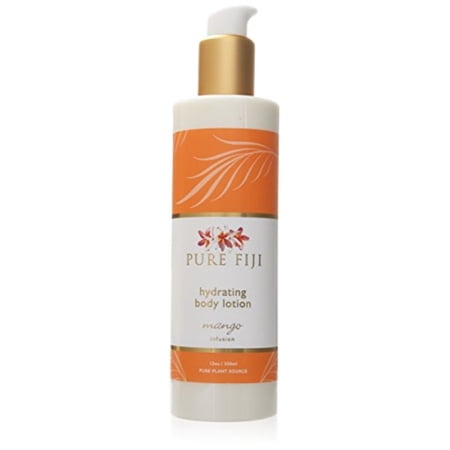
pure fiji hydrating body lotion, mango, 12 ounce
Analysis updated August 2026 · How Scout scores
At a glance
Summary
This body lotion contains several beneficial natural oils and extracts, such as coconut oil, tamanu oil, and hyaluronic acid, which are known for their moisturizing and skin-soothing properties. However, the presence of phenoxyethanol and synthetic fragrance (parfum) introduces potential skin irritation risks, which affects the overall safety profile. The product is moderately processed, which also influences its rating.
Key ingredients 19
Cocos Nucifera OilVery Good
Coconut oil is a natural emollient that helps to moisturize and soften the skin. It is rich in fatty acids that can improve skin barrier function.
Risks
Some individuals may experience allergic reactions or breakouts.
Benefits
Coconut oil provides deep hydration and can improve skin barrier function.
Calophyllum Inophyllum Seed OilVery Good
Tamanu oil is known for its skin healing properties and is rich in fatty acids and antioxidants. It can help reduce inflammation and promote skin regeneration.
Risks
May cause allergic reactions in sensitive individuals.
Benefits
Tamanu oil promotes skin healing and reduces inflammation.
Macadamia Ternifolia Seed OilVery Good
Macadamia oil is a lightweight oil that is easily absorbed by the skin. It contains palmitoleic acid, which is beneficial for skin hydration and repair.
Risks
Rarely, it may cause allergic reactions.
Benefits
Macadamia oil hydrates and repairs the skin effectively.
Aleurites Moluccanus Seed OilVery Good
Kukui nut oil is known for its moisturizing properties and ability to soothe dry, irritated skin. It contains essential fatty acids that nourish the skin.
Risks
Potential for allergic reactions in some individuals.
Benefits
Kukui nut oil soothes and moisturizes dry, irritated skin.
Passiflora Incarnata ExtractGood
Passionflower extract is used for its calming and soothing properties on the skin. It contains flavonoids that can help reduce skin irritation.
Risks
Generally safe, but may cause mild irritation in sensitive skin.
Benefits
Passionflower extract calms and soothes the skin.
Caprylic/Capric TriglycerideGood
This ingredient is an emollient that helps to smooth and soften the skin. It is derived from coconut oil and glycerin, providing a lightweight texture.
Risks
Generally considered safe with low risk of irritation.
Benefits
Caprylic/Capric Triglyceride smooths and softens the skin.
GlycerinGood
Glycerin is a humectant that attracts moisture to the skin, helping to keep it hydrated. It is widely used in skincare for its moisturizing properties.
Risks
Low risk of irritation; generally safe for all skin types.
Benefits
Glycerin helps maintain skin hydration by attracting moisture.
Hyaluronic AcidGood
Hyaluronic acid is a powerful humectant that attracts and retains moisture in the skin. It helps to plump and hydrate the skin, reducing the appearance of fine lines.
Risks
Generally safe with low risk of irritation.
Benefits
Hyaluronic acid deeply hydrates and plumps the skin.
Tocopheryl AcetateGood
Tocopheryl acetate is a form of vitamin E that acts as an antioxidant, protecting the skin from free radical damage. It also has moisturizing properties.
Risks
Low risk of irritation; generally safe for use.
Benefits
Tocopheryl acetate protects the skin from free radical damage and moisturizes.
WaterNeutral
Water is a common solvent used in cosmetics to dissolve other ingredients. It helps in the application and absorption of the product. It does not provide direct benefits or risks.
Risks
There are no significant risks associated with water in cosmetics.
Benefits
Water helps in the application and absorption of the product.
Emulsifying WaxNeutral
Emulsifying wax is used to blend oil and water in formulations, creating a stable emulsion. It does not provide direct skin benefits.
Risks
Generally safe with low risk of irritation.
Benefits
Emulsifying wax helps stabilize the product formulation.
Glyceryl StearateNeutral
Glyceryl stearate is an emulsifier and emollient that helps to soften the skin. It is commonly used to improve the texture of skincare products.
Risks
Low risk of irritation; generally considered safe.
Benefits
Glyceryl stearate softens the skin and improves product texture.
EthylhexylglycerinNeutral
Ethylhexylglycerin is used as a preservative and skin conditioning agent. It enhances the efficacy of other preservatives.
Risks
Generally considered safe with low risk of irritation.
Benefits
Ethylhexylglycerin conditions the skin and enhances preservative efficacy.
Caprylyl GlycolNeutral
Caprylyl glycol is a skin conditioning agent and preservative booster. It helps to improve the texture and feel of the product.
Risks
Low risk of irritation; generally safe for use.
Benefits
Caprylyl glycol conditions the skin and improves product texture.
Phenyl TrimethiconeNeutral
Phenyl trimethicone is a silicone that provides a silky feel and enhances the spreadability of the product. It forms a protective barrier on the skin.
Risks
May cause breakouts in acne-prone skin.
Benefits
Phenyl trimethicone enhances product spreadability and provides a silky feel.
Sclerotium GumNeutral
Sclerotium gum is a natural thickening agent used to stabilize and improve the texture of cosmetic formulations. It does not provide direct skin benefits.
Risks
Generally considered safe with low risk of irritation.
Benefits
Sclerotium gum stabilizes and improves product texture.
DimethiconeBad
Occlusive silicone film-former — flagged under clean-beauty doctrine.
Risks
May cause breakouts in acne-prone skin.
Benefits
Dimethicone provides a smooth application and protects the skin barrier.
PhenoxyethanolBad
Phenoxyethanol is a preservative used to prevent microbial growth in cosmetics. It can cause skin irritation and allergic reactions in some individuals.
Risks
Potential for skin irritation and allergic reactions.
Benefits
Phenoxyethanol helps preserve the product by preventing microbial growth.
ParfumBad
Fragrance is used to add scent to products but can cause skin irritation and allergic reactions. It is a common allergen in cosmetics.
Risks
High risk of skin irritation and allergic reactions.
Benefits
Adds a pleasant scent to the product.
Get the full breakdown in the Scout appTake Scout shopping
Scan any product to see lab results, healthy alternatives, and your personalized analysis.
Download on theApp Store GET IT ONGoogle Play