
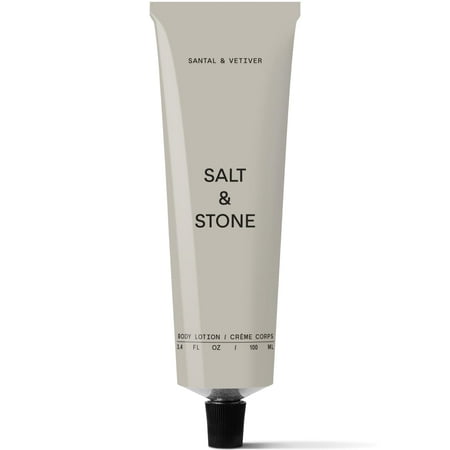


Salt & Stone Santal & Vetiver Body Lotion - 3.4oz
Analysis updated October 2026 · How Scout scores
At a glance
Summary
This body lotion contains a mix of beneficial ingredients such as niacinamide, shea butter glycerides, and jojoba seed oil, which provide hydration and nourishment to the skin. However, the presence of 'fragrance' can be a concern due to potential undisclosed chemicals that may cause skin irritation or sensitivity. The overall formulation is mostly safe, but the inclusion of synthetic fragrance slightly lowers its rating.
Key ingredients 31
Shea Butter GlyceridesVery Good
Shea Butter Glycerides are derived from shea butter, providing deep moisturization and nourishment to the skin. They are rich in fatty acids and vitamins.
Risks
There are minimal risks, though it may cause breakouts in very oily skin.
Benefits
They provide intense hydration and improve skin softness.
Simmondsia Chinensis (Jojoba) Seed OilVery Good
Jojoba Seed Oil is a natural oil that closely resembles the skin's sebum, providing excellent moisturizing and balancing properties. It helps to regulate oil production and improve skin texture.
Risks
There are minimal risks, though it may cause breakouts in very oily skin.
Benefits
It provides deep hydration and helps to balance the skin's natural oils.
TocopherolVery Good
Tocopherol, also known as Vitamin E, is a powerful antioxidant that helps to protect the skin from free radical damage. It provides moisturizing and anti-inflammatory benefits.
Risks
There are minimal risks, though it may cause irritation in very sensitive skin.
Benefits
It provides antioxidant protection and helps to soothe and moisturize the skin.
Sodium Ascorbyl PhosphateVery Good
Sodium Ascorbyl Phosphate is a stable form of Vitamin C, known for its antioxidant and brightening properties. It helps to protect the skin from oxidative stress and improve skin tone.
Risks
There are minimal risks, though it may cause irritation in very sensitive skin.
Benefits
It provides antioxidant protection and helps to brighten the skin.
Camellia Sinensis Leaf ExtractVery Good
Camellia Sinensis Leaf Extract, also known as Green Tea Extract, is rich in antioxidants and provides anti-inflammatory benefits. It helps to protect the skin from environmental damage and reduce redness.
Risks
There are minimal risks, though it may cause irritation in very sensitive skin.
Benefits
It provides antioxidant protection and helps to soothe and calm the skin.
Caprylic/Capric TriglycerideGood
Caprylic/Capric Triglyceride is an emollient derived from coconut oil and glycerin. It helps to moisturize and replenish the skin without leaving a greasy residue.
Risks
There are minimal risks, though it may cause irritation in very sensitive skin.
Benefits
It provides a lightweight moisturizing effect and enhances skin smoothness.
GlycerinGood
Glycerin is a humectant that attracts moisture to the skin, helping to keep it hydrated. It is widely used in skincare for its moisturizing properties.
Risks
Rarely, glycerin can cause irritation if used in high concentrations.
Benefits
It effectively hydrates the skin by drawing moisture from the environment.
Cetearyl OlivateGood
Cetearyl Olivate is an emulsifier derived from olive oil, helping to blend oil and water components. It is gentle on the skin and enhances moisture retention.
Risks
There are minimal risks associated with this ingredient.
Benefits
It helps to maintain skin hydration and improve product texture.
NiacinamideGood
Niacinamide is a form of Vitamin B3 known for its anti-inflammatory and skin-brightening properties. It helps to improve skin texture and reduce the appearance of pores.
Risks
It is generally well-tolerated, though it may cause mild irritation in sensitive skin.
Benefits
It improves skin elasticity, enhances barrier function, and reduces redness.
Sorbitan OlivateGood
Sorbitan Olivate is an emulsifier derived from olive oil, used to stabilize and thicken formulations. It is gentle and helps to maintain skin moisture.
Risks
There are minimal risks associated with this ingredient.
Benefits
It helps to stabilize the product and maintain skin hydration.
Laminaria Japonica ExtractGood
Laminaria Japonica Extract is derived from seaweed and is rich in minerals and antioxidants. It helps to hydrate and protect the skin from environmental stressors.
Risks
There are minimal risks, though it may cause irritation in very sensitive skin.
Benefits
It provides hydration and antioxidant protection to the skin.
Spirulina Maxima ExtractGood
Spirulina Maxima Extract is rich in proteins, vitamins, and minerals, offering antioxidant and anti-inflammatory benefits. It helps to nourish and revitalize the skin.
Risks
There are minimal risks, though it may cause irritation in very sensitive skin.
Benefits
It provides nourishment and helps to protect the skin from oxidative stress.
Laminaria Digitata ExtractGood
Laminaria Digitata Extract is a type of seaweed extract known for its hydrating and soothing properties. It helps to improve skin elasticity and moisture levels.
Risks
There are minimal risks, though it may cause irritation in very sensitive skin.
Benefits
It enhances skin hydration and provides soothing effects.
Chondrus Crispus ExtractGood
Chondrus Crispus Extract, also known as Irish Moss, is rich in carrageenan, providing moisturizing and soothing benefits. It helps to improve skin texture and hydration.
Risks
There are minimal risks, though it may cause irritation in very sensitive skin.
Benefits
It provides hydration and helps to soothe the skin.
Macrocystis Pyrifera (Kelp) ExtractGood
Macrocystis Pyrifera Extract is derived from kelp and is rich in vitamins and minerals. It helps to nourish and hydrate the skin, providing antioxidant benefits.
Risks
There are minimal risks, though it may cause irritation in very sensitive skin.
Benefits
It provides nourishment and helps to protect the skin from environmental damage.
Porphyra Umbilicalis ExtractGood
Porphyra Umbilicalis Extract is a type of red algae extract known for its antioxidant and moisturizing properties. It helps to protect the skin from environmental stressors.
Risks
There are minimal risks, though it may cause irritation in very sensitive skin.
Benefits
It provides antioxidant protection and enhances skin hydration.
Carthamus Tinctorius (Safflower) Seed OilGood
Safflower Seed Oil is rich in linoleic acid, providing moisturizing and anti-inflammatory benefits. It helps to improve skin barrier function and reduce dryness.
Risks
There are minimal risks, though it may cause irritation in very sensitive skin.
Benefits
It provides hydration and helps to soothe and protect the skin.
Sclerocarya Birrea Seed OilGood
Sclerocarya Birrea Seed Oil, also known as Marula Oil, is rich in antioxidants and fatty acids, providing moisturizing and nourishing benefits. It helps to improve skin elasticity and reduce redness.
Risks
There are minimal risks, though it may cause breakouts in very oily skin.
Benefits
It provides deep hydration and helps to protect the skin from environmental damage.
Oryza Sativa (Rice) Bran ExtractGood
Rice Bran Extract is rich in antioxidants and nutrients, providing moisturizing and soothing benefits. It helps to improve skin texture and protect against environmental damage.
Risks
There are minimal risks, though it may cause irritation in very sensitive skin.
Benefits
It provides nourishment and helps to soothe and protect the skin.
Helianthus Annuus (Sunflower) ExtractGood
Sunflower Extract is rich in vitamins and fatty acids, providing moisturizing and antioxidant benefits. It helps to improve skin barrier function and reduce inflammation.
Risks
There are minimal risks, though it may cause irritation in very sensitive skin.
Benefits
It provides hydration and helps to protect the skin from environmental damage.
Rosmarinus Officinalis (Rosemary) Leaf ExtractGood
Rosemary Leaf Extract is known for its antioxidant and anti-inflammatory properties. It helps to protect the skin from oxidative stress and improve circulation.
Risks
There are minimal risks, though it may cause irritation in very sensitive skin.
Benefits
It provides antioxidant protection and helps to soothe the skin.
Water (Aqua)Neutral
Water is a common solvent used in cosmetics to dissolve other ingredients. It helps in the application and absorption of the product. It does not provide direct benefits or risks.
Risks
There are no significant risks associated with water in cosmetics.
Benefits
Water helps in the application and absorption of the product.
Isopropyl MyristateNeutral
Isopropyl Myristate is used to enhance the absorption of other ingredients into the skin. It provides a smooth, non-greasy feel to the product.
Risks
It can potentially clog pores in acne-prone skin.
Benefits
It improves the texture and absorption of the lotion.
Cetearyl AlcoholNeutral
Cetearyl Alcohol is a fatty alcohol used as an emollient and thickener in cosmetics. It helps to soften the skin and improve product texture.
Risks
It is generally safe, though it may cause irritation in very sensitive skin.
Benefits
It provides a creamy texture and helps to soften the skin.
Polyacrylate Crosspolymer-6Neutral
Polyacrylate Crosspolymer-6 is a synthetic polymer used as a thickening agent in cosmetics. It helps to stabilize and improve the texture of the product.
Risks
There are minimal risks, though it may cause irritation in very sensitive skin.
Benefits
It provides a smooth texture and helps to stabilize the formulation.
Tetrasodium Glutamate DiacetateNeutral
Tetrasodium Glutamate Diacetate is a chelating agent used to improve the stability and efficacy of the product. It helps to prevent the degradation of other ingredients.
Risks
There are minimal risks associated with this ingredient.
Benefits
It enhances the stability and shelf life of the product.
Caprylyl GlycolNeutral
Caprylyl Glycol is a skin-conditioning agent that provides moisturizing benefits. It also acts as a preservative booster, enhancing the efficacy of other preservatives.
Risks
There are minimal risks, though it may cause irritation in very sensitive skin.
Benefits
It provides hydration and helps to enhance the preservation of the product.
Citric AcidNeutral
Citric Acid is used to adjust the pH of cosmetics and provide mild exfoliation. It helps to improve the texture and stability of the product.
Risks
It can cause irritation if used in high concentrations.
Benefits
It helps to balance the pH and improve skin texture.
Benzyl BenzoateNeutral
Benzyl Benzoate is used as a fragrance ingredient and solvent in cosmetics. It helps to enhance the scent and stability of the product.
Risks
It can cause irritation and allergic reactions in sensitive skin.
Benefits
It enhances the fragrance and stability of the product.
PhenoxyethanolBad
Processed additive flagged under Scout's ingredient doctrine.
Risks
It can cause irritation in sensitive skin and should be used in low concentrations.
Benefits
It helps to preserve the product and prevent contamination.
Fragrance (Parfum)Very Bad
Fragrance is used to impart scent to the product but can be a common irritant and allergen. It may contain undisclosed chemicals that can cause skin sensitivity.
Risks
It can cause allergic reactions and irritation, especially in sensitive skin.
Benefits
It provides a pleasant scent to the product.
Get the full breakdown in the Scout appTake Scout shopping
Scan any product to see lab results, healthy alternatives, and your personalized analysis.
Download on theApp Store GET IT ONGoogle PlayAmazon pricing & content
Amazon price as of . Product prices and availability are accurate as of the date/time indicated and are subject to change. Any price and availability information displayed on Amazon.com at the time of purchase will apply to the purchase of this product.
CERTAIN CONTENT THAT APPEARS ON THIS SITE COMES FROM AMAZON. THIS CONTENT IS PROVIDED “AS IS” AND IS SUBJECT TO CHANGE OR REMOVAL AT ANY TIME.