
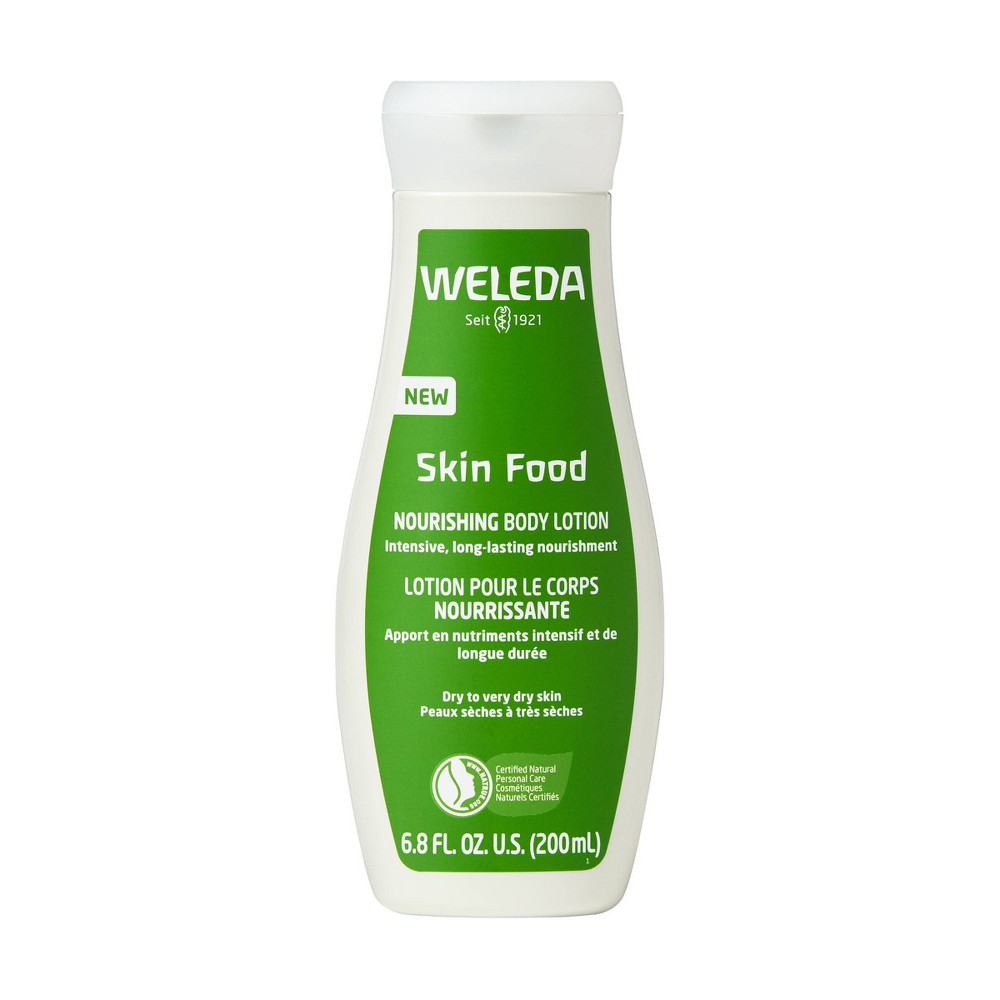

Weleda Skin Food Nourishing Body Lotion - Calendula, Rosemary & Pansy - 6.8 fl oz: For Dry Skin, Whole Body, Squeeze Bottle, Vegan
Analysis updated August 2026 · How Scout scores
At a glance
Summary
This body lotion contains several beneficial ingredients such as sunflower seed oil, shea butter, and glycerin, which provide moisturizing and nourishing properties. However, the presence of fragrance components like limonene, linalool, and geraniol, which are known allergens, can cause skin irritation and detract from the overall safety of the product. The processing level and inclusion of these potential irritants prevent it from achieving a higher rating.
Key ingredients 27
Helianthus Annuus (Sunflower) Seed OilVery Good
Sunflower seed oil is rich in linoleic acid, which helps maintain the skin barrier and reduce moisture loss. It is known for its emollient properties, making it beneficial for dry skin.
Risks
There are minimal risks, though some individuals may experience allergic reactions.
Benefits
It provides excellent moisturizing properties and supports skin barrier function.
Carthamus Tinctorius (Safflower) Seed OilVery Good
Safflower seed oil is rich in linoleic acid, which helps to maintain the integrity of the outer skin layer. It is beneficial for dry and sensitive skin due to its moisturizing properties.
Risks
There are minimal risks, though some individuals may experience allergic reactions.
Benefits
It provides excellent moisturizing benefits and supports skin barrier function.
Butyrospermum Parkii (Shea) ButterVery Good
Shea butter is a rich emollient that provides deep moisturization and nourishment to the skin. It is known for its anti-inflammatory and healing properties.
Risks
There are minimal risks, though some individuals may experience allergic reactions.
Benefits
It offers excellent moisturizing and healing benefits for the skin.
Rosmarinus Officinalis (Rosemary) Leaf ExtractVery Good
Rosemary leaf extract is a natural antioxidant that helps to protect the skin from free radical damage. It also has anti-inflammatory and antimicrobial properties.
Risks
There are minimal risks, though some individuals may experience allergic reactions.
Benefits
It provides antioxidant protection and has anti-inflammatory benefits.
Chamomilla Recutita (Matricaria) Flower ExtractVery Good
Chamomile extract is known for its soothing and anti-inflammatory properties, making it beneficial for sensitive skin. It helps to calm irritation and redness.
Risks
There are minimal risks, though some individuals may experience allergic reactions.
Benefits
It soothes and calms irritated skin.
Calendula Officinalis Flower ExtractVery Good
Calendula extract is renowned for its healing and anti-inflammatory properties. It helps to soothe and repair damaged skin.
Risks
There are minimal risks, though some individuals may experience allergic reactions.
Benefits
It promotes skin healing and reduces inflammation.
TocopherolVery Good
Tocopherol, or Vitamin E, is a powerful antioxidant that helps to protect the skin from free radical damage. It also provides moisturizing benefits.
Risks
There are minimal risks, though some individuals may experience allergic reactions.
Benefits
It offers antioxidant protection and moisturizes the skin.
Caprylic/Capric TriglycerideGood
This ingredient is derived from coconut oil and glycerin, providing a lightweight, non-greasy emollient effect. It helps to improve the spreadability of the product.
Risks
There are minimal risks, though it may cause irritation in sensitive individuals.
Benefits
It enhances skin hydration and improves product texture.
GlycerinGood
Glycerin is a powerful humectant that attracts moisture to the skin, helping to keep it hydrated. It is widely used for its ability to improve skin smoothness and suppleness.
Risks
There are minimal risks, though excessive use can lead to a sticky feeling.
Benefits
It significantly enhances skin hydration and smoothness.
Glyceryl Stearate CitrateGood
This ingredient is an emulsifier that helps to blend oil and water components in formulations. It also provides a moisturizing effect on the skin.
Risks
There are minimal risks associated with this ingredient.
Benefits
It improves product texture and provides moisturizing benefits.
BetaineGood
Betaine is a natural osmolyte that helps to maintain skin hydration and protect against environmental stress. It is known for its soothing properties.
Risks
There are minimal risks, though it may cause irritation in sensitive individuals.
Benefits
It enhances skin hydration and provides soothing effects.
Sorbitan OlivateGood
Sorbitan olivate is an emulsifier derived from olive oil, known for its skin-conditioning properties. It helps to blend oil and water components in formulations.
Risks
There are minimal risks associated with this ingredient.
Benefits
It improves product texture and provides skin-conditioning benefits.
Viola Tricolor ExtractGood
Viola tricolor extract is known for its soothing and anti-inflammatory properties. It helps to calm irritated skin and provides hydration.
Risks
There are minimal risks, though some individuals may experience allergic reactions.
Benefits
It soothes and hydrates the skin.
Glyceryl CaprylateGood
Glyceryl caprylate is an emollient and emulsifier that helps to stabilize formulations. It also provides antimicrobial properties.
Risks
There are minimal risks associated with this ingredient.
Benefits
It stabilizes formulations and provides antimicrobial benefits.
Water (Aqua)Neutral
Water is a common solvent used in cosmetics to dissolve other ingredients. It helps in the application and absorption of the product. It does not provide direct benefits or risks.
Risks
There are no significant risks associated with water in cosmetics.
Benefits
Water helps in the application and absorption of the product.
AlcoholNeutral
Alcohol is used as a solvent and can help other ingredients penetrate the skin. It can also act as a preservative in formulations.
Risks
In high concentrations, it can be drying and irritating to the skin.
Benefits
It helps in the penetration of active ingredients and acts as a preservative.
Tapioca StarchNeutral
Tapioca starch is used as a thickening agent and to improve the texture of cosmetic products. It helps to absorb excess oil and provide a matte finish.
Risks
There are minimal risks associated with this ingredient.
Benefits
It improves product texture and provides a matte finish.
Stearic AcidNeutral
Stearic acid is a fatty acid used as an emulsifier and thickener in cosmetics. It helps to stabilize formulations and improve texture.
Risks
There are minimal risks associated with this ingredient.
Benefits
It stabilizes formulations and improves product texture.
Palmitic AcidNeutral
Palmitic acid is a fatty acid that acts as an emollient and thickener in cosmetic formulations. It helps to improve the texture and stability of products.
Risks
There are minimal risks associated with this ingredient.
Benefits
It enhances product texture and stability.
Xanthan GumNeutral
Xanthan gum is used as a thickening agent and stabilizer in cosmetic formulations. It helps to improve the texture and consistency of products.
Risks
There are minimal risks associated with this ingredient.
Benefits
It stabilizes formulations and improves product texture.
Lactic AcidNeutral
Standard formulation ingredient — neither beneficial nor harmful at typical use.
Risks
There are minimal risks, though it may cause irritation in sensitive individuals.
Benefits
It exfoliates and moisturizes the skin.
Benzyl CinnamateNeutral
Benzyl cinnamate is used as a fragrance component and has low potential for irritation. It is generally considered safe in cosmetics.
Risks
There are minimal risks associated with this ingredient.
Benefits
It provides a pleasant scent to the product.
LimoneneBad
Limonene is a fragrance component that can oxidize and cause skin irritation and allergic reactions. It is a known allergen in cosmetics.
Risks
It can cause skin irritation and allergic reactions.
Benefits
It provides a citrus scent to the product.
LinaloolBad
Linalool is a fragrance component that can oxidize and cause skin irritation and allergic reactions. It is a known allergen in cosmetics.
Risks
It can cause skin irritation and allergic reactions.
Benefits
It provides a floral scent to the product.
Benzyl BenzoateBad
Benzyl benzoate is a fragrance component that can cause skin irritation and allergic reactions. It is a known allergen in cosmetics.
Risks
It can cause skin irritation and allergic reactions.
Benefits
It acts as a solvent and fragrance component.
GeraniolBad
Geraniol is a fragrance component that can cause skin irritation and allergic reactions. It is a known allergen in cosmetics.
Risks
It can cause skin irritation and allergic reactions.
Benefits
It provides a rose-like scent to the product.
FragranceVery Bad
Fragrance is often a mixture of various chemicals that can cause skin irritation and allergic reactions. It is a common cause of contact dermatitis.
Risks
It can cause skin irritation and allergic reactions.
Benefits
It provides a pleasant scent to the product.
Get the full breakdown in the Scout appTake Scout shopping
Scan any product to see lab results, healthy alternatives, and your personalized analysis.
Download on theApp Store GET IT ONGoogle PlayAmazon pricing & content
Amazon price as of . Product prices and availability are accurate as of the date/time indicated and are subject to change. Any price and availability information displayed on Amazon.com at the time of purchase will apply to the purchase of this product.
CERTAIN CONTENT THAT APPEARS ON THIS SITE COMES FROM AMAZON. THIS CONTENT IS PROVIDED “AS IS” AND IS SUBJECT TO CHANGE OR REMOVAL AT ANY TIME.