
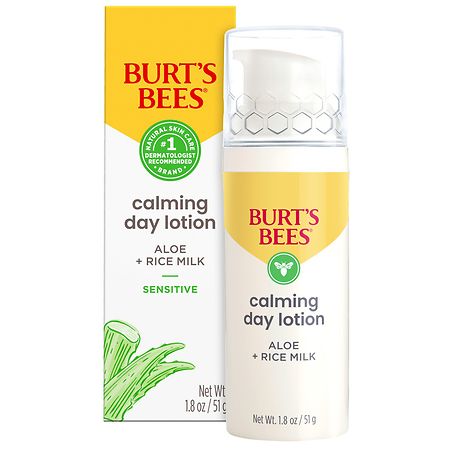

Burt s Bees Calming Day Face Lotion With Aloe and Rice Milk 1.8 oz. Bottle
Analysis updated August 2026 · How Scout scores
At a glance
Summary
This face lotion contains several beneficial ingredients such as sunflower seed oil, glycerin, zinc oxide, and shea butter, which provide moisturizing and protective properties. However, the presence of denatured alcohol, even though not among the top ingredients, can be drying and irritating to the skin, which affects the overall safety profile. The product also includes phenoxyethanol as a preservative, which is generally considered safe but can be a concern for sensitive skin types.
Key ingredients 35
Helianthus Annuus (Sunflower) Seed OilVery Good
Sunflower seed oil is rich in linoleic acid, which helps maintain the skin barrier and reduce trans-epidermal water loss. It is a natural emollient that softens and soothes the skin.
Risks
There are minimal risks, though some individuals may experience allergic reactions.
Benefits
It provides essential fatty acids and antioxidants that nourish and protect the skin.
Butyrospermum Parkii (Shea) ButterVery Good
Shea butter is a natural fat extracted from the nuts of the shea tree. It is known for its moisturizing and anti-inflammatory properties.
Risks
There are minimal risks, though some individuals may experience allergic reactions.
Benefits
It deeply moisturizes and nourishes the skin, improving its elasticity and softness.
Aloe Barbadensis Leaf JuiceVery Good
Aloe vera is known for its soothing and healing properties. It is widely used in skincare for its ability to hydrate and calm the skin.
Risks
There are minimal risks, though some individuals may experience allergic reactions.
Benefits
It provides hydration and helps to soothe irritated or sunburned skin.
Jojoba EstersVery Good
Jojoba esters are derived from jojoba oil and are used as emollients in skincare. They help to moisturize and protect the skin.
Risks
There are minimal risks associated with jojoba esters.
Benefits
They provide long-lasting moisture and help to improve skin texture.
Hydrolyzed Jojoba EstersVery Good
Hydrolyzed jojoba esters are used for their moisturizing and conditioning properties. They are derived from jojoba oil and help to improve skin hydration.
Risks
There are minimal risks associated with hydrolyzed jojoba esters.
Benefits
They enhance skin moisture and provide a smooth, soft feel.
GlycerinGood
Glycerin is a humectant that attracts moisture to the skin, helping to keep it hydrated. It is widely used in skincare for its moisturizing properties.
Risks
Glycerin is generally safe, but in high concentrations, it may cause irritation for some skin types.
Benefits
It improves skin hydration and resilience, making it softer and smoother.
CI 77947 (Zinc Oxide)Good
Zinc oxide is a mineral used for its protective and soothing properties. It acts as a physical barrier against UV rays and has anti-inflammatory effects.
Risks
There are minimal risks, though it may leave a white cast on the skin.
Benefits
It provides sun protection and helps to calm irritated skin.
Oryza Sativa (Rice) ExtractGood
Rice extract is known for its moisturizing and antioxidant properties. It helps to improve skin texture and tone.
Risks
There are minimal risks, though some individuals may experience sensitivity.
Benefits
It provides hydration and helps to brighten the skin.
Beta Vulgaris (Beet) Root ExtractGood
Beet root extract is rich in antioxidants and vitamins, which help to protect and nourish the skin. It is known for its anti-aging properties.
Risks
There are minimal risks, though some individuals may experience allergic reactions.
Benefits
It helps to improve skin elasticity and reduce signs of aging.
KaolinGood
Beneficial ingredient — whole-food or functional value in this product class.
Risks
There are minimal risks, though it may cause dryness for some skin types.
Benefits
It helps to purify and mattify the skin, reducing shine.
InositolGood
Beneficial ingredient — whole-food or functional value in this product class.
Risks
There are minimal risks associated with inositol.
Benefits
It helps to hydrate and condition the skin, improving its overall feel.
WaterNeutral
Water is a common solvent used in cosmetics to dissolve other ingredients. It helps in the application and absorption of the product. It does not have any direct benefits or risks.
Risks
There are no significant risks associated with water in cosmetics.
Benefits
Water helps in hydrating the skin by acting as a vehicle for other moisturizing ingredients.
Cetyl AlcoholNeutral
Cetyl alcohol is a fatty alcohol used as an emollient and thickening agent in cosmetics. It helps to stabilize and improve the texture of the product.
Risks
It is generally safe, but some individuals with sensitive skin may experience irritation.
Benefits
It provides a smooth application and helps to soften the skin.
Zea Mays (Corn) StarchNeutral
Corn starch is used as a thickening agent and absorbent in cosmetics. It helps to improve the texture and feel of the product.
Risks
There are minimal risks, though it may cause clogging of pores in some individuals.
Benefits
It provides a smooth, matte finish and helps to absorb excess oil.
Gossypium Herbaceum (Cotton) Flower ExtractNeutral
Cotton flower extract is used for its soothing and conditioning properties. It is often included in skincare for its gentle nature.
Risks
There are minimal risks associated with this ingredient.
Benefits
It helps to soothe and condition the skin, making it feel soft and smooth.
Artemisia Umbelliformis ExtractNeutral
Artemisia extract is used for its soothing and anti-inflammatory properties. It is often included in skincare for its calming effects.
Risks
There are minimal risks associated with this ingredient.
Benefits
It helps to calm and soothe irritated skin.
Euphrasia Officinalis ExtractNeutral
Euphrasia extract, also known as eyebright, is used for its soothing and anti-inflammatory properties. It is often included in products for sensitive skin.
Risks
There are minimal risks associated with this ingredient.
Benefits
It helps to soothe and calm sensitive skin.
Saccharum Officinarum (Sugar Cane) ExtractNeutral
Sugar cane extract is used for its exfoliating and moisturizing properties. It contains glycolic acid, which helps to remove dead skin cells.
Risks
There are minimal risks, though it may cause irritation for sensitive skin.
Benefits
It helps to exfoliate and hydrate the skin, improving its texture.
SucroseNeutral
Sucrose is used as a humectant and exfoliant in skincare. It helps to attract moisture and gently exfoliate the skin.
Risks
There are minimal risks, though it may cause irritation for sensitive skin.
Benefits
It helps to hydrate and smooth the skin, improving its texture.
Citric AcidNeutral
Citric acid is used as a pH adjuster and exfoliant in cosmetics. It helps to balance the pH of the product and gently exfoliate the skin.
Risks
There are minimal risks, though it may cause irritation for sensitive skin.
Benefits
It helps to improve skin texture and brightness by removing dead skin cells.
Benzoic AcidNeutral
Benzoic acid is used as a preservative in cosmetics to prevent microbial growth. It helps to extend the shelf life of the product.
Risks
There are minimal risks, though it may cause irritation for sensitive skin.
Benefits
It helps to maintain the product's stability and safety.
TrehaloseNeutral
Trehalose is used as a humectant and moisturizer in skincare. It helps to retain moisture and protect the skin from dehydration.
Risks
There are minimal risks associated with trehalose.
Benefits
It helps to keep the skin hydrated and improve its resilience.
Xanthan GumNeutral
Xanthan gum is used as a thickening and stabilizing agent in cosmetics. It helps to improve the texture and consistency of the product.
Risks
There are minimal risks associated with xanthan gum.
Benefits
It provides a smooth application and helps to stabilize the formulation.
Glyceryl LaurateNeutral
Glyceryl laurate is used as an emulsifier and surfactant in cosmetics. It helps to blend ingredients and improve the texture of the product.
Risks
There are minimal risks associated with glyceryl laurate.
Benefits
It helps to stabilize the formulation and improve its application.
Sucrose StearateNeutral
Sucrose stearate is used as an emulsifier and conditioning agent in skincare. It helps to blend ingredients and improve skin feel.
Risks
There are minimal risks associated with sucrose stearate.
Benefits
It helps to stabilize the formulation and improve skin texture.
Sucrose PolystearateNeutral
Sucrose polystearate is used as an emulsifier and thickening agent in cosmetics. It helps to blend ingredients and improve the texture of the product.
Risks
There are minimal risks associated with sucrose polystearate.
Benefits
It helps to stabilize the formulation and provide a smooth application.
Sodium PCANeutral
Sodium PCA is a natural moisturizing factor that helps to retain moisture in the skin. It is used for its hydrating properties.
Risks
There are minimal risks associated with sodium PCA.
Benefits
It helps to keep the skin hydrated and improve its elasticity.
LecithinBad
Processed additive flagged under Scout's ingredient doctrine.
Risks
There are minimal risks associated with lecithin.
Benefits
It helps to hydrate and soften the skin, improving its overall feel.
FructoseBad
Processed additive flagged under Scout's ingredient doctrine.
Risks
There are minimal risks associated with fructose.
Benefits
It helps to keep the skin hydrated and soft.
GlucoseBad
Processed additive flagged under Scout's ingredient doctrine.
Risks
There are minimal risks associated with glucose.
Benefits
It helps to maintain skin moisture and improve its texture.
Potassium SorbateBad
Synthetic preservative — flagged in daily-use products.
Risks
There are minimal risks, though it may cause irritation for sensitive skin.
Benefits
It helps to maintain the product's stability and safety.
Sodium BenzoateBad
Synthetic preservative that can form benzene in the presence of vitamin C.
Risks
There are minimal risks, though it may cause irritation for sensitive skin.
Benefits
It helps to maintain the product's stability and safety.
Sodium Stearoyl LactylateBad
Processed additive flagged under Scout's ingredient doctrine.
Risks
There are minimal risks associated with sodium stearoyl lactylate.
Benefits
It helps to stabilize the formulation and improve skin texture.
PhenoxyethanolBad
Processed additive flagged under Scout's ingredient doctrine.
Risks
There are minimal risks, though it may cause irritation for sensitive skin.
Benefits
It helps to maintain the product's stability and safety.
Alcohol Denat.Very Bad
Denatured alcohol is used as a solvent and astringent in cosmetics. It can be drying and irritating to the skin, especially in high concentrations.
Risks
It may cause dryness, irritation, and disrupt the skin barrier.
Benefits
It helps to improve the absorption of other ingredients and provides a quick-drying finish.
Get the full breakdown in the Scout appTake Scout shopping
Scan any product to see lab results, healthy alternatives, and your personalized analysis.
Download on theApp Store GET IT ONGoogle PlayAmazon pricing & content
Amazon price as of . Product prices and availability are accurate as of the date/time indicated and are subject to change. Any price and availability information displayed on Amazon.com at the time of purchase will apply to the purchase of this product.
CERTAIN CONTENT THAT APPEARS ON THIS SITE COMES FROM AMAZON. THIS CONTENT IS PROVIDED “AS IS” AND IS SUBJECT TO CHANGE OR REMOVAL AT ANY TIME.