
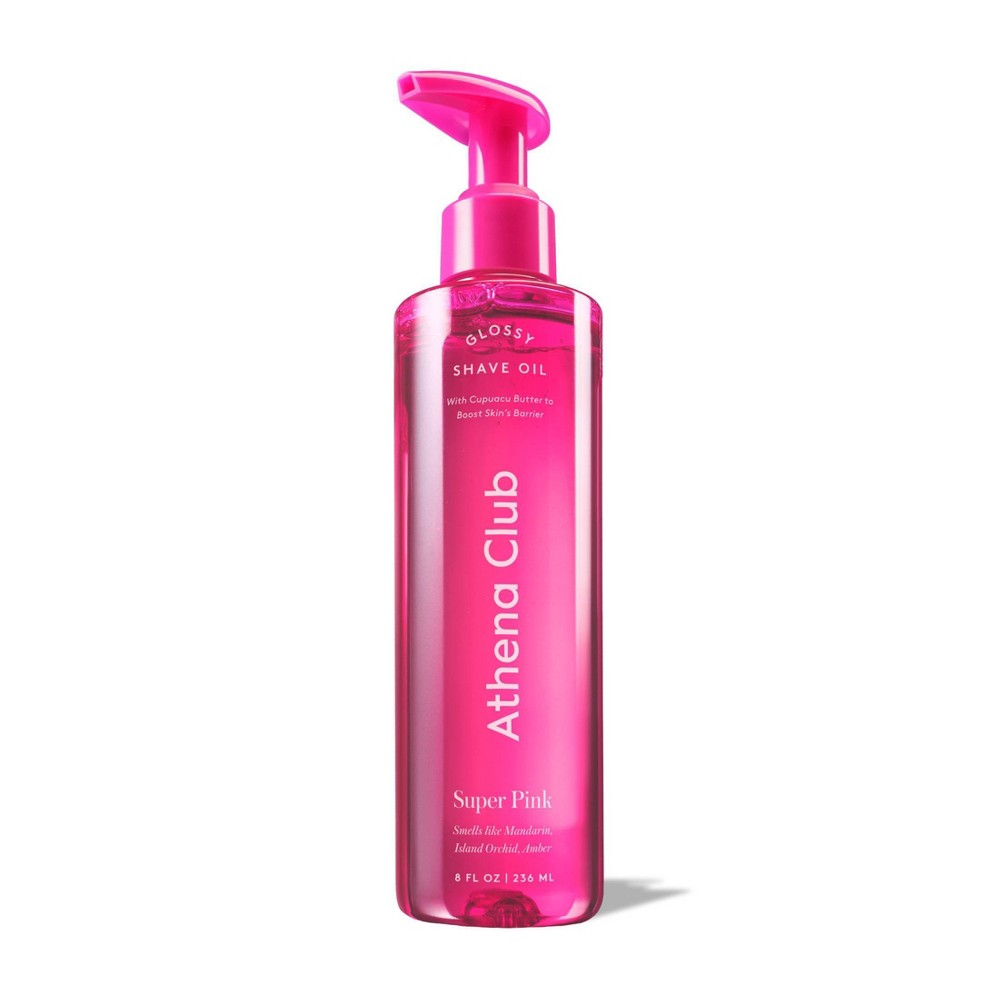
Athena Club Glossy Shave Oil - Super Pink - 8 fl oz: Whole Body, Pre-Shave Oil, All Hair & Skin Types
Analysis updated August 2026 · How Scout scores
At a glance
Summary
This shave oil contains several beneficial natural oils and butters, such as jojoba, avocado, and shea butter, which are known for their moisturizing and nourishing properties. However, the presence of synthetic fragrance, which can be an allergen and irritant, slightly detracts from its overall safety profile. The product is moderately processed, which also influences its rating, but the inclusion of many skin-friendly ingredients helps maintain a favorable score.
Key ingredients 20
Theobroma Grandiflorum (Cupuacu) Seed ButterVery Good
Cupuacu seed butter is a natural emollient rich in fatty acids and antioxidants. It is known for its moisturizing and skin-softening properties. It is considered highly beneficial for dry and sensitive skin.
Risks
There are minimal risks, though some individuals may experience mild irritation.
Benefits
It deeply moisturizes the skin and improves elasticity.
Simmondsia Chinensis (Jojoba) Seed OilVery Good
Jojoba oil is a natural oil that closely resembles the skin's sebum. It is known for its moisturizing and balancing properties. It is highly beneficial for all skin types, including oily and acne-prone skin.
Risks
There are minimal risks associated with jojoba oil.
Benefits
It helps regulate oil production and provides long-lasting moisture.
Persea Gratissima (Avocado) OilVery Good
Avocado oil is rich in vitamins and fatty acids, making it an excellent moisturizer. It is known for its nourishing and regenerative properties. It is beneficial for dry and mature skin types.
Risks
There are minimal risks, though some individuals may experience mild irritation.
Benefits
It deeply nourishes the skin and supports skin barrier function.
Helianthus Annuus (Sunflower) Seed OilVery Good
Sunflower seed oil is a lightweight oil rich in vitamin E and fatty acids. It is known for its moisturizing and anti-inflammatory properties. It is suitable for all skin types and helps improve skin texture.
Risks
There are minimal risks associated with sunflower seed oil.
Benefits
It hydrates the skin and provides antioxidant protection.
Butyrospermum Parkii (Shea) ButterVery Good
Shea butter is a natural fat extracted from the nuts of the shea tree. It is known for its rich moisturizing and anti-inflammatory properties. It is highly beneficial for dry and sensitive skin.
Risks
There are minimal risks, though some individuals may experience mild irritation.
Benefits
It provides deep hydration and soothes irritated skin.
Argania Spinosa (Argan) Kernel OilVery Good
Argan oil is a natural oil rich in vitamin E and essential fatty acids. It is known for its moisturizing and anti-aging properties. It is highly beneficial for all skin types, providing nourishment and protection.
Risks
There are minimal risks associated with argan oil.
Benefits
It hydrates the skin and helps reduce the appearance of fine lines.
Prunus Amygdalus Dulcis (Sweet Almond) OilVery Good
Sweet almond oil is a natural emollient rich in vitamins and fatty acids. It is known for its moisturizing and soothing properties. It is beneficial for dry and sensitive skin, helping to improve skin tone and texture.
Risks
There are minimal risks, though some individuals may experience mild irritation.
Benefits
It provides deep hydration and helps soothe irritated skin.
TocopherolVery Good
Tocopherol, or vitamin E, is a powerful antioxidant that helps protect the skin from environmental damage. It is known for its moisturizing and anti-aging properties. It is beneficial for maintaining skin health and preventing premature aging.
Risks
There are minimal risks associated with tocopherol.
Benefits
It provides antioxidant protection and helps improve skin elasticity.
Cocos Nucifera (Coconut) OilVery Good
Coconut oil is a natural emollient known for its moisturizing and antimicrobial properties. It is widely used in skincare for its ability to hydrate and protect the skin. It is beneficial for dry and sensitive skin types.
Risks
There are minimal risks, though some individuals may experience clogged pores.
Benefits
It deeply moisturizes the skin and provides a protective barrier.
GlycerinGood
Glycerin is a well-known humectant that attracts moisture to the skin. It is widely used in skincare products for its hydrating properties. It is considered safe and beneficial for most skin types.
Risks
There are minimal risks associated with glycerin, though excessive use may lead to a sticky feel.
Benefits
It helps maintain skin hydration and improves skin barrier function.
Pistacia Vera (Pistachio) Seed OilGood
Pistachio seed oil is rich in fatty acids and antioxidants. It is known for its moisturizing and skin-softening properties. It is beneficial for maintaining skin elasticity and hydration.
Risks
There are minimal risks, though some individuals may experience mild irritation.
Benefits
It helps improve skin texture and provides antioxidant protection.
AllantoinGood
Allantoin is a skin-soothing agent known for its ability to promote skin healing. It is often used in cosmetics for its calming and protective properties. It is beneficial for sensitive and irritated skin.
Risks
There are minimal risks associated with allantoin.
Benefits
It helps soothe and protect the skin, promoting a healthy appearance.
WaterNeutral
Water is a common solvent used in cosmetic formulations. It helps dissolve other ingredients and provides a base for the product. It is generally considered safe and non-irritating.
Risks
There are no significant risks associated with water in cosmetic products.
Benefits
Water helps to hydrate the skin and improve the texture of the product.
Polysorbate 20Neutral
Polysorbate 20 is an emulsifier that helps blend oil and water-based ingredients. It is commonly used in cosmetics to improve texture and stability. It is generally considered safe for use in personal care products.
Risks
In rare cases, it may cause skin irritation or allergic reactions.
Benefits
It helps maintain the consistency and effectiveness of the product.
Glycereth-26Neutral
Glycereth-26 is a humectant and emollient that helps retain moisture in the skin. It is often used in cosmetics for its moisturizing properties. It is considered safe for use in personal care products.
Risks
There are minimal risks, though some individuals may experience mild irritation.
Benefits
It enhances skin hydration and improves the feel of the product.
Sodium ChlorideNeutral
Sodium chloride, or salt, is used as a thickening agent in cosmetics. It helps improve the texture and stability of the product. It is generally considered safe for use in personal care products.
Risks
In high concentrations, it may cause skin dryness or irritation.
Benefits
It helps maintain the consistency and performance of the product.
Caprylyl GlycolNeutral
Caprylyl glycol is a skin-conditioning agent with antimicrobial properties. It is often used in cosmetics to enhance product preservation. It is considered safe for use in personal care products.
Risks
There are minimal risks, though some individuals may experience mild irritation.
Benefits
It helps improve skin hydration and product longevity.
Polyquaternium-10Neutral
Polyquaternium-10 is a conditioning agent that helps improve the texture and feel of the product. It is commonly used in hair and skincare products for its film-forming properties. It is generally considered safe for use in cosmetics.
Risks
There are minimal risks, though some individuals may experience mild irritation.
Benefits
It helps improve product texture and provides a smooth feel.
PhenoxyethanolBad
Processed additive flagged under Scout's ingredient doctrine.
Risks
In high concentrations, it may cause skin irritation or allergic reactions.
Benefits
It helps preserve the product and extend its shelf life.
FragranceVery Bad
Fragrance is often added to cosmetics for scent but can be a source of allergens and irritants. It is a common cause of contact dermatitis and allergic reactions. It is generally considered a negative ingredient in sensitive skin formulations.
Risks
Fragrance can cause skin irritation, allergic reactions, and sensitivity.
Benefits
It provides a pleasant scent to the product, enhancing user experience.
Get the full breakdown in the Scout appTake Scout shopping
Scan any product to see lab results, healthy alternatives, and your personalized analysis.
Download on theApp Store GET IT ONGoogle PlayAmazon pricing & content
Amazon price as of . Product prices and availability are accurate as of the date/time indicated and are subject to change. Any price and availability information displayed on Amazon.com at the time of purchase will apply to the purchase of this product.
CERTAIN CONTENT THAT APPEARS ON THIS SITE COMES FROM AMAZON. THIS CONTENT IS PROVIDED “AS IS” AND IS SUBJECT TO CHANGE OR REMOVAL AT ANY TIME.