

At a glance
Summary
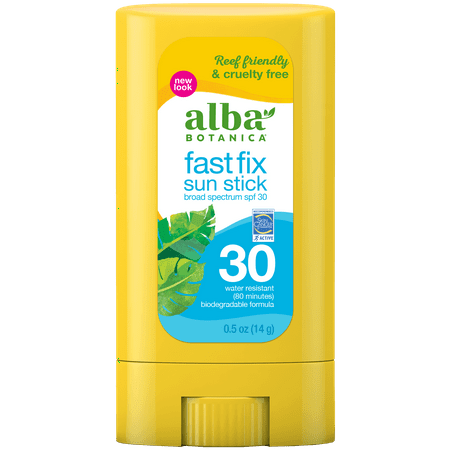
This sunscreen stick contains beneficial ingredients like coconut oil, jojoba esters, and zinc oxide, which provide moisturizing and UV protection benefits. However, the presence of octyl salicylate, a chemical UV filter that can cause skin irritation, slightly lowers its safety profile. The product is moderately processed, which also impacts its overall rating.
Key ingredients 9
Cocos Nucifera (Coconut) OilVery Good
Coconut oil is a natural oil known for its moisturizing properties. It is rich in fatty acids that help to nourish and hydrate the skin. It is widely used in skincare for its emollient benefits.
Risks
In some cases, coconut oil can clog pores and may not be suitable for acne-prone skin.
Benefits
It provides deep hydration and helps to improve skin barrier function.
Jojoba EstersVery Good
Jojoba esters are derived from jojoba oil and are used for their emollient properties. They mimic the skin's natural oils, providing hydration without clogging pores. They are well-tolerated and beneficial for all skin types.
Risks
There are minimal risks associated with jojoba esters, making them suitable for sensitive skin.
Benefits
They provide excellent moisturizing properties and help to balance oil production in the skin.
GlycerinGood
Glycerin is a humectant that attracts moisture to the skin, helping to keep it hydrated. It is a common ingredient in skincare due to its effectiveness and safety. It is well-tolerated by most skin types.
Risks
Glycerin is generally safe, but in high concentrations, it may cause irritation in sensitive individuals.
Benefits
It helps to maintain skin hydration and improves the skin's barrier function.
Zinc OxideGood
Zinc Oxide is a mineral sunscreen agent that provides broad-spectrum UV protection. It is considered safe and effective, especially for sensitive skin. It is often used in natural and hypoallergenic formulations.
Risks
There are minimal risks associated with zinc oxide, though it may leave a white cast on the skin.
Benefits
It offers excellent broad-spectrum protection and is suitable for sensitive skin types.
Caprylic/Capric TriglycerideNeutral
Caprylic/Capric Triglyceride is a mixed triester derived from coconut oil and glycerin. It is commonly used as an emollient and helps to improve the spreadability of products. It is generally considered safe and non-irritating.
Risks
There are minimal risks associated with this ingredient, though it may cause mild irritation in very sensitive individuals.
Benefits
It provides a lightweight, non-greasy moisturizing effect and enhances the texture of formulations.
Euphorbia Cerifera (Candelilla) WaxNeutral
Candelilla wax is a plant-derived wax used as a thickening agent and emollient. It helps to stabilize formulations and provides a smooth application. It is considered safe for use in cosmetics.
Risks
There are no significant risks associated with candelilla wax, though it may cause mild irritation in rare cases.
Benefits
It enhances the texture and consistency of products, providing a smooth and even application.
HydrogenatedNeutral
The term 'hydrogenated' refers to oils that have been chemically altered to improve stability and texture. It is often used in cosmetics to enhance the consistency of products. The safety depends on the specific oil used.
Risks
Hydrogenated oils can sometimes be comedogenic, potentially clogging pores.
Benefits
They provide stability and improve the texture of cosmetic formulations.
Octyl SalicylateNeutral
Octyl Salicylate is a chemical sunscreen agent that absorbs UVB rays. It is commonly used in sunscreens to enhance UV protection. It is generally considered safe for use in cosmetics.
Risks
There is a potential for skin irritation, especially in sensitive individuals.
Benefits
It provides effective UVB protection, helping to prevent sunburn.
OctocryleneBad
Octocrylene is a chemical sunscreen agent that absorbs UVB and short UVA rays. It is often used to stabilize other sunscreen ingredients. However, it can cause skin irritation and has been associated with allergic reactions.
Risks
There is a risk of skin irritation and potential for allergic reactions, particularly in sensitive individuals.
Benefits
It helps to stabilize sunscreen formulations and provides broad-spectrum UV protection.
Processing
Processed Foods
Get the full breakdown in the Scout appTake Scout shopping
Scan any product to see lab results, healthy alternatives, and your personalized analysis.
Download on theApp Store GET IT ONGoogle Play