
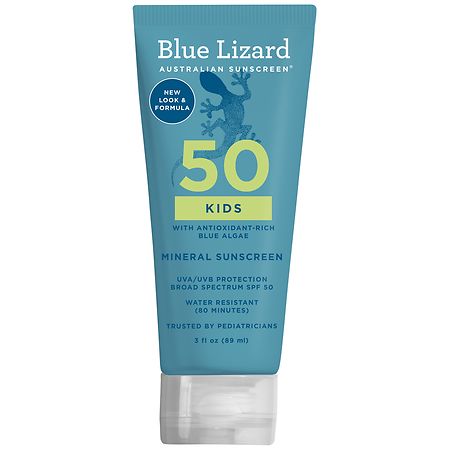




Blue Lizard Kids' Sunscreen Lotion - SPF 50 - 3 fl oz: Whole Body, Paraben-Free, Vegan, Contains Zinc Oxide
Analysis updated August 2026 · How Scout scores
At a glance
Summary
This sunscreen contains zinc oxide, a mineral UV filter, which is a safer alternative to chemical filters. It also includes beneficial ingredients like glycerin and tocopherol that provide hydration and antioxidant protection. However, the presence of PEG compounds and other synthetic additives contributes to a higher level of processing, which slightly lowers its overall score.
Key ingredients 31
GlycerinGood
Glycerin is a humectant that attracts moisture to the skin. It is considered safe and beneficial for use in cosmetics. It helps to hydrate and soften the skin.
Risks
There are minimal risks associated with its use in cosmetics.
Benefits
It provides excellent moisturizing benefits to the skin.
Tocopherol (Vitamin E)Good
Tocopherol is a form of Vitamin E used for its antioxidant properties. It is considered safe and beneficial for use in cosmetics. It helps to protect the skin from oxidative stress.
Risks
There are minimal risks associated with its use in cosmetics.
Benefits
It provides antioxidant benefits and helps to protect the skin.
Tocopheryl AcetateGood
Beneficial ingredient — whole-food or functional value in this product class.
Risks
There are minimal risks associated with its use in cosmetics.
Benefits
It provides antioxidant benefits and helps to protect the skin.
1, 2-HexanediolNeutral
1, 2-Hexanediol is a synthetic preservative and moisture-binding agent. It is generally considered safe for use in cosmetics. It helps to stabilize formulations.
Risks
There are minimal risks associated with its use in cosmetics.
Benefits
It helps to preserve the product and maintain its efficacy.
AluminaNeutral
Alumina is used as a thickening agent and absorbent in cosmetics. It is considered safe for topical use. It helps to improve the texture of the product.
Risks
There are no significant risks associated with its use in cosmetics.
Benefits
It enhances the texture and stability of the formulation.
Aluminum StearateNeutral
Aluminum Stearate is used as a thickening agent and emulsifier in cosmetics. It is generally recognized as safe for use. It helps to stabilize emulsions.
Risks
There are minimal risks associated with its use in cosmetics.
Benefits
It aids in the stability and consistency of the product.
Aphanizomenon Flosaquae ExtractNeutral
Aphanizomenon Flosaquae Extract is derived from blue-green algae and is used for its potential antioxidant properties. It is considered safe for use in cosmetics. It may provide some skin conditioning benefits.
Risks
There are minimal risks associated with its use in cosmetics.
Benefits
It may offer antioxidant benefits to the skin.
C12-15 Alkyl BenzoateNeutral
C12-15 Alkyl Benzoate is an emollient and texture enhancer in cosmetics. It is considered safe for use. It provides a silky feel to the skin.
Risks
There are minimal risks associated with its use in cosmetics.
Benefits
It improves the texture and feel of the product on the skin.
Caprylyl GlycolNeutral
Caprylyl Glycol is a skin conditioning agent and preservative. It is considered safe for use in cosmetics. It helps to moisturize the skin.
Risks
There are minimal risks associated with its use in cosmetics.
Benefits
It provides moisturizing benefits to the skin.
Cetyl DimethiconeNeutral
Cetyl Dimethicone is a silicone-based polymer used for its conditioning properties. It is considered safe for use in cosmetics. It provides a smooth application.
Risks
There are minimal risks associated with its use in cosmetics.
Benefits
It enhances the spreadability and feel of the product.
Cetyl PEG/PPG-10/1 DimethiconeNeutral
Cetyl PEG/PPG-10/1 Dimethicone is a silicone-based emulsifier. It is considered safe for use in cosmetics. It helps to stabilize emulsions.
Risks
There are minimal risks associated with its use in cosmetics.
Benefits
It aids in the stability and consistency of the product.
Ethylhexyl PalmitateNeutral
Ethylhexyl Palmitate is an emollient used to improve the texture of cosmetics. It is considered safe for use. It provides a silky feel to the skin.
Risks
There are minimal risks associated with its use in cosmetics.
Benefits
It improves the texture and feel of the product on the skin.
Ethylhexyl StearateNeutral
Ethylhexyl Stearate is an emollient used to improve the texture of cosmetics. It is considered safe for use. It provides a silky feel to the skin.
Risks
There are minimal risks associated with its use in cosmetics.
Benefits
It improves the texture and feel of the product on the skin.
Euphorbia Cerifera (Candelilla) WaxNeutral
Euphorbia Cerifera (Candelilla) Wax is a natural wax used as a thickening agent. It is considered safe for use in cosmetics. It helps to stabilize formulations.
Risks
There are minimal risks associated with its use in cosmetics.
Benefits
It enhances the texture and stability of the formulation.
Hexyl LaurateNeutral
Hexyl Laurate is an emollient used to improve the texture of cosmetics. It is considered safe for use. It provides a silky feel to the skin.
Risks
There are minimal risks associated with its use in cosmetics.
Benefits
It improves the texture and feel of the product on the skin.
HydroxyacetophenoneNeutral
Hydroxyacetophenone is an antioxidant and preservative booster. It is considered safe for use in cosmetics. It helps to enhance the stability of the product.
Risks
There are minimal risks associated with its use in cosmetics.
Benefits
It provides antioxidant benefits and boosts preservative efficacy.
Methyl Glucose DioleateNeutral
Methyl Glucose Dioleate is an emulsifier and surfactant. It is considered safe for use in cosmetics. It helps to stabilize emulsions.
Risks
There are minimal risks associated with its use in cosmetics.
Benefits
It aids in the stability and consistency of the product.
Octyldodecyl NeopentanoateNeutral
Octyldodecyl Neopentanoate is an emollient used to improve the texture of cosmetics. It is considered safe for use. It provides a silky feel to the skin.
Risks
There are minimal risks associated with its use in cosmetics.
Benefits
It improves the texture and feel of the product on the skin.
PEG-7 Hydrogenated Castor OilNeutral
PEG-7 Hydrogenated Castor Oil is an emulsifier and surfactant. It is considered safe for use in cosmetics. It helps to stabilize emulsions.
Risks
There are minimal risks associated with its use in cosmetics.
Benefits
It aids in the stability and consistency of the product.
Polyglyceryl-4 IsostearateNeutral
Polyglyceryl-4 Isostearate is an emulsifier used to stabilize formulations. It is considered safe for use in cosmetics. It helps to maintain product consistency.
Risks
There are minimal risks associated with its use in cosmetics.
Benefits
It enhances the stability and consistency of the product.
Polyhydroxystearic acidNeutral
Polyhydroxystearic acid is used as a thickening agent and emulsifier. It is considered safe for use in cosmetics. It helps to stabilize formulations.
Risks
There are minimal risks associated with its use in cosmetics.
Benefits
It enhances the texture and stability of the formulation.
PropanediolNeutral
Propanediol is a solvent and humectant used in cosmetics. It is considered safe for use. It helps to improve the texture and moisture retention of the product.
Risks
There are minimal risks associated with its use in cosmetics.
Benefits
It enhances the texture and moisture retention of the product.
TriethoxycaprylylsilaneNeutral
Triethoxycaprylylsilane is a silicone-based compound used as a binding agent. It is considered safe for use in cosmetics. It helps to improve the adhesion of the product.
Risks
There are minimal risks associated with its use in cosmetics.
Benefits
It enhances the adhesion and longevity of the product.
TrimethylsiloxysilicateNeutral
Trimethylsiloxysilicate is a silicone-based film-forming agent. It is considered safe for use in cosmetics. It helps to improve the water resistance of the product.
Risks
There are minimal risks associated with its use in cosmetics.
Benefits
It enhances the water resistance and durability of the product.
Hexadecene CopolymerNeutral
Hexadecene Copolymer is a film-forming agent used in cosmetics. It is considered safe for use. It helps to improve the texture and durability of the product.
Risks
There are minimal risks associated with its use in cosmetics.
Benefits
It enhances the texture and durability of the product.
WaterNeutral
Water is used as a solvent and base in cosmetics. It is considered safe for use. It helps to dissolve other ingredients and provide hydration.
Risks
There are no risks associated with its use in cosmetics.
Benefits
It acts as a solvent and provides hydration to the skin.
Butyloctyl SalicylateBad
Processed additive flagged under Scout's ingredient doctrine.
Risks
There are minimal risks associated with its use in cosmetics.
Benefits
It contributes to the sun protection factor of the sunscreen.
DimethiconeBad
Occlusive silicone film-former — flagged under clean-beauty doctrine.
Risks
There are minimal risks associated with its use in cosmetics.
Benefits
It enhances the spreadability and feel of the product.
Disodium EDTABad
Processed additive flagged under Scout's ingredient doctrine.
Risks
There are minimal risks associated with its use in cosmetics.
Benefits
It enhances the stability and shelf life of the product.
Potassium SorbateBad
Synthetic preservative — flagged in daily-use products.
Risks
There are minimal risks associated with its use in cosmetics.
Benefits
It effectively preserves the product by inhibiting microbial growth.
Sodium BenzoateBad
Synthetic preservative that can form benzene in the presence of vitamin C.
Risks
There are minimal risks associated with its use in cosmetics.
Benefits
It effectively preserves the product by inhibiting microbial growth.
Processing
Processed Foods
Get the full breakdown in the Scout appTake Scout shopping
Scan any product to see lab results, healthy alternatives, and your personalized analysis.
Download on theApp Store GET IT ONGoogle PlayAmazon pricing & content
Amazon price as of . Product prices and availability are accurate as of the date/time indicated and are subject to change. Any price and availability information displayed on Amazon.com at the time of purchase will apply to the purchase of this product.
CERTAIN CONTENT THAT APPEARS ON THIS SITE COMES FROM AMAZON. THIS CONTENT IS PROVIDED “AS IS” AND IS SUBJECT TO CHANGE OR REMOVAL AT ANY TIME.