
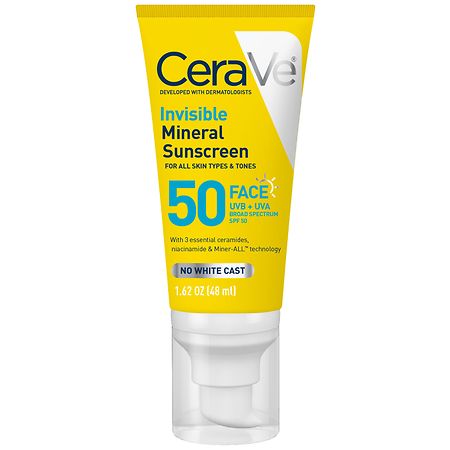
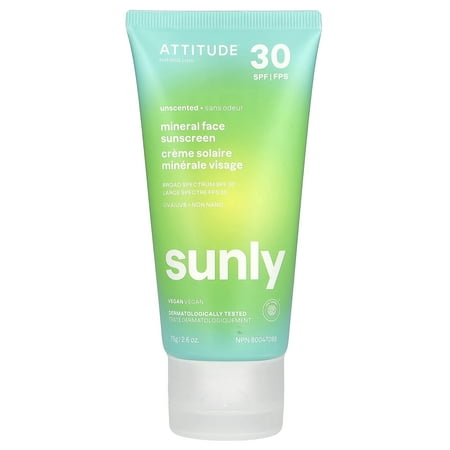
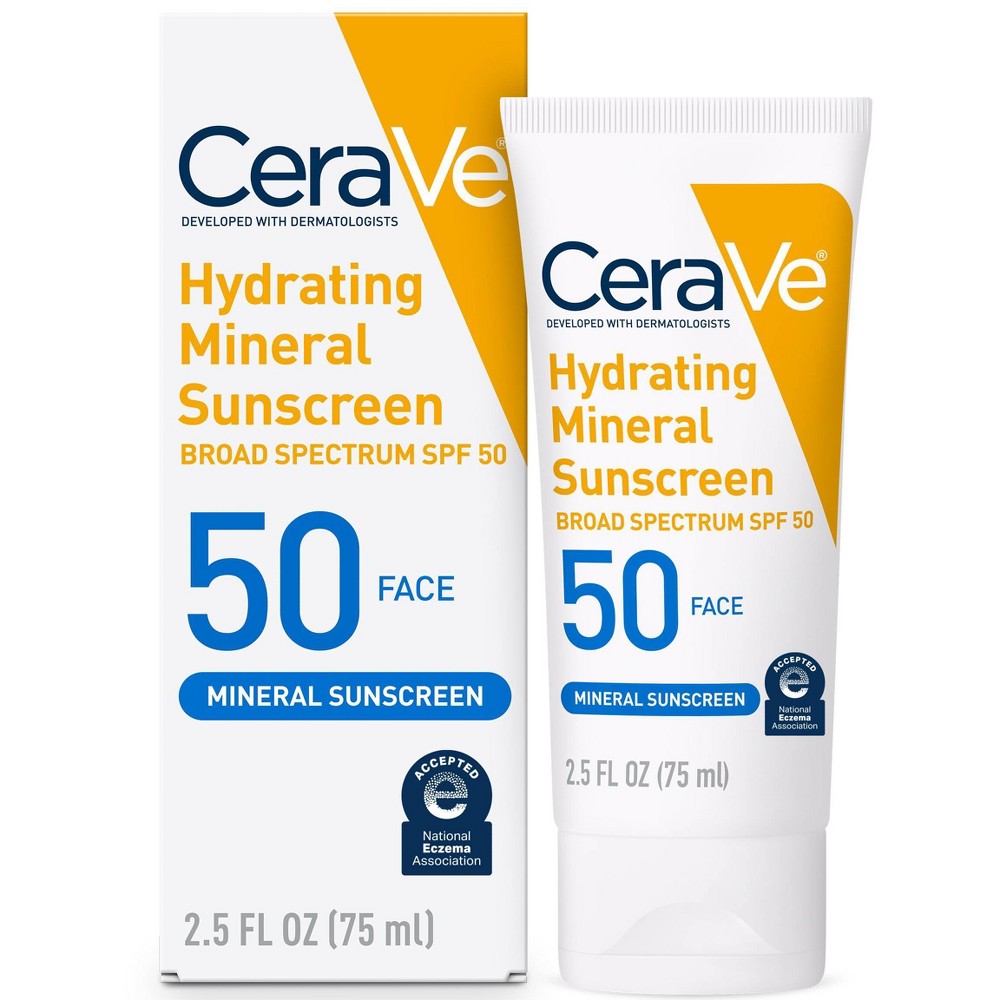
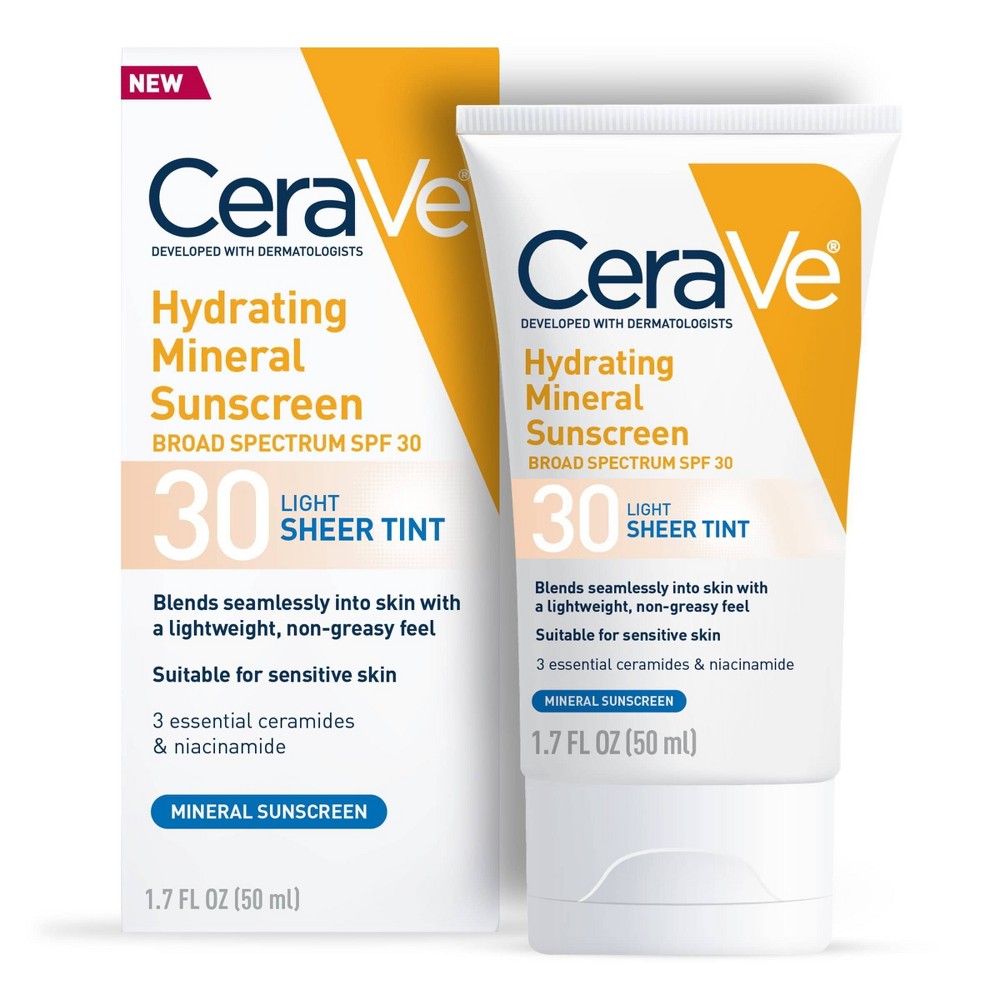
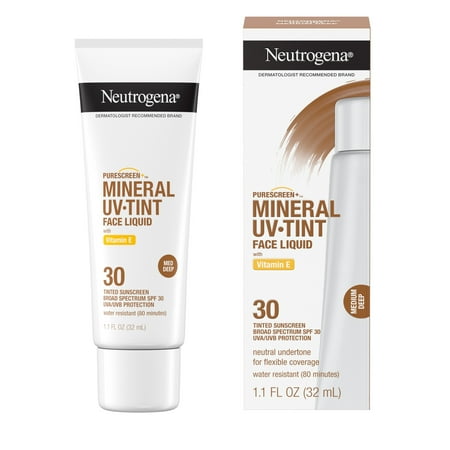
CeraVe Invisible Mineral Face Sunscreen - SPF 50 - 1.62 fl oz
Analysis updated August 2026 · How Scout scores
At a glance
Summary
This sunscreen features beneficial ingredients like niacinamide, glycerin, and ceramides, which support skin hydration and barrier function. It uses mineral UV filters, which are generally considered safer than chemical filters. However, the presence of some synthetic emulsifiers and preservatives slightly lowers its rating, reflecting a moderate level of processing.
Key ingredients 41
Ceramide APVery Good
Ceramide AP is a lipid molecule that is essential for maintaining the skin's barrier and retaining moisture. It helps in protecting the skin from environmental damage and prevents moisture loss. Ceramides are naturally found in the skin and are crucial for healthy skin function.
Risks
Ceramide AP is generally considered safe with no significant risks reported.
Benefits
It helps in restoring the skin barrier and retaining moisture, making it ideal for dry and sensitive skin.
Ceramide EOPVery Good
Ceramide EOP is a lipid molecule that is essential for maintaining the skin's barrier and retaining moisture. It helps in protecting the skin from environmental damage and prevents moisture loss. Ceramides are naturally found in the skin and are crucial for healthy skin function.
Risks
Ceramide EOP is generally considered safe with no significant risks reported.
Benefits
It helps in restoring the skin barrier and retaining moisture, making it ideal for dry and sensitive skin.
NiacinamideGood
Niacinamide is a form of Vitamin B3 that is known for its anti-inflammatory properties and ability to improve skin barrier function. It helps in reducing redness and blotchiness, making it beneficial for sensitive skin. Additionally, it can help in minimizing pore appearance and regulating oil production.
Risks
There are minimal risks associated with niacinamide, though some individuals may experience mild irritation.
Benefits
Niacinamide is beneficial for improving skin texture, reducing inflammation, and enhancing the skin's natural barrier.
Ceramide NPGood
Ceramide NP is a lipid molecule that is essential for maintaining the skin's barrier and retaining moisture. It helps in protecting the skin from environmental damage and prevents moisture loss. Ceramides are naturally found in the skin and are crucial for healthy skin function.
Risks
Ceramide NP is generally considered safe with no significant risks reported.
Benefits
It helps in restoring the skin barrier and retaining moisture, making it ideal for dry and sensitive skin.
TocopherolGood
Tocopherol, also known as Vitamin E, is an antioxidant that helps protect the skin from free radical damage. It is known for its moisturizing properties and ability to improve skin texture. Tocopherol can also enhance the efficacy of other active ingredients in skincare formulations.
Risks
In rare cases, tocopherol can cause skin irritation or allergic reactions.
Benefits
Tocopherol provides antioxidant protection and helps in maintaining skin hydration and smoothness.
GlycerinGood
Glycerin is a humectant that attracts moisture to the skin, helping to keep it hydrated. It is a common ingredient in skincare products due to its ability to improve skin barrier function and smoothness. Glycerin is non-irritating and suitable for all skin types.
Risks
Glycerin is generally safe, but in high concentrations, it may cause a sticky feeling on the skin.
Benefits
It helps in maintaining skin hydration and improving skin barrier function.
PanthenolGood
Panthenol, also known as Provitamin B5, is a humectant and skin-conditioning agent used in cosmetic formulations. It helps in retaining moisture and improving the texture of products. Panthenol is known for its soothing and moisturizing properties.
Risks
There are no significant risks associated with panthenol.
Benefits
It retains moisture and provides soothing and moisturizing benefits, improving the texture of products.
WaterNeutral
Water is a common solvent used in cosmetic formulations to dissolve other ingredients. It acts as a base for the product and helps in spreading the product evenly on the skin. Water is essential for hydrating the skin and maintaining its moisture balance.
Risks
There are no significant risks associated with water in cosmetic formulations.
Benefits
Water helps in hydrating the skin and acts as a solvent for other beneficial ingredients.
Dicaprylyl CarbonateNeutral
Dicaprylyl Carbonate is an emollient that provides a silky, smooth feel to the skin. It is used to enhance the spreadability of products and improve their texture. This ingredient is often used in formulations to provide a non-greasy finish.
Risks
There are no significant risks associated with dicaprylyl carbonate.
Benefits
It improves the texture and spreadability of skincare products, providing a smooth finish.
PropanediolNeutral
Propanediol is a glycol that is used as a solvent and skin-conditioning agent. It helps in improving the absorption of other ingredients and provides a smooth application. Propanediol is considered a safer alternative to propylene glycol.
Risks
Propanediol is generally safe, but some individuals may experience mild irritation.
Benefits
It enhances the absorption of active ingredients and provides a smooth application.
Cetearyl IsononanoateNeutral
Cetearyl Isononanoate is an emollient that provides a lightweight, non-greasy feel to the skin. It is used to improve the texture and spreadability of cosmetic products. This ingredient is often used in formulations to enhance the sensory experience.
Risks
There are no significant risks associated with cetearyl isononanoate.
Benefits
It improves the texture and spreadability of products, providing a lightweight feel.
Polyhydroxystearic AcidNeutral
Polyhydroxystearic Acid is used as a thickening agent and emulsifier in cosmetic formulations. It helps in stabilizing emulsions and improving the texture of products. This ingredient is commonly used to enhance the consistency of creams and lotions.
Risks
There are no significant risks associated with polyhydroxystearic acid.
Benefits
It stabilizes emulsions and improves the texture of cosmetic products.
Ethylhexyl MethoxycryleneNeutral
Ethylhexyl Methoxycrylene is a photostabilizer used in sunscreens to enhance the stability of UV filters. It helps in maintaining the efficacy of sunscreens by preventing the degradation of active ingredients. This ingredient is crucial for ensuring long-lasting sun protection.
Risks
There are no significant risks associated with ethylhexyl methoxycrylene.
Benefits
It enhances the stability and efficacy of UV filters in sunscreen formulations.
CelluloseNeutral
Cellulose is a natural polymer used as a thickening agent and stabilizer in cosmetic formulations. It helps in improving the texture and consistency of products. Cellulose is derived from plant sources and is biodegradable.
Risks
There are no significant risks associated with cellulose.
Benefits
It improves the texture and consistency of cosmetic products and is biodegradable.
TriethylhexanoinNeutral
Triethylhexanoin is an emollient that provides a lightweight, non-greasy feel to the skin. It is used to improve the spreadability and texture of cosmetic products. This ingredient is often used in formulations to enhance the sensory experience.
Risks
There are no significant risks associated with triethylhexanoin.
Benefits
It improves the texture and spreadability of products, providing a lightweight feel.
IsohexadecaneNeutral
Isohexadecane is a lightweight emollient used to improve the texture and spreadability of cosmetic products. It provides a silky, non-greasy feel and is often used in formulations to enhance the sensory experience. Isohexadecane is commonly used in skincare and makeup products.
Risks
There are no significant risks associated with isohexadecane.
Benefits
It provides a silky, non-greasy feel and improves the spreadability of products.
TriethoxycaprylylsilaneNeutral
Triethoxycaprylylsilane is a silicone-based compound used as a dispersing agent and surface modifier. It helps in improving the spreadability and stability of formulations. This ingredient is often used in sunscreens to enhance the dispersion of mineral UV filters.
Risks
There are no significant risks associated with triethoxycaprylylsilane.
Benefits
It improves the dispersion and stability of formulations, particularly in sunscreens.
Steareth-20Neutral
Steareth-20 is an emulsifier used to stabilize formulations and improve texture. It helps in blending oil and water-based ingredients, ensuring a uniform product. Steareth-20 is commonly used in skincare products for its emulsifying properties.
Risks
There are no significant risks associated with steareth-20.
Benefits
It stabilizes formulations and improves the texture of cosmetic products.
SilicaNeutral
Silica is a mineral used as a thickening agent and absorbent in cosmetic formulations. It helps in controlling oil and shine, making it ideal for oily skin types. Silica is also used to improve the texture and feel of products.
Risks
There are no significant risks associated with silica.
Benefits
It controls oil and shine and improves the texture of cosmetic products.
Steareth-2Neutral
Steareth-2 is an emulsifier used to stabilize formulations and improve texture. It helps in blending oil and water-based ingredients, ensuring a uniform product. Steareth-2 is commonly used in skincare products for its emulsifying properties.
Risks
There are no significant risks associated with steareth-2.
Benefits
It stabilizes formulations and improves the texture of cosmetic products.
CarbomerNeutral
Carbomer is a synthetic polymer used as a thickening agent and stabilizer in cosmetic formulations. It helps in improving the texture and consistency of products. Carbomer is commonly used to create gel-like textures in skincare products.
Risks
There are no significant risks associated with carbomer.
Benefits
It improves the texture and consistency of cosmetic products, providing a gel-like feel.
Glyceryl StearateNeutral
Glyceryl Stearate is an emulsifier and emollient used to stabilize formulations and improve texture. It helps in blending oil and water-based ingredients, ensuring a uniform product. Glyceryl Stearate is commonly used in skincare products for its moisturizing properties.
Risks
There are no significant risks associated with glyceryl stearate.
Benefits
It stabilizes formulations and provides moisturizing benefits to the skin.
Cetearyl AlcoholNeutral
Cetearyl Alcohol is a fatty alcohol used as an emollient and emulsifier in cosmetic formulations. It helps in improving the texture and consistency of products. Cetearyl Alcohol is commonly used to provide a creamy, smooth feel to skincare products.
Risks
There are no significant risks associated with cetearyl alcohol.
Benefits
It improves the texture and consistency of cosmetic products, providing a creamy feel.
Triethyl CitrateNeutral
Triethyl Citrate is used as a fragrance ingredient and stabilizer in cosmetic formulations. It helps in improving the stability and shelf life of products. This ingredient is often used to enhance the sensory experience of formulations.
Risks
There are no significant risks associated with triethyl citrate.
Benefits
It improves the stability and sensory experience of cosmetic products.
Sodium Lauroyl LactylateNeutral
Sodium Lauroyl Lactylate is a mild surfactant and emulsifier used in cosmetic formulations. It helps in improving the texture and spreadability of products. This ingredient is known for its gentle cleansing and emulsifying properties.
Risks
There are no significant risks associated with sodium lauroyl lactylate.
Benefits
It provides gentle cleansing and emulsifying benefits, improving the texture of products.
CholesterolNeutral
Cholesterol is a lipid molecule used as an emollient and skin-conditioning agent in cosmetic formulations. It helps in maintaining the skin's barrier and retaining moisture. Cholesterol is naturally found in the skin and is crucial for healthy skin function.
Risks
There are no significant risks associated with cholesterol.
Benefits
It helps in restoring the skin barrier and retaining moisture, making it ideal for dry and sensitive skin.
Aluminum StearateNeutral
Aluminum Stearate is used as a thickening agent and stabilizer in cosmetic formulations. It helps in improving the texture and consistency of products. This ingredient is commonly used to enhance the stability of formulations.
Risks
There are no significant risks associated with aluminum stearate.
Benefits
It improves the texture and stability of cosmetic products.
AluminaNeutral
Alumina is used as an absorbent and thickening agent in cosmetic formulations. It helps in controlling oil and shine, making it ideal for oily skin types. Alumina is also used to improve the texture and feel of products.
Risks
There are no significant risks associated with alumina.
Benefits
It controls oil and shine and improves the texture of cosmetic products.
ChlorphenesinNeutral
Chlorphenesin is a preservative used to prevent the growth of bacteria and mold in cosmetic formulations. It helps in extending the shelf life of products and ensuring their safety. Chlorphenesin is commonly used in skincare products for its antimicrobial properties.
Risks
There are no significant risks associated with chlorphenesin.
Benefits
It provides antimicrobial protection and extends the shelf life of cosmetic products.
HydroxyacetophenoneNeutral
Hydroxyacetophenone is an antioxidant and preservative used in cosmetic formulations. It helps in protecting the product from oxidative damage and extending its shelf life. This ingredient is often used to enhance the stability and efficacy of formulations.
Risks
There are no significant risks associated with hydroxyacetophenone.
Benefits
It provides antioxidant protection and extends the shelf life of cosmetic products.
Caprylyl GlycolNeutral
Caprylyl Glycol is a humectant and skin-conditioning agent used in cosmetic formulations. It helps in retaining moisture and improving the texture of products. Caprylyl Glycol is also known for its antimicrobial properties.
Risks
There are no significant risks associated with caprylyl glycol.
Benefits
It retains moisture and provides antimicrobial protection, improving the texture of products.
Caprylic/Capric TriglycerideNeutral
Caprylic/Capric Triglyceride is an emollient used to improve the texture and spreadability of cosmetic products. It provides a lightweight, non-greasy feel and is often used in formulations to enhance the sensory experience. This ingredient is derived from coconut oil and glycerin.
Risks
There are no significant risks associated with caprylic/capric triglyceride.
Benefits
It provides a lightweight, non-greasy feel and improves the spreadability of products.
Citric AcidNeutral
Citric Acid is used as a pH adjuster and exfoliant in cosmetic formulations. It helps in maintaining the stability and efficacy of products by adjusting their pH levels. Citric Acid is also known for its mild exfoliating properties.
Risks
There are no significant risks associated with citric acid.
Benefits
It adjusts the pH levels and provides mild exfoliation, improving the stability and efficacy of products.
Diethylhexyl SyringylidenemalonateNeutral
Diethylhexyl Syringylidenemalonate is an antioxidant used to protect cosmetic formulations from oxidative damage. It helps in extending the shelf life of products and ensuring their efficacy. This ingredient is often used to enhance the stability of sunscreens.
Risks
There are no significant risks associated with diethylhexyl syringylidenemalonate.
Benefits
It provides antioxidant protection and extends the shelf life of cosmetic products.
Xanthan GumNeutral
Xanthan Gum is a natural thickening agent used in cosmetic formulations. It helps in improving the texture and consistency of products. Xanthan Gum is derived from the fermentation of sugars and is biodegradable.
Risks
There are no significant risks associated with xanthan gum.
Benefits
It improves the texture and consistency of cosmetic products and is biodegradable.
PhytosphingosineNeutral
Phytosphingosine is a lipid molecule used as a skin-conditioning agent in cosmetic formulations. It helps in maintaining the skin's barrier and retaining moisture. Phytosphingosine is naturally found in the skin and is crucial for healthy skin function.
Risks
There are no significant risks associated with phytosphingosine.
Benefits
It helps in restoring the skin barrier and retaining moisture, making it ideal for dry and sensitive skin.
Polysorbate 20Neutral
Polysorbate 20 is an emulsifier used to stabilize formulations and improve texture. It helps in blending oil and water-based ingredients, ensuring a uniform product. Polysorbate 20 is commonly used in skincare products for its emulsifying properties.
Risks
There are no significant risks associated with polysorbate 20.
Benefits
It stabilizes formulations and improves the texture of cosmetic products.
Benzoic AcidNeutral
Benzoic Acid is a preservative used to prevent the growth of bacteria and mold in cosmetic formulations. It helps in extending the shelf life of products and ensuring their safety. Benzoic Acid is commonly used in skincare products for its antimicrobial properties.
Risks
There are no significant risks associated with benzoic acid.
Benefits
It provides antimicrobial protection and extends the shelf life of cosmetic products.
DimethiconeBad
Occlusive silicone film-former — flagged under clean-beauty doctrine.
Risks
Dimethicone is generally safe, but it may cause breakouts in acne-prone skin due to its occlusive nature.
Benefits
It provides a smooth, silky feel and helps in locking in moisture on the skin.
Behentrimonium MethosulfateBad
Processed additive flagged under Scout's ingredient doctrine.
Risks
There are no significant risks associated with behentrimonium methosulfate.
Benefits
It provides gentle conditioning benefits and improves the texture of hair and skin.
Acrylates/C10-30 Alkyl Acrylate CrosspolymerBad
Processed additive flagged under Scout's ingredient doctrine.
Risks
There are no significant risks associated with acrylates/C10-30 alkyl acrylate crosspolymer.
Benefits
It improves the texture and consistency of cosmetic products, providing a gel-like feel.
Processing
Processed Foods
Get the full breakdown in the Scout appTake Scout shopping
Scan any product to see lab results, healthy alternatives, and your personalized analysis.
Download on theApp Store GET IT ONGoogle PlayAmazon pricing & content
Amazon price as of . Product prices and availability are accurate as of the date/time indicated and are subject to change. Any price and availability information displayed on Amazon.com at the time of purchase will apply to the purchase of this product.
CERTAIN CONTENT THAT APPEARS ON THIS SITE COMES FROM AMAZON. THIS CONTENT IS PROVIDED “AS IS” AND IS SUBJECT TO CHANGE OR REMOVAL AT ANY TIME.