
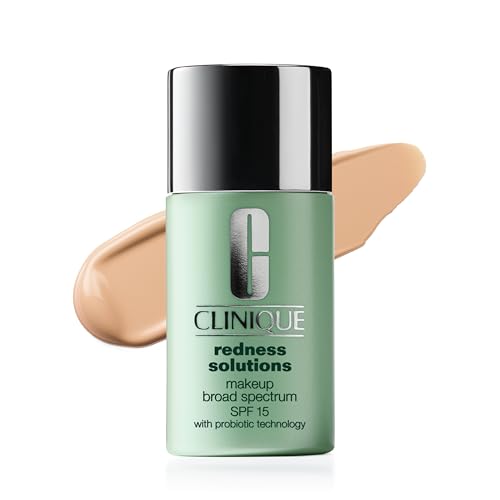

Clinique Redness Solutions Makeup Broad Spectrum SPF 15 With Probiotic Technology
Analysis updated August 2026 · How Scout scores
At a glance
Summary
This sunscreen contains beneficial mineral UV filters like titanium dioxide and zinc oxide, which provide broad-spectrum protection and are considered safe. However, the presence of ethylhexyl methoxycinnamate, a chemical UV filter associated with hormone disruption, lowers the overall safety profile. The product also includes several skin-beneficial ingredients such as glycerin and tocopheryl acetate, which contribute positively to skin health.
Key ingredients 39
Zinc Oxide (Nano)Good
Zinc Oxide is a mineral UV filter that provides broad-spectrum protection against UVA and UVB rays. It is effective and considered safe for use in sunscreens. The nano form allows for a more transparent application.
Risks
Concerns about nanoparticle inhalation, but topical use is generally safe.
Benefits
Offers effective sun protection with minimal skin irritation.
Lactobacillus FermentGood
Lactobacillus Ferment is a probiotic ingredient that helps to balance the skin's microbiome. It can improve skin health and reduce inflammation. It is considered beneficial for sensitive and acne-prone skin.
Risks
There are minimal risks associated with this ingredient.
Benefits
Supports skin health and reduces inflammation.
Astrocaryum Murumuru Seed ButterGood
Murumuru Seed Butter is a natural emollient that helps to moisturize and soften the skin. It is rich in fatty acids and provides nourishment to the skin. It is considered beneficial for dry and sensitive skin.
Risks
There are minimal risks associated with this ingredient.
Benefits
Deeply moisturizes and nourishes the skin.
GlycerinGood
Glycerin is a humectant that helps to draw moisture into the skin, keeping it hydrated. It is widely used in cosmetics for its moisturizing properties. It is considered safe and beneficial for all skin types.
Risks
There are minimal risks associated with this ingredient.
Benefits
Keeps the skin hydrated and improves moisture retention.
Tocopheryl AcetateGood
Tocopheryl Acetate is a form of Vitamin E used for its antioxidant properties. It helps to protect the skin from environmental damage and improve skin health. It is considered beneficial for all skin types.
Risks
There are minimal risks associated with this ingredient.
Benefits
Provides antioxidant protection and improves skin health.
MicaGood
Beneficial ingredient — whole-food or functional value in this product class.
Risks
Inhalation of mica dust can be a concern, but topical application is generally safe.
Benefits
Adds shimmer and enhances the visual appeal of products.
WaterNeutral
Water is a common solvent used in cosmetics to dissolve other ingredients. It helps in the application and absorption of the product. It does not provide any direct benefits or risks.
Risks
There are no significant risks associated with water in cosmetics.
Benefits
Water helps in the even distribution of the product on the skin.
Methyl TrimethiconeNeutral
Methyl Trimethicone is a silicone-based compound used to improve the texture and spreadability of products. It provides a silky feel and helps in forming a protective barrier on the skin. It is generally considered safe for use in cosmetics.
Risks
There are minimal risks, but it may cause mild irritation in sensitive individuals.
Benefits
It enhances the smooth application and provides a matte finish.
Phenyl TrimethiconeNeutral
Phenyl Trimethicone is a silicone derivative that provides a smooth, silky feel to the skin. It is used to enhance the spreadability and longevity of the product. It is considered safe for use in cosmetics.
Risks
May cause mild irritation in sensitive skin types.
Benefits
Improves product texture and provides a non-greasy finish.
TriethylhexanoinNeutral
Triethylhexanoin is an emollient that helps to soften and smooth the skin. It is used to improve the texture and feel of the product. It is generally considered safe for use in cosmetics.
Risks
Minimal risks, though it may cause mild irritation in very sensitive skin.
Benefits
Enhances skin softness and product spreadability.
Butylene GlycolNeutral
Butylene Glycol is a common solvent and conditioning agent in cosmetics. It helps to retain moisture and improve the texture of the product. It is generally safe for use in cosmetics.
Risks
May cause mild irritation in sensitive skin types.
Benefits
Improves skin hydration and product texture.
Titanium DioxideNeutral
Standard formulation ingredient — neither beneficial nor harmful at typical use.
Risks
Inhalation of nanoparticles can be a concern, but topical application is generally safe.
Benefits
Provides effective broad-spectrum sun protection without chemical filters.
TrimethylsiloxysilicateNeutral
Trimethylsiloxysilicate is a silicone resin used to improve the water resistance and longevity of products. It forms a flexible film on the skin, enhancing product durability. It is considered safe for use in cosmetics.
Risks
Minimal risks, though it may cause mild irritation in sensitive skin.
Benefits
Improves product longevity and water resistance.
PEG-10 DimethiconeNeutral
PEG-10 Dimethicone is a silicone-based compound used to improve the texture and spreadability of products. It helps in forming a smooth, even layer on the skin. It is generally considered safe for use in cosmetics.
Risks
May cause mild irritation in sensitive individuals.
Benefits
Enhances product texture and application.
Lauryl PEG-9 Polydimethylsiloxyethyl DimethiconeNeutral
This ingredient is a silicone-based surfactant that helps in emulsifying and spreading the product evenly. It is used to improve the texture and feel of the product. It is generally considered safe for use in cosmetics.
Risks
Minimal risks, though it may cause mild irritation in sensitive skin.
Benefits
Improves product texture and spreadability.
C12-15 Alkyl BenzoateNeutral
C12-15 Alkyl Benzoate is an emollient that helps to soften and smooth the skin. It is used to improve the texture and feel of the product. It is generally considered safe for use in cosmetics.
Risks
Minimal risks, though it may cause mild irritation in sensitive skin.
Benefits
Enhances skin softness and product spreadability.
Citrus Grandis (Grapefruit) Peel ExtractNeutral
Grapefruit Peel Extract is used for its antioxidant properties and potential to improve skin tone. It can help to protect the skin from environmental damage. It is generally considered safe for use in cosmetics.
Risks
May cause mild irritation in sensitive skin types.
Benefits
Provides antioxidant benefits and improves skin tone.
Magnolia Grandiflora Bark ExtractNeutral
Magnolia Bark Extract is known for its anti-inflammatory and antioxidant properties. It can help to soothe the skin and protect it from environmental stressors. It is generally considered safe for use in cosmetics.
Risks
Minimal risks, though it may cause mild irritation in sensitive skin.
Benefits
Soothes the skin and provides antioxidant protection.
Poria Cocos Sclerotium ExtractNeutral
Poria Cocos Extract is used for its potential anti-inflammatory and skin-soothing properties. It can help to calm irritated skin and improve overall skin health. It is generally considered safe for use in cosmetics.
Risks
Minimal risks, though it may cause mild irritation in sensitive skin.
Benefits
Calms irritated skin and supports skin health.
CaffeineNeutral
Caffeine is used in cosmetics for its potential to reduce puffiness and improve circulation. It can help to temporarily tighten and brighten the skin. It is generally considered safe for use in cosmetics.
Risks
May cause mild irritation in sensitive skin types.
Benefits
Reduces puffiness and improves skin appearance.
Caprylyl MethiconeNeutral
Caprylyl Methicone is a silicone-based compound used to improve the texture and spreadability of products. It provides a lightweight, silky feel on the skin. It is generally considered safe for use in cosmetics.
Risks
May cause mild irritation in sensitive skin types.
Benefits
Enhances product texture and provides a smooth application.
Stearic AcidNeutral
Stearic Acid is a fatty acid used as an emulsifier and thickening agent in cosmetics. It helps to stabilize formulations and improve texture. It is generally considered safe for use in cosmetics.
Risks
May cause mild irritation in sensitive skin types.
Benefits
Stabilizes formulations and improves product texture.
MethiconeNeutral
Methicone is a silicone-based compound used to improve the texture and spreadability of products. It forms a protective barrier on the skin, preventing moisture loss. It is generally considered safe for use in cosmetics.
Risks
May cause mild irritation in sensitive skin types.
Benefits
Enhances product texture and provides a smooth, silky feel.
Polyglyceryl-6 PolyricinoleateNeutral
This ingredient is an emulsifier used to stabilize formulations and improve texture. It helps to blend oil and water-based ingredients. It is generally considered safe for use in cosmetics.
Risks
Minimal risks, though it may cause mild irritation in sensitive skin.
Benefits
Stabilizes formulations and improves product texture.
Acetyl GlucosamineNeutral
Acetyl Glucosamine is used for its potential skin-repairing and moisturizing properties. It can help to improve skin texture and reduce signs of aging. It is generally considered safe for use in cosmetics.
Risks
Minimal risks, though it may cause mild irritation in sensitive skin.
Benefits
Improves skin texture and reduces signs of aging.
Disteardimonium HectoriteNeutral
Disteardimonium Hectorite is a thickening agent used to improve the texture and stability of products. It helps to create a smooth, even application. It is generally considered safe for use in cosmetics.
Risks
Minimal risks, though it may cause mild irritation in sensitive skin.
Benefits
Improves product texture and stability.
Isopropyl Titanium TriisostearateNeutral
This ingredient is used as a pigment dispersant and to improve the spreadability of products. It helps to create a smooth, even application. It is generally considered safe for use in cosmetics.
Risks
Minimal risks, though it may cause mild irritation in sensitive skin.
Benefits
Improves pigment dispersion and product application.
Dimethicone Crosspolymer-3Neutral
Dimethicone Crosspolymer-3 is a silicone-based compound used to improve the texture and spreadability of products. It provides a smooth, silky feel on the skin. It is generally considered safe for use in cosmetics.
Risks
May cause mild irritation in sensitive skin types.
Benefits
Enhances product texture and provides a smooth application.
Laureth-7Neutral
Laureth-7 is a surfactant used to improve the texture and spreadability of products. It helps to blend oil and water-based ingredients. It is generally considered safe for use in cosmetics.
Risks
Minimal risks, though it may cause mild irritation in sensitive skin.
Benefits
Improves product texture and spreadability.
Sodium ChlorideNeutral
Sodium Chloride is used as a thickening agent and to improve the texture of products. It helps to stabilize formulations and improve spreadability. It is generally considered safe for use in cosmetics.
Risks
Minimal risks, though it may cause mild irritation in sensitive skin.
Benefits
Stabilizes formulations and improves product texture.
Dipropylene GlycolNeutral
Dipropylene Glycol is a solvent and humectant used to improve the texture and moisture retention of products. It helps to keep the skin hydrated and improve product spreadability. It is generally considered safe for use in cosmetics.
Risks
May cause mild irritation in sensitive skin types.
Benefits
Improves skin hydration and product texture.
Polyaminopropyl BiguanideNeutral
Polyaminopropyl Biguanide is a preservative used to prevent microbial growth in products. It helps to ensure product safety and longevity. It is generally considered safe for use in cosmetics.
Risks
May cause mild irritation in sensitive skin types.
Benefits
Prevents microbial growth and ensures product safety.
Iron Oxides (CI 77491, CI 77492, CI 77499)Neutral
Iron Oxides are mineral pigments used to provide color in cosmetics. They are stable, non-toxic, and provide a range of shades for cosmetic formulations. They are generally considered safe for use in cosmetics.
Risks
There are minimal risks associated with these ingredients.
Benefits
Provide stable, non-toxic color options for cosmetics.
DimethiconeBad
Occlusive silicone film-former — flagged under clean-beauty doctrine.
Risks
May cause mild irritation in sensitive skin types.
Benefits
Enhances product texture and provides a smooth, silky feel.
LecithinBad
Processed additive flagged under Scout's ingredient doctrine.
Risks
Minimal risks, though it may cause mild irritation in sensitive skin.
Benefits
Stabilizes formulations and improves product texture.
Dimethicone/PEG-10/15 CrosspolymerBad
Processed additive flagged under Scout's ingredient doctrine.
Risks
May cause mild irritation in sensitive skin types.
Benefits
Enhances product texture and provides a smooth application.
Disodium EDTABad
Processed additive flagged under Scout's ingredient doctrine.
Risks
Minimal risks, though it may cause mild irritation in sensitive skin.
Benefits
Improves product stability and shelf life.
PhenoxyethanolBad
Processed additive flagged under Scout's ingredient doctrine.
Risks
May cause mild irritation in sensitive skin types.
Benefits
Prevents microbial growth and ensures product safety.
Ethylhexyl MethoxycinnamateVery Bad
Ethylhexyl Methoxycinnamate is a chemical UV filter used to protect the skin from UVB rays. It is effective in preventing sunburn but has been associated with hormone disruption. It is a common ingredient in sunscreens.
Risks
Potential endocrine disruption and skin irritation in sensitive individuals.
Benefits
Provides effective UVB protection, reducing the risk of sunburn.
Get the full breakdown in the Scout appTake Scout shopping
Scan any product to see lab results, healthy alternatives, and your personalized analysis.
Download on theApp Store GET IT ONGoogle PlayAmazon pricing & content
Amazon price as of . Product prices and availability are accurate as of the date/time indicated and are subject to change. Any price and availability information displayed on Amazon.com at the time of purchase will apply to the purchase of this product.
CERTAIN CONTENT THAT APPEARS ON THIS SITE COMES FROM AMAZON. THIS CONTENT IS PROVIDED “AS IS” AND IS SUBJECT TO CHANGE OR REMOVAL AT ANY TIME.