
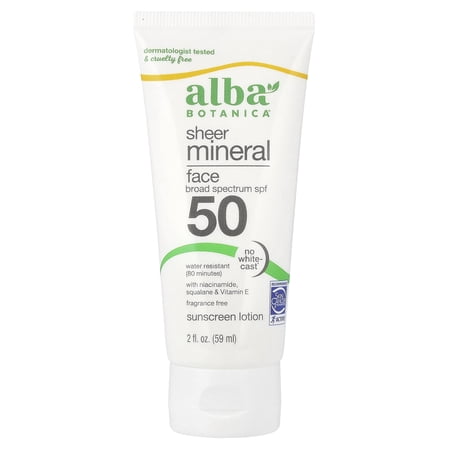
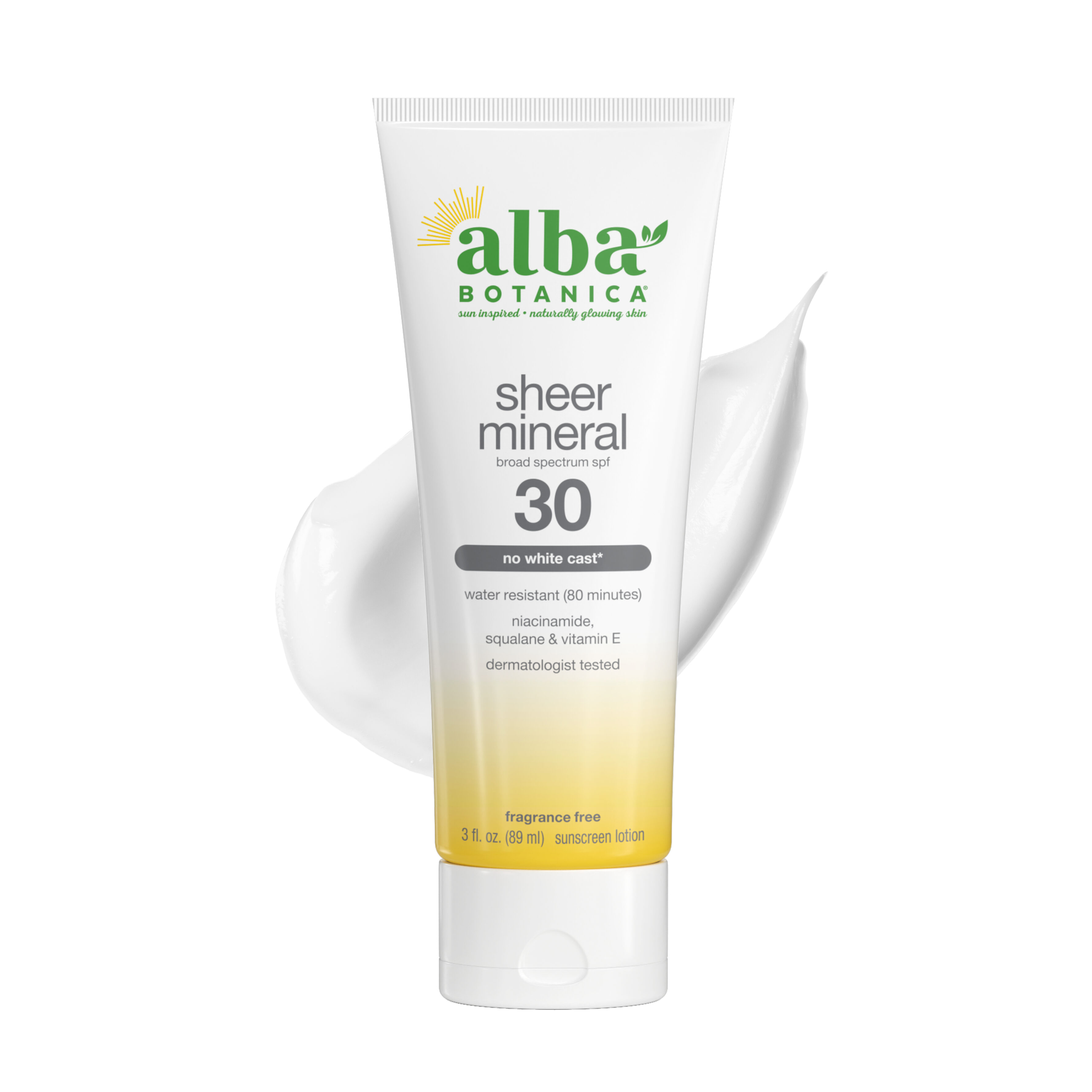
Alba Botanica Sheer Mineral Face Sunscreen Lotion SPF 50 Fragrance Free 2 fl oz (59 ml)
Analysis updated October 2026 · How Scout scores
At a glance
Summary
This sunscreen features zinc oxide as its primary UV filter, which is a mineral-based and safe option for sun protection. It includes beneficial ingredients like niacinamide and squalane, which support skin health and hydration. The presence of phenoxyethanol as a preservative is a minor concern, but it is used in low concentrations, minimizing potential irritation.
Key ingredients 5
SqualaneVery Good
Squalane is a highly effective emollient and natural antioxidant. It mimics the skin's natural oils, making it an excellent moisturizer. It is non-comedogenic and suitable for all skin types.
Risks
Squalane is considered safe with minimal risk of irritation or allergic reaction.
Benefits
It helps to hydrate and maintain the skin's moisture barrier, leaving the skin soft and supple.
Zinc OxideGood
Zinc Oxide is a mineral UV filter that provides broad-spectrum sun protection. It is considered safe and effective for sensitive skin. It is non-comedogenic and does not penetrate the skin, making it a preferred choice for physical sunscreens.
Risks
There are minimal risks associated with Zinc Oxide, primarily related to potential white cast on the skin.
Benefits
It offers excellent protection against both UVA and UVB rays and is suitable for sensitive skin types.
NiacinamideGood
Niacinamide is a form of Vitamin B3 that is known for its anti-inflammatory properties. It helps improve skin texture and tone while reducing redness and blotchiness. It also strengthens the skin barrier and enhances skin elasticity.
Risks
Niacinamide is generally well-tolerated, but in rare cases, it may cause mild irritation.
Benefits
It is beneficial for reducing the appearance of enlarged pores and improving uneven skin tone.
Tocopheryl AcetateGood
Tocopheryl Acetate is a form of Vitamin E, known for its antioxidant properties. It helps protect the skin from free radical damage and supports skin healing. It also acts as a conditioning agent, improving skin texture.
Risks
In rare cases, it may cause skin irritation or allergic reactions.
Benefits
It provides antioxidant protection and helps to maintain skin health and appearance.
PhenoxyethanolBad
Phenoxyethanol is a preservative used to prevent microbial growth in cosmetic products. It is considered a safer alternative to parabens but can still cause irritation. It is often used in low concentrations to minimize potential adverse effects.
Risks
It may cause skin irritation or allergic reactions, especially in sensitive individuals.
Benefits
It effectively preserves the product, extending its shelf life and preventing contamination.
Get the full breakdown in the Scout appTake Scout shopping
Scan any product to see lab results, healthy alternatives, and your personalized analysis.
Download on theApp Store GET IT ONGoogle PlayAmazon pricing & content
Amazon price as of . Product prices and availability are accurate as of the date/time indicated and are subject to change. Any price and availability information displayed on Amazon.com at the time of purchase will apply to the purchase of this product.
CERTAIN CONTENT THAT APPEARS ON THIS SITE COMES FROM AMAZON. THIS CONTENT IS PROVIDED “AS IS” AND IS SUBJECT TO CHANGE OR REMOVAL AT ANY TIME.