
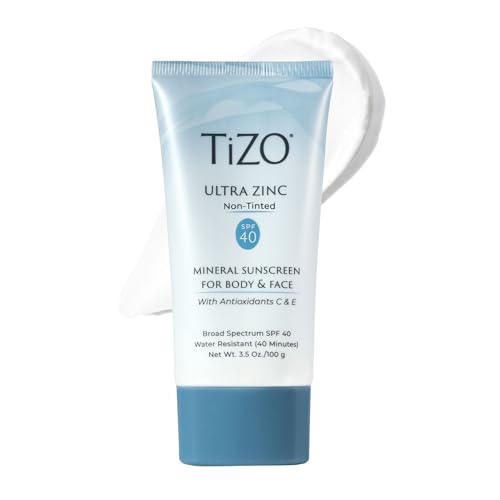
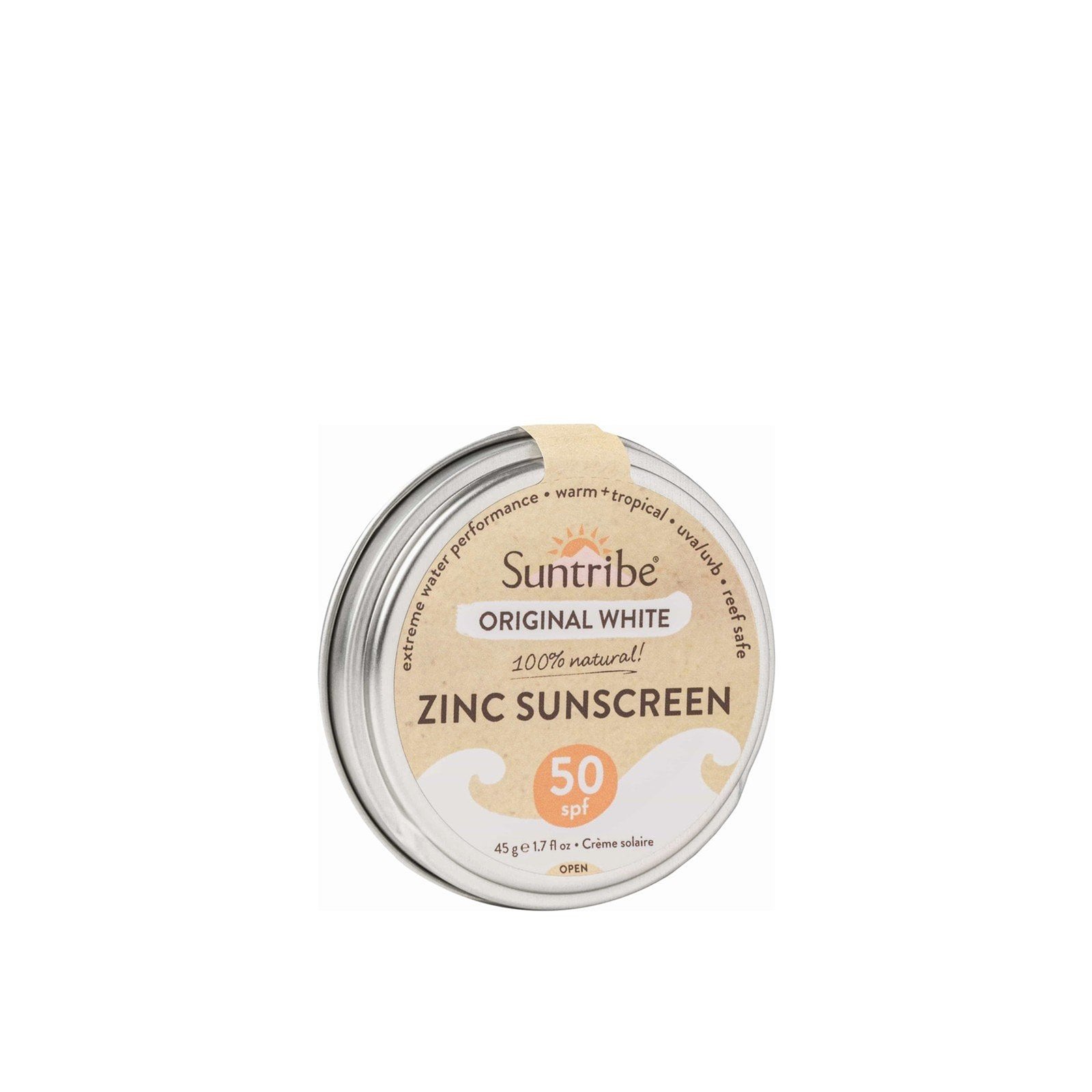
TIZO Age Defying Fusion tinted Ultra Zinc Body & Face Sunscreen SPF 40 3.5 oz
Analysis updated September 2026 · How Scout scores
At a glance
Summary
This sunscreen primarily uses zinc oxide, a mineral UV filter, which is considered safe and effective for broad-spectrum protection. The formulation includes beneficial ingredients like glycerin and tocopheryl acetate, which provide moisturizing and antioxidant benefits. However, the presence of triethanolamine, which can cause skin irritation and has potential contamination concerns, slightly impacts the overall ingredient safety.
Key ingredients 30
Zinc OxideGood
Zinc Oxide is a mineral sunscreen agent that provides broad-spectrum UV protection. It is considered safe and effective for sensitive skin types. It is often used in physical sunscreens due to its ability to reflect UV rays.
Risks
There are minimal risks associated with Zinc Oxide, though it can leave a white cast on the skin.
Benefits
Zinc Oxide is beneficial for its non-irritating, broad-spectrum sun protection properties.
GlycerinGood
Glycerin is a humectant that attracts moisture to the skin, helping to keep it hydrated. It is widely used in skincare for its moisturizing properties.
Risks
There are minimal risks associated with Glycerin, though it may cause irritation in very sensitive individuals.
Benefits
It provides excellent moisturizing benefits and helps to maintain skin hydration.
Iron OxidesGood
Beneficial ingredient — whole-food or functional value in this product class.
Risks
There is a low risk of irritation, especially for those with sensitive skin.
Benefits
They provide natural-looking color and are stable in formulations.
MicaGood
Beneficial ingredient — whole-food or functional value in this product class.
Risks
There is a low risk of irritation, particularly for those with sensitive skin.
Benefits
It provides a natural shimmer and enhances the appearance of the product.
Tocopheryl AcetateGood
Tocopheryl Acetate is a form of Vitamin E used for its antioxidant properties. It helps to protect the skin from free radical damage and improve moisture retention.
Risks
There is a low risk of irritation, particularly for those with sensitive skin.
Benefits
It provides antioxidant benefits and helps to maintain skin hydration.
Bismuth OxychlorideNeutral
Bismuth Oxychloride is used in cosmetics for its shimmery appearance and smooth application. It is generally considered safe for use in makeup products.
Risks
Some individuals may experience skin irritation or allergic reactions to Bismuth Oxychloride.
Benefits
It provides a pearlescent finish and enhances the texture of cosmetic products.
C12-15 Alkyl BenzoateNeutral
C12-15 Alkyl Benzoate is an emollient that helps to improve the texture and spreadability of products. It is commonly used in sunscreens and lotions.
Risks
There are minimal risks associated with this ingredient, though it may cause irritation in sensitive individuals.
Benefits
It enhances the feel of the product on the skin and helps to stabilize formulations.
Caprylhydroxamic AcidNeutral
Caprylhydroxamic Acid is a preservative that helps to prevent microbial growth in cosmetic products. It is considered a safer alternative to parabens.
Risks
There is a low risk of skin irritation with Caprylhydroxamic Acid, especially in sensitive individuals.
Benefits
It effectively preserves the product without the use of traditional parabens.
Caprylyl GlycolNeutral
Caprylyl Glycol is a skin-conditioning agent that also acts as a preservative booster. It is widely used in cosmetics for its moisturizing properties.
Risks
There is a low risk of irritation, particularly for those with sensitive skin.
Benefits
It provides moisturizing benefits and enhances the efficacy of preservatives.
Cetyl PEG/PPG-10/1 DimethiconeNeutral
Cetyl PEG/PPG-10/1 Dimethicone is a silicone-based compound used to improve the texture and spreadability of products. It is commonly used in skincare and cosmetics.
Risks
There is a potential for skin irritation, especially in individuals with silicone sensitivities.
Benefits
It provides a smooth application and enhances the sensory feel of the product.
CyclohexasiloxaneNeutral
Cyclohexasiloxane is a silicone used to improve the texture and spreadability of cosmetic products. It is often used in formulations for its lightweight feel.
Risks
There is a potential for skin irritation, particularly in individuals sensitive to silicones.
Benefits
It provides a silky, smooth application and helps to condition the skin.
CyclopentasiloxaneNeutral
Cyclopentasiloxane is a volatile silicone that provides a silky texture and smooth application in cosmetics. It evaporates quickly, leaving a non-greasy feel.
Risks
There is a low risk of irritation, especially for those with silicone sensitivities.
Benefits
It enhances the spreadability and feel of the product on the skin.
Dimethicone CrosspolymerNeutral
Dimethicone Crosspolymer is a silicone-based ingredient used to improve the texture and spreadability of products. It provides a silky, smooth feel on the skin.
Risks
There is a potential for skin irritation, especially in individuals with silicone sensitivities.
Benefits
It enhances the sensory feel of the product and provides a smooth application.
DimethiconolNeutral
Dimethiconol is a silicone-based polymer used to improve the texture and spreadability of products. It provides a smooth, silky feel on the skin.
Risks
There is a potential for skin irritation, especially in individuals with silicone sensitivities.
Benefits
It enhances the sensory feel of the product and provides a smooth application.
Hydrogen DimethiconeNeutral
Hydrogen Dimethicone is a silicone-based ingredient used to improve the texture and spreadability of products. It provides a smooth, silky feel on the skin.
Risks
There is a potential for skin irritation, particularly in individuals sensitive to silicones.
Benefits
It enhances the sensory feel of the product and provides a smooth application.
Microcrystalline WaxNeutral
Microcrystalline Wax is used to thicken and stabilize cosmetic formulations. It provides a smooth texture and helps to hold the product together.
Risks
There is a low risk of irritation, especially for those with sensitive skin.
Benefits
It enhances the texture and stability of the product.
PEG-10 DimethiconeNeutral
PEG-10 Dimethicone is a silicone-based surfactant used to improve the texture and spreadability of products. It provides a smooth, silky feel on the skin.
Risks
There is a potential for skin irritation, particularly in individuals sensitive to silicones.
Benefits
It enhances the sensory feel of the product and provides a smooth application.
PEG-30 DipolyhydroxystearateNeutral
PEG-30 Dipolyhydroxystearate is an emulsifier used to stabilize cosmetic formulations. It helps to blend oil and water-based ingredients.
Risks
There is a low risk of irritation, especially for those with sensitive skin.
Benefits
It enhances the stability and texture of the product.
Polyglyceryl-4 IsostearateNeutral
Polyglyceryl-4 Isostearate is an emulsifier used to stabilize cosmetic formulations. It helps to blend oil and water-based ingredients.
Risks
There is a low risk of irritation, particularly for those with sensitive skin.
Benefits
It enhances the stability and texture of the product.
Polyhydroxystearic AcidNeutral
Polyhydroxystearic Acid is an emulsifier used to stabilize cosmetic formulations. It helps to blend oil and water-based ingredients.
Risks
There is a low risk of irritation, especially for those with sensitive skin.
Benefits
It enhances the stability and texture of the product.
Polysorbate 20Neutral
Polysorbate 20 is an emulsifier used to stabilize cosmetic formulations. It helps to blend oil and water-based ingredients.
Risks
There is a low risk of irritation, particularly for those with sensitive skin.
Benefits
It enhances the stability and texture of the product.
Sodium ChlorideNeutral
Sodium Chloride is used as a thickening agent in cosmetic formulations. It helps to improve the texture and stability of products.
Risks
There is a low risk of irritation, especially for those with sensitive skin.
Benefits
It enhances the texture and stability of the product.
Stearyl DimethiconeNeutral
Stearyl Dimethicone is a silicone-based ingredient used to improve the texture and spreadability of products. It provides a smooth, silky feel on the skin.
Risks
There is a potential for skin irritation, particularly in individuals sensitive to silicones.
Benefits
It enhances the sensory feel of the product and provides a smooth application.
Tetrahexyldecyl AscorbateNeutral
Tetrahexyldecyl Ascorbate is a stable form of Vitamin C used in skincare for its antioxidant properties. It helps to brighten the skin and reduce signs of aging.
Risks
There is a low risk of irritation, especially for those with sensitive skin.
Benefits
It provides antioxidant benefits and helps to improve skin tone.
TriethoxycaprylylsilaneNeutral
Triethoxycaprylylsilane is a silicone-based ingredient used to improve the texture and spreadability of products. It provides a smooth, silky feel on the skin.
Risks
There is a potential for skin irritation, particularly in individuals sensitive to silicones.
Benefits
It enhances the sensory feel of the product and provides a smooth application.
WaterNeutral
Water is used as a solvent in cosmetic formulations. It helps to dissolve other ingredients and provides a base for the product.
Risks
There are minimal risks associated with water in cosmetic formulations.
Benefits
It acts as a solvent and helps to hydrate the skin.
DimethiconeBad
Occlusive silicone film-former — flagged under clean-beauty doctrine.
Risks
There is a potential for skin irritation, particularly in individuals sensitive to silicones.
Benefits
It provides a smooth application and helps to lock in moisture.
Dimethicone/Vinyl Dimethicone CrosspolymerBad
Processed additive flagged under Scout's ingredient doctrine.
Risks
There is a potential for skin irritation, particularly in individuals sensitive to silicones.
Benefits
It enhances the sensory feel of the product and provides a smooth application.
Disodium EDTABad
Processed additive flagged under Scout's ingredient doctrine.
Risks
There is a low risk of skin irritation, particularly for those with sensitive skin.
Benefits
It enhances the stability and shelf life of the product.
TriethanolamineBad
Triethanolamine is used as a pH balancer in cosmetic formulations. However, it can cause skin irritation and has potential contamination concerns with nitrosamines.
Risks
There is a risk of skin irritation and potential contamination with carcinogenic nitrosamines.
Benefits
It helps to stabilize the pH of cosmetic formulations.
Get the full breakdown in the Scout appTake Scout shopping
Scan any product to see lab results, healthy alternatives, and your personalized analysis.
Download on theApp Store GET IT ONGoogle PlayAmazon pricing & content
Amazon price as of . Product prices and availability are accurate as of the date/time indicated and are subject to change. Any price and availability information displayed on Amazon.com at the time of purchase will apply to the purchase of this product.
CERTAIN CONTENT THAT APPEARS ON THIS SITE COMES FROM AMAZON. THIS CONTENT IS PROVIDED “AS IS” AND IS SUBJECT TO CHANGE OR REMOVAL AT ANY TIME.