
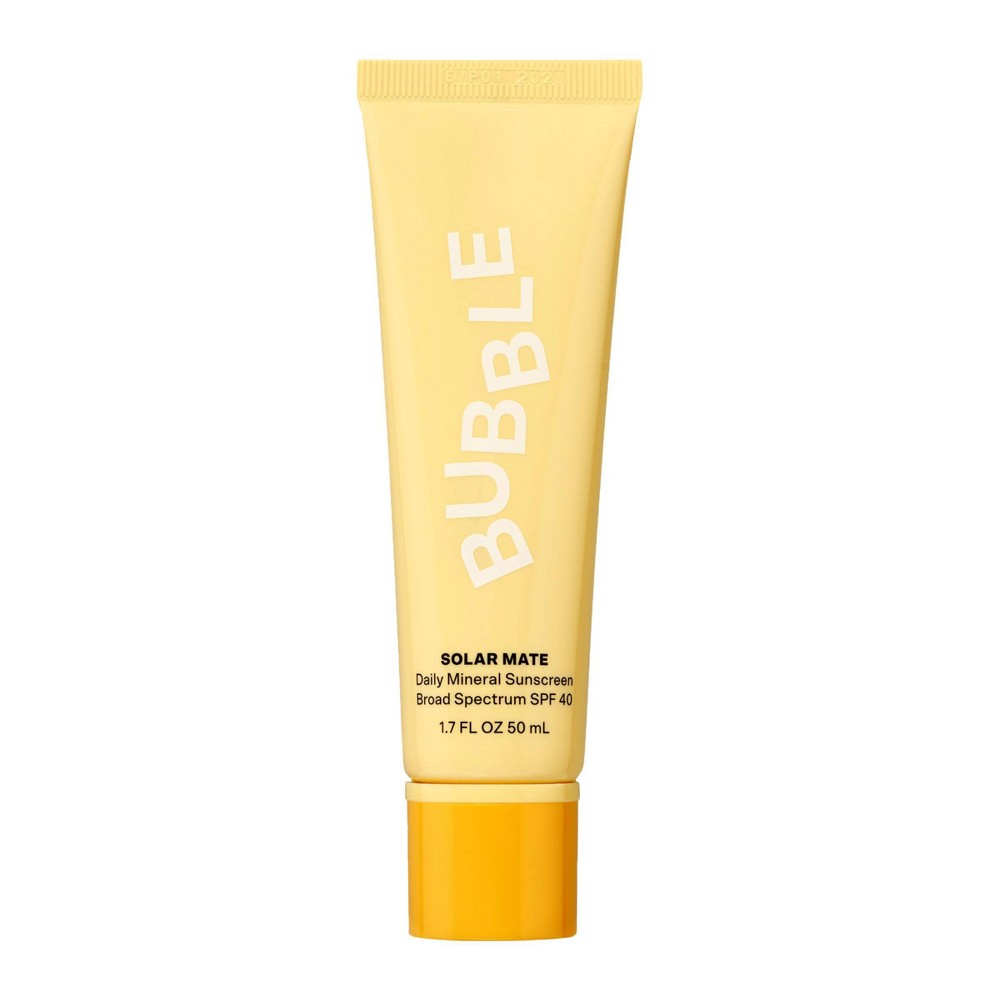


Bubble Skincare Solar Mate Mineral Sunscreen - SPF 40 - 1.7 fl oz: Zinc Oxide, Aluminum-Free, Vegan Formula
Analysis updated August 2026 · How Scout scores
At a glance
Summary
This mineral sunscreen features zinc oxide as its active ingredient, providing broad-spectrum UV protection without the risks associated with chemical filters. The formula includes beneficial ingredients like glycerin and raspberry seed oil, which offer moisturizing and antioxidant benefits. However, the presence of phenoxyethanol, a synthetic preservative, slightly detracts from its overall natural profile, though it remains a safe choice for most users.
Key ingredients 5
Rubus Idaeus (Raspberry) Seed OilVery Good
Raspberry Seed Oil is rich in essential fatty acids and antioxidants, providing nourishment and protection to the skin. It has anti-inflammatory properties and can help soothe irritated skin. It also offers some natural UV protection.
Risks
There are minimal risks associated with Raspberry Seed Oil, primarily related to potential allergic reactions in sensitive individuals.
Benefits
Raspberry Seed Oil provides antioxidant protection and helps improve skin elasticity and hydration.
Zinc OxideGood
Zinc Oxide is a mineral sunscreen agent that provides broad-spectrum UV protection. It is considered safe and effective for sensitive skin. It is non-comedogenic and does not penetrate the skin, making it a preferred choice for physical sunblocks.
Risks
There are minimal risks associated with Zinc Oxide, primarily related to potential whitening effect on the skin.
Benefits
Zinc Oxide offers excellent protection against both UVA and UVB rays and is suitable for sensitive skin types.
GlycerinGood
Glycerin is a humectant that attracts moisture to the skin, helping to keep it hydrated. It is widely used in skincare products due to its moisturizing properties. It is non-irritating and suitable for all skin types.
Risks
There are no significant risks associated with Glycerin when used in skincare products.
Benefits
Glycerin helps maintain skin hydration and improves skin barrier function.
Panax Ginseng Root ExtractGood
Panax Ginseng Root Extract is known for its antioxidant and anti-aging properties. It helps to revitalize and rejuvenate the skin, improving its overall appearance. It also has anti-inflammatory effects, which can benefit sensitive skin.
Risks
There are minimal risks associated with Panax Ginseng Root Extract, primarily related to potential allergic reactions.
Benefits
Panax Ginseng Root Extract helps improve skin tone and texture, providing anti-aging benefits.
PhenoxyethanolBad
Phenoxyethanol is a preservative used to prevent microbial growth in cosmetic products. While it is considered safe in low concentrations, it can cause irritation in some individuals. It is a synthetic compound, which may not be preferred by those seeking natural products.
Risks
Phenoxyethanol can cause skin irritation and allergic reactions in sensitive individuals.
Benefits
Phenoxyethanol helps preserve the product by preventing bacterial and fungal growth.
Get the full breakdown in the Scout appTake Scout shopping
Scan any product to see lab results, healthy alternatives, and your personalized analysis.
Download on theApp Store GET IT ONGoogle PlayAmazon pricing & content
Amazon price as of . Product prices and availability are accurate as of the date/time indicated and are subject to change. Any price and availability information displayed on Amazon.com at the time of purchase will apply to the purchase of this product.
CERTAIN CONTENT THAT APPEARS ON THIS SITE COMES FROM AMAZON. THIS CONTENT IS PROVIDED “AS IS” AND IS SUBJECT TO CHANGE OR REMOVAL AT ANY TIME.