
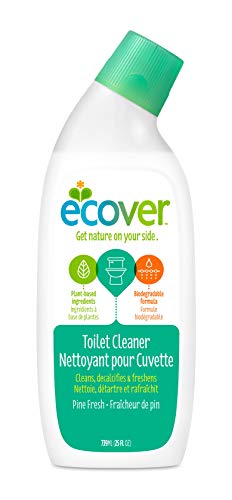


Ecover Toilet Bowl Cleaner Pine Fresh 25 Ounce
Summary
This product contains beneficial ingredients like citric acid, lauryl glucoside, and sodium citrate, which are biodegradable and effective for cleaning. However, the presence of synthetic fragrance, which can contribute to indoor air pollution and potential allergic reactions, impacts its overall safety and environmental friendliness. The product is processed, which limits its maximum potential score.
At a glance
Key ingredients 8
AquaNeutral
Aqua, or water, is a common solvent used in cleaning products. It helps dissolve other ingredients and facilitates the cleaning process. It is generally considered safe and non-toxic.
Risks
There are no significant risks associated with water in cleaning products.
Benefits
Water is essential for dissolving and distributing other cleaning agents effectively.
Citric acidGood
Citric acid is a natural acid found in citrus fruits, used for its cleaning and descaling properties. It is effective in breaking down mineral deposits and soap scum. It is biodegradable and considered safe for use in cleaning products.
Risks
In high concentrations, citric acid can cause skin irritation.
Benefits
Citric acid is a natural, biodegradable ingredient that effectively cleans and descales surfaces.
Lauryl glucosideGood
Lauryl glucoside is a mild, plant-derived surfactant used for its foaming and cleansing properties. It is derived from glucose and lauryl alcohol, making it biodegradable and gentle on the skin. It is considered a safer alternative to harsher surfactants like SLS.
Risks
There are minimal risks associated with lauryl glucoside, though it may cause mild irritation in sensitive individuals.
Benefits
Lauryl glucoside is a gentle, biodegradable surfactant that effectively cleans without harshness.
Sodium citrateGood
Sodium citrate is the sodium salt of citric acid, used as a water softener and pH regulator in cleaning products. It helps enhance the effectiveness of other cleaning agents. It is biodegradable and considered safe for use.
Risks
Sodium citrate is generally safe, but excessive exposure may cause mild irritation.
Benefits
Sodium citrate is a biodegradable ingredient that improves cleaning efficiency and regulates pH.
Xanthan gumNeutral
Xanthan gum is a polysaccharide used as a thickening agent in cleaning products. It helps stabilize formulations and improve texture. It is derived from natural sources and is generally considered safe.
Risks
Xanthan gum is generally safe, but inhalation of powder form can cause respiratory issues.
Benefits
Xanthan gum stabilizes and thickens cleaning formulations, enhancing product consistency.
FragranceBad
Fragrance in cleaning products often refers to synthetic scents used to mask odors. These can contain phthalates and other chemicals that may cause allergic reactions or respiratory issues. Synthetic fragrances are not biodegradable and can contribute to indoor air pollution.
Risks
Synthetic fragrances can cause skin irritation, allergic reactions, and respiratory issues.
Benefits
Fragrances can improve the sensory experience of using cleaning products by providing a pleasant scent.
Sodium benzoateNeutral
Sodium benzoate is a preservative used to prevent microbial growth in cleaning products. It is effective in extending the shelf life of products. It is generally recognized as safe in low concentrations.
Risks
Sodium benzoate can cause skin irritation in sensitive individuals.
Benefits
Sodium benzoate helps maintain product stability by preventing microbial contamination.
LinaloolNeutral
Linalool is a naturally occurring terpene alcohol found in many flowers and spice plants, used for its pleasant scent. It is commonly used in fragrances and is generally considered safe. However, it can oxidize and cause allergic reactions in some individuals.
Risks
Linalool can cause allergic reactions in sensitive individuals, especially when oxidized.
Benefits
Linalool provides a natural floral scent, enhancing the fragrance profile of cleaning products.
Processing
Processed Foods
Get the full breakdown in the Scout app
Scan any product to see lab results, healthy alternatives, and your personalized analysis.
Download on theApp Store