
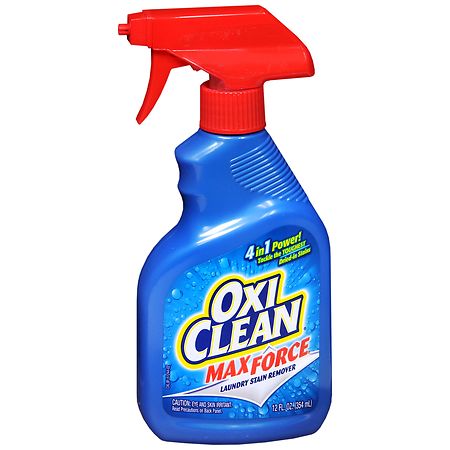

OxiClean MaxForce Laundry Stain Remover Spray - 12 fl oz: Phosphate-Free, Not for Wool or Silk
Analysis updated August 2026 · How Scout scores
At a glance
Summary
This product contains beneficial ingredients like citric acid and various enzymes that enhance cleaning power and are biodegradable. However, it also includes potentially harmful components such as sodium hydroxide, synthetic fragrances, and preservatives like benzisothiazolinone and methylisothiazolinone, which can cause skin irritation and allergic reactions. The presence of these ingredients, along with the product's processed nature, impacts its overall safety and environmental friendliness.
Key ingredients 15
PROTEASE ENZYMEGood
Protease enzymes break down protein-based stains. They are derived from natural sources and are biodegradable. They enhance the cleaning power of the product.
Risks
May cause mild skin irritation in sensitive individuals.
Benefits
Effective in removing protein-based stains and biodegradable.
AMYLASE ENZYMEGood
Amylase enzymes break down starch-based stains. They are derived from natural sources and are biodegradable. They improve the cleaning efficiency of the product.
Risks
May cause mild skin irritation in sensitive individuals.
Benefits
Effective in removing starch-based stains and biodegradable.
MANNANASE ENZYMEGood
Mannanase enzymes break down mannan-based stains. They are derived from natural sources and are biodegradable. They enhance the cleaning power of the product.
Risks
May cause mild skin irritation in sensitive individuals.
Benefits
Effective in removing mannan-based stains and biodegradable.
WATERNeutral
Water is a common solvent used in cleaning products. It helps dissolve other ingredients and facilitates application. It is generally considered safe and non-toxic.
Risks
There are no significant risks associated with water in cleaning products.
Benefits
Water acts as a carrier for other ingredients, aiding in their distribution and effectiveness.
C10-16 ALKETHNeutral
C10-16 Alketh is a surfactant used to help remove dirt and stains. It is a synthetic compound derived from alcohols. Its safety profile is generally acceptable for cleaning purposes.
Risks
May cause mild skin irritation upon prolonged contact.
Benefits
Effective in breaking down and removing stains and dirt.
SODIUM BORATENeutral
Sodium borate, also known as borax, is used as a cleaning agent and pH buffer. It enhances the cleaning power of detergents. It is generally safe in controlled amounts.
Risks
May cause skin irritation and is harmful if ingested in large quantities.
Benefits
Improves cleaning efficiency and stabilizes the product's pH.
CITRIC ACIDNeutral
Common acidulant and preservative — safe at typical use levels, neither beneficial nor harmful.
Risks
May cause mild skin irritation in sensitive individuals.
Benefits
Biodegradable and effective in breaking down stains and mineral deposits.
ALKYL IMINO DIPROPIONIC ACID, MONOSODIUM SALTNeutral
This compound is used as a surfactant and cleaning agent. It helps in the removal of dirt and stains. It is generally considered safe for use in cleaning products.
Risks
Potential for mild skin irritation with prolonged exposure.
Benefits
Enhances the cleaning power of the product.
MODIFIED ACRYLIC COPOLYMERNeutral
Modified acrylic copolymer is used as a film-forming agent. It helps in the adhesion of the product to surfaces. It is generally safe for use in cleaning products.
Risks
May cause skin irritation if not rinsed properly.
Benefits
Improves product adherence and cleaning efficiency.
SODIUM HYDROXIDENeutral
Standard formulation ingredient — neither beneficial nor harmful at typical use.
Risks
Can cause severe skin and eye irritation or burns.
Benefits
Effective in breaking down tough stains and organic matter.
CALCIUM CHLORIDENeutral
Calcium chloride is used as a stabilizer and moisture absorber. It helps maintain the product's consistency. It is generally considered safe for use in cleaning products.
Risks
May cause mild skin irritation upon contact.
Benefits
Helps stabilize the product and maintain its consistency.
PROPYLENE GLYCOLBad
Processed additive flagged under Scout's ingredient doctrine.
Risks
Can cause skin irritation in sensitive individuals.
Benefits
Helps maintain product consistency and enhances cleaning performance.
FRAGRANCESBad
Fragrances are added to provide a pleasant scent. They are often synthetic and can contain allergens. There is a risk of skin irritation and allergic reactions.
Risks
Potential allergens and skin irritants.
Benefits
Provides a pleasant scent to the product.
BENZISOTHIAZOLINONEBad
Benzisothiazolinone is a preservative used to prevent microbial growth. It is effective but can cause skin sensitization. It is considered a potential allergen.
Risks
Potential skin sensitizer and allergen.
Benefits
Prevents microbial growth, extending product shelf life.
METHYLISOTHIAZOLINONEVery Bad
Methylisothiazolinone is a preservative used to prevent microbial growth. It is effective but can cause skin sensitization. It is considered a potential allergen.
Risks
Potential skin sensitizer and allergen.
Benefits
Prevents microbial growth, extending product shelf life.
Get the full breakdown in the Scout appTake Scout shopping
Scan any product to see lab results, healthy alternatives, and your personalized analysis.
Download on theApp Store GET IT ONGoogle PlayAmazon pricing & content
Amazon price as of . Product prices and availability are accurate as of the date/time indicated and are subject to change. Any price and availability information displayed on Amazon.com at the time of purchase will apply to the purchase of this product.
CERTAIN CONTENT THAT APPEARS ON THIS SITE COMES FROM AMAZON. THIS CONTENT IS PROVIDED “AS IS” AND IS SUBJECT TO CHANGE OR REMOVAL AT ANY TIME.