
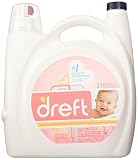
Dreft Laundry Detergent - 170 oz -110 load size-NEW BIGGER SIZE
Analysis updated August 2026 · How Scout scores
At a glance
Summary
Dreft Stage 1 Newborn Baby Liquid Laundry Detergent contains synthetic fragrances, which can be irritating and are not environmentally friendly. However, it does not contain harsher chemicals like sodium lauryl sulfate or bleach, which are more detrimental to health and the environment. The product's formulation is moderately processed with some synthetic components, but it avoids the most harmful ingredients found in lower-scoring detergents.
Key ingredients 5
C10-16 ParethNeutral
C10-16 Pareth is a nonionic surfactant used for its cleaning properties. It is generally considered mild and effective in removing dirt and oils. However, it is not plant-derived and lacks significant environmental benefits.
Risks
There is a potential for skin irritation in sensitive individuals.
Benefits
It is effective in cleaning and removing stains from fabrics.
Sodium C10-16 AlkylbenzenesulfonateNeutral
Sodium C10-16 Alkylbenzenesulfonate is a synthetic surfactant known for its strong cleaning power. It is commonly used in detergents for its ability to break down grease and oils. However, it is not biodegradable and can be harsh on the skin.
Risks
It may cause skin irritation and is not environmentally friendly.
Benefits
It provides effective cleaning and stain removal.
Sodium Salts of C12-18 Fatty AcidsNeutral
Sodium Salts of C12-18 Fatty Acids are used as surfactants and emulsifiers in cleaning products. They are derived from natural fatty acids and are generally considered safe. However, they do not offer significant environmental benefits.
Risks
There is minimal risk of skin irritation.
Benefits
They help in emulsifying and stabilizing the detergent formula.
Sodium CitrateNeutral
Standard formulation ingredient — neither beneficial nor harmful at typical use.
Risks
There are minimal risks associated with its use.
Benefits
It is biodegradable and helps improve the cleaning power of the detergent.
Sodium Lauryl SulfateVery Bad
Sodium Lauryl Sulfate (SLS) is a harsh surfactant known for its strong cleaning and foaming properties. It is widely used in cleaning products but is a known skin irritant. Despite its effectiveness, it is not considered safe for sensitive skin.
Risks
SLS can cause skin irritation and dryness, especially in sensitive individuals.
Benefits
It is effective in removing dirt and grease.
Get the full breakdown in the Scout appTake Scout shopping
Scan any product to see lab results, healthy alternatives, and your personalized analysis.
Download on theApp Store GET IT ONGoogle Play