
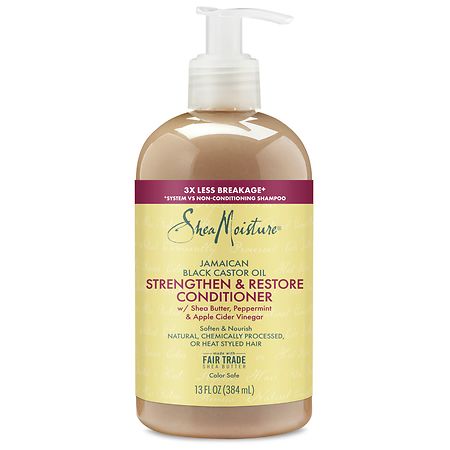


SheaMoisture Strength and Restore Daily Conditioner Jamaican Black Castor Oil 13 fl oz Bottle
Analysis updated August 2026 · How Scout scores
At a glance
Summary
This conditioner contains a variety of beneficial natural oils and butters, such as shea butter, coconut oil, and jojoba oil, which are known for their moisturizing and nourishing properties. The presence of hydrolyzed proteins and panthenol further supports hair health by strengthening and conditioning. However, the inclusion of synthetic fragrance, which can cause irritation or allergic reactions, slightly detracts from its overall ingredient safety.
Key ingredients 29
Butyrospermum Parkii (Shea) ButterVery Good
Shea Butter is a natural fat extracted from the nuts of the shea tree. It is highly moisturizing and helps to condition the hair. It is rich in vitamins and fatty acids, making it beneficial for hair health.
Risks
There are minimal risks, though individuals with nut allergies should exercise caution.
Benefits
Shea Butter deeply moisturizes and nourishes the hair, improving its softness and manageability.
Cocos Nucifera (Coconut) OilVery Good
Coconut Oil is a natural oil known for its conditioning properties. It penetrates the hair shaft to provide deep moisture and reduce protein loss. It is widely used for its ability to improve hair health and shine.
Risks
Overuse can lead to buildup, making hair greasy.
Benefits
Coconut Oil strengthens and conditions the hair, enhancing its luster and reducing breakage.
Ricinus Communis (Castor) Seed OilVery Good
Castor Oil is a natural oil known for its conditioning and strengthening properties. It is rich in fatty acids that nourish the hair and scalp. It is often used to promote hair growth and improve hair health.
Risks
Overuse can lead to buildup, making hair greasy.
Benefits
Castor Oil enhances hair strength and shine, and may support hair growth.
Macadamia Ternifolia Seed OilVery Good
Macadamia Oil is a lightweight oil that provides deep hydration and nourishment to the hair. It is rich in fatty acids and antioxidants, which help to protect and repair the hair. It is known for its ability to improve hair elasticity and shine.
Risks
There are minimal risks, though individuals with nut allergies should exercise caution.
Benefits
Macadamia Oil moisturizes and strengthens the hair, enhancing its softness and manageability.
Simmondsia Chinensis (Jojoba) Seed OilVery Good
Jojoba Oil is a natural oil that closely resembles the sebum produced by the scalp. It provides deep conditioning and helps to balance oil production. It is known for its ability to moisturize and protect the hair.
Risks
There are minimal risks associated with Jojoba Oil.
Benefits
Jojoba Oil conditions and nourishes the hair, improving its texture and shine.
Mauritia Flexuosa (Buriti) Fruit OilVery Good
Buriti Oil is rich in vitamins and fatty acids, providing nourishment and hydration to the hair. It is known for its antioxidant properties, which help to protect the hair from environmental damage. It is often used to enhance hair shine and softness.
Risks
There are minimal risks associated with Buriti Oil.
Benefits
Buriti Oil deeply moisturizes and protects the hair, enhancing its luster and health.
Glycerin (Vegetable)Good
Glycerin is a humectant that attracts moisture to the hair. It helps to keep the hair hydrated and prevents dryness. It is derived from vegetable oils and is considered safe and effective.
Risks
In very humid conditions, it may draw too much moisture, causing frizz.
Benefits
Glycerin helps to maintain moisture balance in the hair, enhancing its softness and elasticity.
Hydrolyzed KeratinGood
Hydrolyzed Keratin is a protein that helps to strengthen and repair the hair. It penetrates the hair shaft to improve elasticity and reduce breakage. It is widely used in hair care products for its ability to enhance hair strength and resilience.
Risks
There are minimal risks, though overuse can lead to protein buildup.
Benefits
It strengthens and repairs damaged hair, improving its overall health and appearance.
NiacinGood
Niacin, also known as Vitamin B3, is used to improve scalp health and promote hair growth. It enhances blood circulation to the scalp, supporting healthy hair follicles. It is considered safe and beneficial for hair care.
Risks
There are minimal risks associated with Niacin in hair care products.
Benefits
Niacin supports healthy hair growth and improves scalp health.
Hydrolyzed Rice ProteinGood
Hydrolyzed Rice Protein is a plant-derived protein that helps to strengthen and volumize the hair. It improves hair elasticity and reduces breakage. It is considered safe and effective for enhancing hair strength.
Risks
There are minimal risks, though overuse can lead to protein buildup.
Benefits
It strengthens and volumizes the hair, enhancing its body and resilience.
TocopherolGood
Tocopherol, or Vitamin E, is an antioxidant that helps to protect the hair from environmental damage. It supports healthy hair growth and improves hair texture. It is widely used in hair care products for its protective and nourishing properties.
Risks
There are minimal risks associated with Tocopherol.
Benefits
Tocopherol protects and nourishes the hair, enhancing its health and appearance.
Hydrolyzed Wheat ProteinGood
Hydrolyzed Wheat Protein is a protein that helps to strengthen and repair the hair. It improves hair elasticity and reduces breakage. It is widely used in hair care products for its ability to enhance hair strength and resilience.
Risks
There are minimal risks, though overuse can lead to protein buildup.
Benefits
It strengthens and repairs damaged hair, improving its overall health and appearance.
Mentha Piperita (Peppermint) Leaf ExtractGood
Peppermint Leaf Extract is known for its cooling and soothing properties. It helps to invigorate the scalp and promote healthy hair growth. It is often used for its refreshing scent and scalp-stimulating effects.
Risks
In high concentrations, it may cause irritation to sensitive scalps.
Benefits
Peppermint Leaf Extract invigorates the scalp and promotes healthy hair growth.
Aloe Barbadensis Leaf JuiceGood
Aloe Vera is known for its hydrating and soothing properties. It helps to moisturize the hair and scalp, reducing dryness and irritation. It is widely used in hair care products for its ability to improve hair health and manageability.
Risks
There are minimal risks associated with Aloe Vera.
Benefits
Aloe Vera hydrates and soothes the hair and scalp, enhancing overall hair health.
PanthenolGood
Panthenol, or Provitamin B5, is a humectant that helps to retain moisture in the hair. It improves hair elasticity and reduces breakage. It is widely used in hair care products for its conditioning and strengthening properties.
Risks
There are minimal risks associated with Panthenol.
Benefits
Panthenol strengthens and conditions the hair, enhancing its softness and resilience.
WaterNeutral
Water is a common solvent used in cosmetic formulations. It helps to dissolve other ingredients and provides a base for the conditioner. It is generally considered safe and non-reactive.
Risks
There are no significant risks associated with water in cosmetic products.
Benefits
Water helps to hydrate and distribute other beneficial ingredients evenly throughout the hair.
Stearyl AlcoholNeutral
Stearyl Alcohol is a fatty alcohol used as an emollient and thickener. It helps to soften and smooth the hair. It is generally considered safe and non-irritating.
Risks
There are minimal risks associated with Stearyl Alcohol, though it may cause mild irritation in sensitive individuals.
Benefits
It provides conditioning benefits and helps to improve the texture of the hair.
Cetyl AlcoholNeutral
Standard formulation ingredient — neither beneficial nor harmful at typical use.
Risks
There are minimal risks, though it may cause mild irritation in sensitive individuals.
Benefits
It provides conditioning benefits and helps to stabilize the formulation.
Behentrimonium ChlorideNeutral
Behentrimonium Chloride is a conditioning agent that helps to detangle and smooth the hair. It is effective in reducing static and frizz. It is generally considered safe for use in hair care products.
Risks
In high concentrations, it may cause irritation to the skin and eyes.
Benefits
It improves hair manageability and reduces frizz, making hair easier to style.
HydroxyethylcelluloseNeutral
Hydroxyethylcellulose is a thickening agent used to improve the texture of the product. It helps to stabilize the formulation and enhance its spreadability. It is considered safe and non-irritating.
Risks
There are minimal risks associated with its use in cosmetics.
Benefits
It improves the consistency of the product, making it easier to apply.
Acetic Acid (Apple Cider)Neutral
Acetic Acid, derived from apple cider, is used to balance the pH of the product. It can help to clarify the hair and remove buildup. It is generally considered safe in cosmetic formulations.
Risks
In high concentrations, it may cause irritation to the skin and scalp.
Benefits
It helps to maintain the pH balance of the hair, promoting a healthy scalp environment.
Glycine Soja (Soybean) OilNeutral
Soybean Oil is a plant-derived oil used for its emollient properties. It helps to condition and soften the hair. It is generally considered safe and non-irritating.
Risks
There are minimal risks, though individuals with soy allergies should exercise caution.
Benefits
Soybean Oil conditions and softens the hair, improving its texture.
Hydrolyzed Wheat StarchNeutral
Hydrolyzed Wheat Starch is used as a thickening and conditioning agent in hair care products. It helps to improve the texture and manageability of the hair. It is generally considered safe and non-irritating.
Risks
There are minimal risks associated with Hydrolyzed Wheat Starch.
Benefits
It improves hair texture and manageability, enhancing the overall feel of the hair.
Trifolium Pratense (Clover) Flower ExtractNeutral
Clover Flower Extract is used for its conditioning and soothing properties. It helps to improve scalp health and support hair growth. It is generally considered safe and non-irritating.
Risks
There are minimal risks associated with Clover Flower Extract.
Benefits
It conditions the hair and supports a healthy scalp environment.
Caprylhydroxamic AcidNeutral
Caprylhydroxamic Acid is a preservative used to prevent microbial growth in cosmetic products. It is effective in maintaining product stability and safety. It is considered safe for use in cosmetics.
Risks
There are minimal risks associated with Caprylhydroxamic Acid.
Benefits
It helps to preserve the product, ensuring its safety and longevity.
Caprylyl GlycolNeutral
Caprylyl Glycol is a humectant and skin conditioning agent. It helps to retain moisture in the hair and improve its texture. It is generally considered safe and non-irritating.
Risks
There are minimal risks associated with Caprylyl Glycol.
Benefits
It helps to maintain moisture balance in the hair, enhancing its softness and manageability.
CaramelBad
Processed additive flagged under Scout's ingredient doctrine.
Risks
There are minimal risks associated with Caramel.
Benefits
It provides natural coloring to the product, enhancing its visual appeal.
Yeast ExtractBad
Concentrated glutamate source — MSG-adjacent flavor enhancer.
Risks
There are minimal risks associated with Yeast Extract.
Benefits
It conditions and nourishes the hair, supporting overall hair health.
FragranceVery Bad
Fragrance is used to impart a pleasant scent to the product. However, it can contain a mixture of chemicals that may cause irritation or allergic reactions. It is often criticized for its lack of transparency regarding specific components.
Risks
Fragrance can cause skin irritation, allergic reactions, and may trigger asthma in sensitive individuals.
Benefits
It enhances the sensory experience of using the product.
Processing
Processed Foods
Get the full breakdown in the Scout appTake Scout shopping
Scan any product to see lab results, healthy alternatives, and your personalized analysis.
Download on theApp Store GET IT ONGoogle PlayAmazon pricing & content
Amazon price as of . Product prices and availability are accurate as of the date/time indicated and are subject to change. Any price and availability information displayed on Amazon.com at the time of purchase will apply to the purchase of this product.
CERTAIN CONTENT THAT APPEARS ON THIS SITE COMES FROM AMAZON. THIS CONTENT IS PROVIDED “AS IS” AND IS SUBJECT TO CHANGE OR REMOVAL AT ANY TIME.