
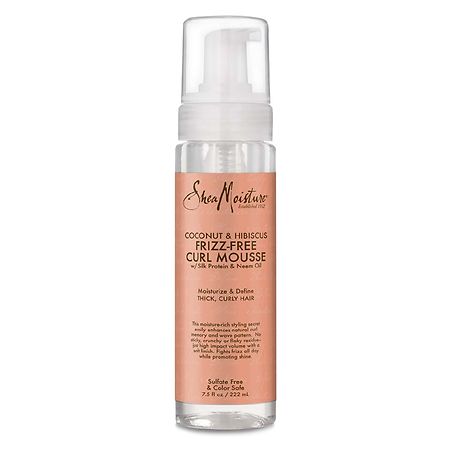

SheaMoisture Coconut and Hibiscus Frizz-Free Curl Mousse - 7.5 fl oz: Shine Enhancing, Sulfate-Free, Daily Use
Analysis updated August 2026 · How Scout scores
At a glance
Summary
This product contains several beneficial natural ingredients such as shea butter, coconut oil, and neem seed oil, which are known for their moisturizing and soothing properties. However, the presence of 'fragrance' as an ingredient is a potential irritant and detracts from the overall safety profile. The product is moderately processed, which also impacts its rating.
Key ingredients 18
Butyrospermum Parkii (Shea) ButterVery Good
Shea Butter is a natural fat extracted from the nuts of the shea tree. It is highly moisturizing and contains vitamins A and E, which are beneficial for skin health. It is known for its anti-inflammatory and healing properties.
Risks
Rarely, it may cause allergic reactions in individuals with nut allergies.
Benefits
Deeply moisturizes and nourishes the skin, improving elasticity and reducing inflammation.
PanthenolVery Good
Panthenol is a form of Vitamin B5 that is used as a moisturizer and to improve skin barrier function. It helps to retain moisture and improve the texture of skin and hair. It is well-tolerated and beneficial for most skin types.
Risks
Generally considered safe with minimal risk of irritation.
Benefits
Enhances skin hydration and improves the appearance of skin and hair.
Cocos Nucifera (Coconut) OilVery Good
Coconut Oil is a natural oil known for its moisturizing and antibacterial properties. It helps to nourish and protect the skin and hair. It is rich in fatty acids that provide deep hydration.
Risks
May cause breakouts in acne-prone skin due to its comedogenic nature.
Benefits
Provides deep hydration and nourishment, enhancing skin and hair health.
Hibiscus Rosa-Sinensis Flower ExtractGood
Hibiscus Extract is rich in antioxidants and has natural exfoliating properties. It helps to improve skin elasticity and provides anti-aging benefits. It is generally well-tolerated and beneficial for skin health.
Risks
Rarely, it may cause irritation in sensitive skin.
Benefits
Improves skin elasticity and provides antioxidant protection.
Melia Azadirachta (Neem) Seed OilGood
Neem Oil is known for its antibacterial and anti-inflammatory properties. It is used to treat various skin conditions and improve skin health. It is generally safe and beneficial for most skin types.
Risks
May cause irritation in sensitive skin or allergic reactions in some individuals.
Benefits
Provides antibacterial and anti-inflammatory benefits, improving skin health.
Glycerin (Vegetable)Good
Glycerin is a humectant that attracts moisture to the skin. It helps to maintain skin hydration and improve barrier function. It is widely used in cosmetics and is generally well-tolerated.
Risks
Minimal risk of irritation or allergic reaction.
Benefits
Enhances skin hydration and improves barrier function.
GluconolactoneGood
Beneficial ingredient — whole-food or functional value in this product class.
Risks
Minimal risk of irritation or allergic reaction.
Benefits
Provides gentle exfoliation and hydration.
Brassica Campestris (Rapeseed) Seed OilGood
Rapeseed Oil is a natural oil rich in fatty acids and antioxidants. It is used to moisturize and nourish the skin and hair. It is generally well-tolerated and beneficial for skin health.
Risks
Minimal risk of irritation or allergic reaction.
Benefits
Provides moisturizing and nourishing benefits, enhancing skin and hair health.
WaterNeutral
Water is a common solvent used in cosmetic formulations. It helps dissolve other ingredients and provides a base for the product. It does not have any direct benefits or risks.
Risks
There are no significant risks associated with water in cosmetics.
Benefits
Water helps in the application and absorption of other beneficial ingredients.
Cocamidopropyl BetaineNeutral
Cocamidopropyl Betaine is a surfactant derived from coconut oil. It is used to help cleanse the skin and hair by allowing water to mix with oil and dirt. It is generally considered mild but can cause irritation in sensitive individuals.
Risks
Potential skin irritation or allergic reactions in sensitive individuals.
Benefits
Provides mild cleansing properties without stripping natural oils.
Silk PowderNeutral
Silk Powder is used in cosmetics for its ability to improve texture and provide a smooth finish. It is derived from silk and is generally considered safe. It does not have significant direct benefits or risks.
Risks
Minimal risk of irritation or allergic reaction.
Benefits
Improves product texture and provides a smooth finish.
Polyquaternium-7Neutral
Polyquaternium-7 is a conditioning agent used to improve the texture and manageability of hair. It is generally considered safe and effective for its intended use. It does not have significant direct benefits or risks.
Risks
Minimal risk of irritation or allergic reaction.
Benefits
Improves hair texture and manageability.
Polyquaternium-10Neutral
Polyquaternium-10 is a conditioning agent that helps to improve the texture and manageability of hair. It is widely used in hair care products and is generally considered safe. It does not have significant direct benefits or risks.
Risks
Minimal risk of irritation or allergic reaction.
Benefits
Enhances hair texture and manageability.
Calcium GluconateNeutral
Calcium Gluconate is used as a skin-conditioning agent. It is generally considered safe and does not have significant direct benefits or risks. It is used to improve the overall feel of the product.
Risks
Minimal risk of irritation or allergic reaction.
Benefits
Improves the overall feel and texture of the product.
Sodium ChlorideNeutral
Sodium Chloride, or table salt, is used to adjust the viscosity of cosmetic products. It is generally considered safe and does not have significant direct benefits or risks. It is used to improve the texture of the product.
Risks
Minimal risk of irritation or allergic reaction.
Benefits
Helps adjust the viscosity and texture of the product.
Potassium SorbateBad
Synthetic preservative — flagged in daily-use products.
Risks
Minimal risk of irritation or allergic reaction.
Benefits
Helps preserve the product by preventing microbial growth.
Sodium BenzoateBad
Synthetic preservative that can form benzene in the presence of vitamin C.
Risks
Minimal risk of irritation or allergic reaction.
Benefits
Helps preserve the product by preventing microbial growth.
FragranceVery Bad
Fragrance is used to impart a pleasant scent to cosmetic products. However, it can cause skin irritation and allergic reactions in sensitive individuals. It is often criticized for its potential to cause adverse skin reactions.
Risks
Potential skin irritation and allergic reactions.
Benefits
Provides a pleasant scent to the product.
Processing
Processed Foods
Get the full breakdown in the Scout appTake Scout shopping
Scan any product to see lab results, healthy alternatives, and your personalized analysis.
Download on theApp Store GET IT ONGoogle PlayAmazon pricing & content
Amazon price as of . Product prices and availability are accurate as of the date/time indicated and are subject to change. Any price and availability information displayed on Amazon.com at the time of purchase will apply to the purchase of this product.
CERTAIN CONTENT THAT APPEARS ON THIS SITE COMES FROM AMAZON. THIS CONTENT IS PROVIDED “AS IS” AND IS SUBJECT TO CHANGE OR REMOVAL AT ANY TIME.