
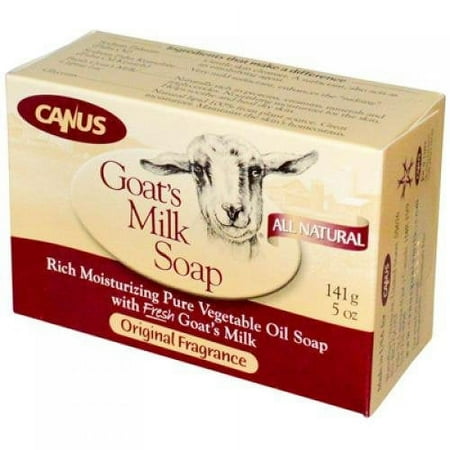

Caprina by Canus Fresh Goat s Milk Soap Bar Original Formula 5 Ounce Cream
Summary
This soap bar contains goat's milk, which is a beneficial ingredient known for its moisturizing properties. However, the product is processed and includes synthetic ingredients that may not be as skin-friendly as natural alternatives. The presence of these synthetic components, along with the processing level, limits its score compared to more natural and minimally processed products.
At a glance
Key ingredients 14
Sodium Tallowate
Sodium Tallowate is a common soap ingredient derived from animal fat. It acts as a surfactant and cleansing agent, helping to remove dirt and oils from the skin. It is generally considered safe for use in cosmetics.
Risks
There are minimal risks associated with Sodium Tallowate, though it may cause irritation for those with sensitive skin.
Benefits
It provides effective cleansing properties and is a traditional ingredient in soap making.
Sodium Cocoate
Sodium Cocoate is a surfactant derived from coconut oil, used for its cleansing properties. It helps to create lather and remove oils and dirt from the skin. It is generally considered safe and mild.
Risks
Potential risks include skin irritation for individuals with coconut allergies.
Benefits
It is a natural ingredient that provides effective cleansing and is less harsh than synthetic surfactants.
Glycerin
Glycerin is a humectant that attracts moisture to the skin, helping to keep it hydrated. It is a common ingredient in skincare products due to its moisturizing properties. It is considered safe and beneficial for most skin types.
Risks
There are minimal risks associated with glycerin, though it may cause irritation in rare cases.
Benefits
It helps to maintain skin hydration and improve skin barrier function.
Caprae Lac
Caprae Lac, or goat's milk, is used for its moisturizing and nourishing properties. It contains vitamins and minerals that can benefit the skin. It is often used in soaps for its gentle and soothing effects.
Risks
There are minimal risks, though individuals with dairy allergies should exercise caution.
Benefits
It provides nourishment and hydration to the skin, making it suitable for sensitive skin types.
Parfum
Parfum, or fragrance, is used to impart a pleasant scent to cosmetic products. It is a common ingredient in many personal care items. However, it can be a mixture of various chemicals.
Risks
Fragrance can cause skin irritation and allergic reactions, especially in sensitive individuals.
Benefits
It enhances the sensory experience of the product with a pleasant aroma.
Tetrasodium EDTA
Tetrasodium EDTA is a chelating agent used to improve the stability and shelf life of cosmetic products. It binds to metal ions, preventing them from affecting the product's quality. It is generally considered safe in low concentrations.
Risks
There are concerns about its potential to enhance skin absorption of other chemicals.
Benefits
It helps maintain product stability and efficacy over time.
DMDM Hydantoin
DMDM Hydantoin is a formaldehyde-releasing preservative used to prevent microbial growth in cosmetics. It is effective in extending the shelf life of products. However, it releases small amounts of formaldehyde over time.
Risks
It can cause skin irritation and allergic reactions, and there are concerns about formaldehyde exposure.
Benefits
It effectively preserves products by preventing microbial contamination.
Titanium Dioxide
Titanium Dioxide is used as a whitening agent and UV filter in cosmetics. It provides opacity and sun protection when used in formulations. It is considered safe for use in cosmetics.
Risks
Inhalation of its powder form can be harmful, but it is generally safe in creams and lotions.
Benefits
It offers sun protection and improves the appearance of the product.
Benzyl Benzoate
Benzyl Benzoate is used as a fragrance ingredient and solvent in cosmetics. It helps to dissolve other ingredients and enhance the scent of the product. It is generally recognized as safe in low concentrations.
Risks
It can cause skin irritation and allergic reactions in sensitive individuals.
Benefits
It enhances the fragrance profile and solubility of other ingredients.
Eugenol
Eugenol is a fragrance component derived from essential oils like clove oil. It is used for its spicy, clove-like aroma. It is generally considered safe in low concentrations.
Risks
It can cause skin irritation and sensitization, especially in high concentrations.
Benefits
It provides a natural fragrance and has antimicrobial properties.
Citronellol
Citronellol is a fragrance ingredient with a floral scent, commonly used in perfumes and cosmetics. It is derived from essential oils such as rose and geranium. It is generally considered safe in low concentrations.
Risks
It can cause skin irritation and allergic reactions in sensitive individuals.
Benefits
It provides a pleasant floral aroma and is used in natural fragrance formulations.
Linalool
Linalool is a naturally occurring terpene alcohol found in many flowers and spice plants. It is used for its pleasant floral scent in cosmetics. It is generally considered safe in low concentrations.
Risks
It can cause skin irritation and allergic reactions in sensitive individuals.
Benefits
It provides a natural fragrance and has calming properties.
Limonene
Limonene is a fragrance ingredient with a citrus scent, derived from the peels of citrus fruits. It is used for its fresh aroma in cosmetics. It is generally considered safe in low concentrations.
Risks
It can cause skin irritation and sensitization, especially when oxidized.
Benefits
It provides a refreshing citrus fragrance and has antioxidant properties.
Geraniol
Geraniol is a fragrance ingredient with a rose-like scent, found in essential oils such as rose and citronella. It is used for its pleasant aroma in cosmetics. It is generally considered safe in low concentrations.
Risks
It can cause skin irritation and allergic reactions in sensitive individuals.
Benefits
It provides a natural floral fragrance and has antimicrobial properties.
Processing
Processed Foods
Get the full breakdown in the Scout app
Scan any product to see lab results, healthy alternatives, and your personalized analysis.
Download on theApp Store