
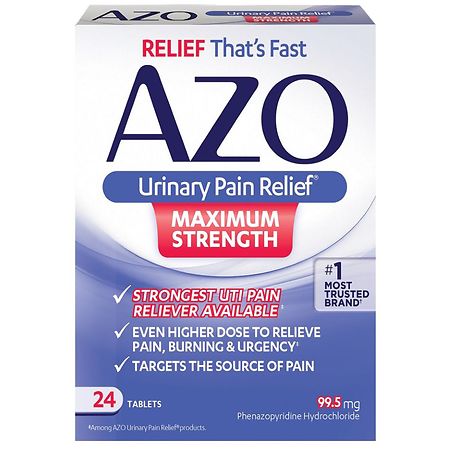


AZO Urinary Pain Relief Maximum Strength / TABLET
Analysis updated July 2026 · How Scout scores
At a glance
Summary
This product contains phenazopyridine hydrochloride as the active ingredient, which is effective for urinary pain relief. However, it includes several additives such as carnauba wax, croscarmellose sodium, and pregelatinized corn starch, which contribute to its high level of processing. While these additives are common in tablet formulations, they do not provide nutritional benefits and may be a concern for those avoiding highly processed ingredients.
Key ingredients 9
Phenazopyridine HydrochlorideNeutral
Phenazopyridine hydrochloride is an active ingredient used to relieve urinary pain and discomfort. It is a synthetic compound specifically designed for its analgesic properties in the urinary tract. While effective for its intended use, it does not provide nutritional benefits.
Risks
Potential risks include gastrointestinal disturbances and allergic reactions in some individuals.
Benefits
Provides targeted relief from urinary pain and discomfort.
Carnauba WaxNeutral
Carnauba wax is used as a coating agent to provide a shiny finish and protect the tablet. It is derived from the leaves of the carnauba palm and is considered safe for consumption. It does not contribute any nutritional value.
See more about Carnauba Wax →Croscarmellose SodiumNeutral
Croscarmellose sodium is a disintegrant used to help tablets dissolve quickly in the digestive tract. It is a chemically modified cellulose compound that enhances the bioavailability of active ingredients. It is generally recognized as safe but offers no nutritional benefits.
See more about Croscarmellose Sodium →HypromelloseNeutral
Hypromellose is a cellulose derivative used as a binder and controlled-release agent in tablets. It is widely used in pharmaceuticals for its stability and safety profile. It does not provide any nutritional benefits.
See more about Hypromellose →Magnesium StearateNeutral
Magnesium stearate is a common lubricant used in tablet manufacturing to prevent ingredients from sticking to equipment. It is a salt of stearic acid and magnesium, considered safe in small amounts. It does not offer nutritional benefits.
Risks
Excessive consumption may interfere with nutrient absorption.
Microcrystalline CelluloseNeutral
Microcrystalline cellulose is used as a bulking agent and stabilizer in tablets. It is a refined wood pulp product that provides structure without adding calories or nutrients. It is considered safe for consumption.
See more about Microcrystalline Cellulose →Polyethylene GlycolNeutral
Polyethylene glycol is used as a solvent and plasticizer in pharmaceuticals. It is a synthetic polymer that helps in the controlled release of active ingredients. It is generally recognized as safe but does not provide nutritional benefits.
Risks
May cause gastrointestinal upset in sensitive individuals.
PovidoneNeutral
Povidone is used as a binder and solubilizing agent in tablets. It is a synthetic polymer that enhances the stability and solubility of active ingredients. It is considered safe but does not offer nutritional benefits.
Pregelatinized Corn StarchBad
Pregelatinized corn starch is used as a binder and disintegrant in tablets. It is a processed form of corn starch that can contribute to the overall carbohydrate content without providing significant nutritional value. Its processing method may raise concerns for those avoiding highly processed ingredients.
Risks
May contribute to blood sugar spikes in sensitive individuals.
Processing
Ultra-Processed Foods
Get the full breakdown in the Scout appTake Scout shopping
Scan any product to see lab results, healthy alternatives, and your personalized analysis.
Download on theApp Store GET IT ONGoogle Play