
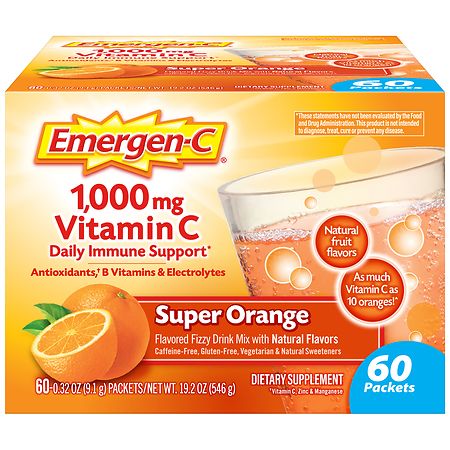


Emergen-C Vitamin C Supplement Drink Mix Packet Powder - Super Orange - 60ct: Naturally Flavored, Gluten-Free, Caffeine-Free, Dairy-Free
Analysis updated July 2026 · How Scout scores
At a glance
Summary
This supplement contains beneficial ingredients like beta-carotene and tocopherols, which provide antioxidant benefits. However, it also includes fructose and maltodextrin, which are highly processed and can contribute to blood sugar spikes. The presence of natural flavors adds to the processing level, and the overall formulation includes several additives, which impacts the overall score.
Key ingredients 14
Beta-CaroteneGood
Beta-carotene is a precursor to vitamin A and acts as an antioxidant, protecting cells from damage. It is naturally found in colorful fruits and vegetables and is beneficial for eye health and immune function. It is often used as a natural colorant in foods.
Risks
Excessive intake of beta-carotene supplements may lead to carotenemia, a harmless condition causing yellowing of the skin.
Benefits
Supports eye health and immune function due to its role as a vitamin A precursor.
GlycineGood
Beneficial ingredient — whole-food or functional value in this product class.
Benefits
May support sleep quality and cognitive function.
TocopherolsGood
Tocopherols are a form of vitamin E, acting as antioxidants that protect cells from oxidative damage. They are naturally found in nuts, seeds, and vegetable oils. They help preserve freshness in food products and support immune function.
Benefits
Supports immune function and protects cells from oxidative damage.
Citric AcidNeutral
Citric acid is a natural acid found in citrus fruits, commonly used as a preservative and flavor enhancer. It is generally recognized as safe and has minimal health concerns when consumed in typical amounts. It can enhance the absorption of minerals like calcium and magnesium.
Benefits
May improve mineral absorption and provide a tangy flavor to foods and beverages.
Malic AcidNeutral
Malic acid is a naturally occurring acid found in fruits, used to enhance flavor and acidity in foods. It is generally safe and well-tolerated in moderate amounts. It can support energy production in the body by participating in the Krebs cycle.
Benefits
May support energy production and improve exercise performance.
AcaciaNeutral
Acacia is a natural gum used as a stabilizer and thickener in foods. It is a source of dietary fiber and can aid in digestive health. It is generally considered safe and has minimal health concerns.
Benefits
Provides dietary fiber that can support digestive health.
L-Aspartic AcidNeutral
L-aspartic acid is a non-essential amino acid involved in energy production and neurotransmitter synthesis. It is generally safe and found in protein-rich foods. It can support athletic performance and energy levels.
Benefits
Supports energy production and athletic performance.
Orange Juice ConcentrateNeutral
Orange juice concentrate is used for flavor and color, providing a natural source of vitamin C and antioxidants. It is more processed than fresh juice, which can reduce its nutritional value. It adds a citrus flavor to the product.
Benefits
Provides vitamin C and antioxidants, contributing to immune support.
Orange OilNeutral
Orange oil is derived from the peel of oranges and used for flavoring. It contains natural compounds like limonene, which may have antioxidant properties. It is generally safe when used in small amounts for flavoring.
Benefits
May provide antioxidant benefits due to natural compounds like limonene.
Silicon DioxideNeutral
Silicon dioxide is used as an anti-caking agent to prevent clumping in powdered products. It is generally recognized as safe and has no significant health concerns. It does not contribute any nutritional value.
See more about Silicon Dioxide →Tartaric AcidNeutral
Tartaric acid is a naturally occurring acid found in grapes and used to enhance flavor and acidity. It is generally safe and used in small amounts in food products. It can aid in digestion and improve the taste profile of foods.
Benefits
May aid in digestion and enhance flavor.
FructoseBad
Fructose is a simple sugar that can contribute to increased blood sugar levels and insulin resistance when consumed in excess. It is often used as a sweetener in processed foods, which can lead to overconsumption. While naturally occurring in fruits, isolated fructose lacks the fiber and nutrients that mitigate its effects.
Risks
Excessive intake of fructose can lead to metabolic issues such as insulin resistance and fatty liver disease.
MaltodextrinBad
Maltodextrin is a highly processed carbohydrate used as a thickener or filler in many processed foods. It has a high glycemic index, which can cause spikes in blood sugar levels. While it provides quick energy, it lacks nutritional value and can contribute to weight gain.
Risks
May cause rapid spikes in blood sugar and contribute to insulin resistance if consumed in large amounts.
Natural FlavorsBad
Natural flavors are a catch-all term for flavoring agents derived from natural sources, but their exact composition is often undisclosed. This lack of transparency can be concerning for those with allergies or sensitivities. While derived from natural sources, they are highly processed and offer no nutritional benefits.
Risks
Potential allergen risk due to undisclosed ingredients and processing methods.
Processing
Ultra-Processed Foods
Get the full breakdown in the Scout appTake Scout shopping
Scan any product to see lab results, healthy alternatives, and your personalized analysis.
Download on theApp Store GET IT ONGoogle Play