
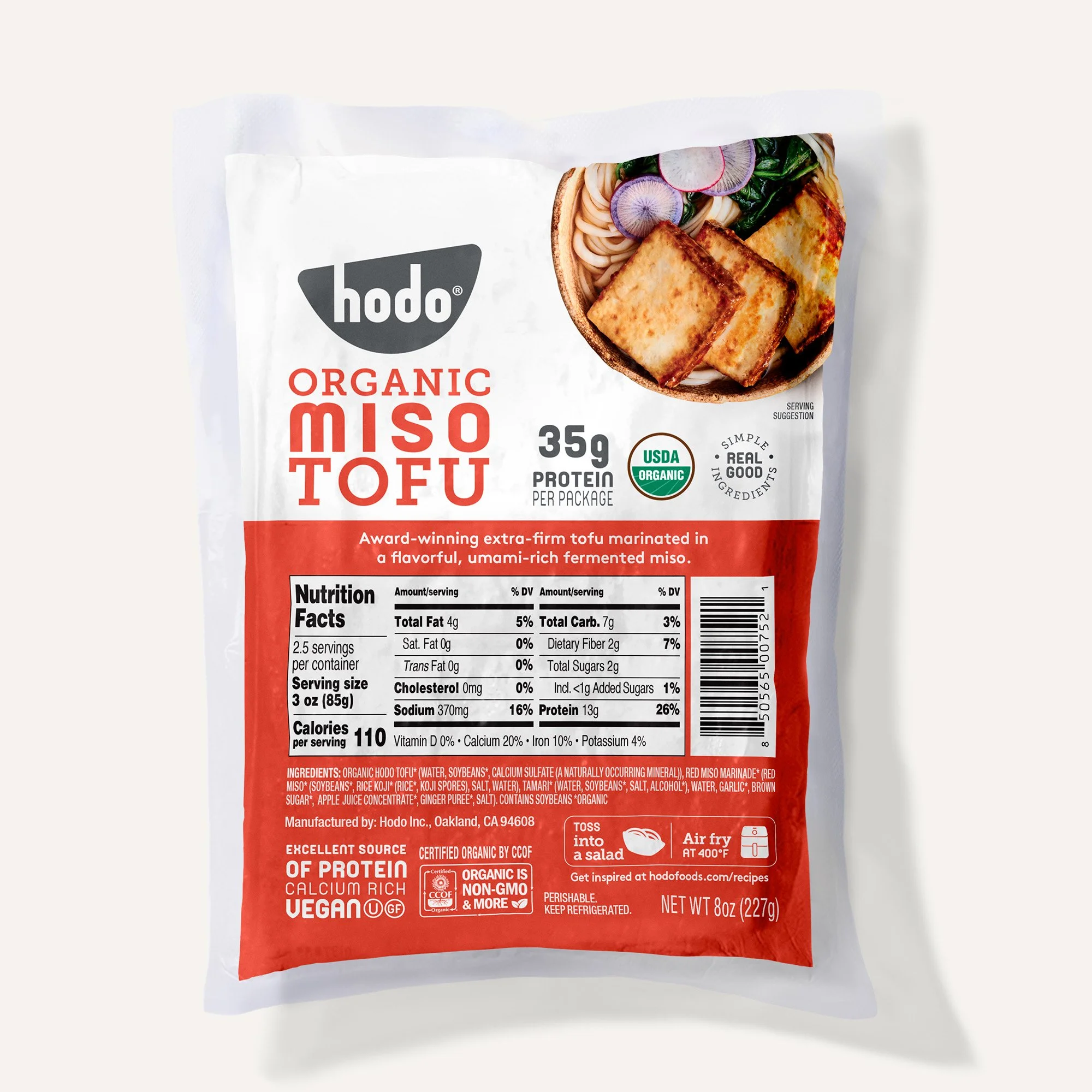
Miso tofu burger
Summary
The miso tofu burger contains beneficial ingredients like miso, onions, sweet potatoes, and carrots, which contribute to its nutritional value. However, the presence of canola oil, a seed oil high in omega-6 fatty acids, and the fact that it is a processed plant-based meat product, significantly impact its healthiness. The processing level and inclusion of canola oil result in a notable penalty, despite the otherwise clean ingredient list.
At a glance
Key ingredients 7
TofuNeutral
Tofu is a plant-based protein made from soybeans, water, and a coagulant like magnesium chloride. It is minimally processed compared to other soy products and provides a good source of protein and essential amino acids. However, it may not offer the same protein quality as animal-based sources.
Risks
Soy products can be allergenic for some individuals and may interfere with thyroid function if consumed in large amounts.
Benefits
Tofu is a good source of plant-based protein and contains essential amino acids. It is also low in saturated fat and cholesterol-free.
MisoGood
Miso is a fermented soybean paste that provides beneficial probiotics for gut health. It is traditionally made through a natural fermentation process involving soybeans, rice, and salt. The fermentation process enhances its nutritional profile and digestibility.
Risks
Miso is high in sodium, which can be a concern for individuals with hypertension if consumed in excess.
Benefits
Rich in probiotics that support digestive health and may boost the immune system. Contains vitamins and minerals such as vitamin K, manganese, and zinc.
OnionsVery Good
Onions are a nutrient-dense vegetable known for their antioxidant properties. They contain quercetin, a flavonoid that has anti-inflammatory effects. Onions are low in calories and provide vitamin C, fiber, and folic acid.
Benefits
Rich in antioxidants that may reduce inflammation and support heart health. Provide essential nutrients and fiber.
Sweet PotatoesVery Good
Sweet potatoes are a nutritious root vegetable high in beta-carotene, which the body converts to vitamin A. They are a good source of fiber, vitamins, and minerals. Their natural sweetness and nutrient density make them a healthy carbohydrate choice.
Benefits
High in beta-carotene, which supports eye health and immune function. Provide dietary fiber that aids in digestion.
CarrotsVery Good
Carrots are a root vegetable rich in beta-carotene, fiber, and antioxidants. They are low in calories and provide essential vitamins and minerals. Carrots are known for their role in supporting eye health due to their high vitamin A content.
Benefits
Rich in beta-carotene and antioxidants that support eye health and may reduce the risk of chronic diseases.
Sesame SeedsGood
Sesame seeds are a nutrient-rich seed high in healthy fats, protein, and minerals like calcium and magnesium. They are often used in small amounts to add flavor and texture. Sesame seeds contain lignans, which have antioxidant properties.
Risks
Sesame seeds can be allergenic for some individuals.
Benefits
Provide healthy fats and essential minerals that support bone health and metabolic functions.
Canola OilVery Bad
Canola oil is a seed oil high in omega-6 fatty acids, which can promote inflammation if consumed in excess. It is typically extracted using high heat and chemical solvents, which may degrade its nutritional quality. Compared to other oils, it lacks the beneficial monounsaturated fats found in olive or avocado oil.
Risks
High omega-6 content may promote inflammation when consumed in excess. Processing methods may introduce harmful compounds.
Processing
Processed Foods
Get the full breakdown in the Scout app
Scan any product to see lab results, healthy alternatives, and your personalized analysis.
Download on theApp Store