
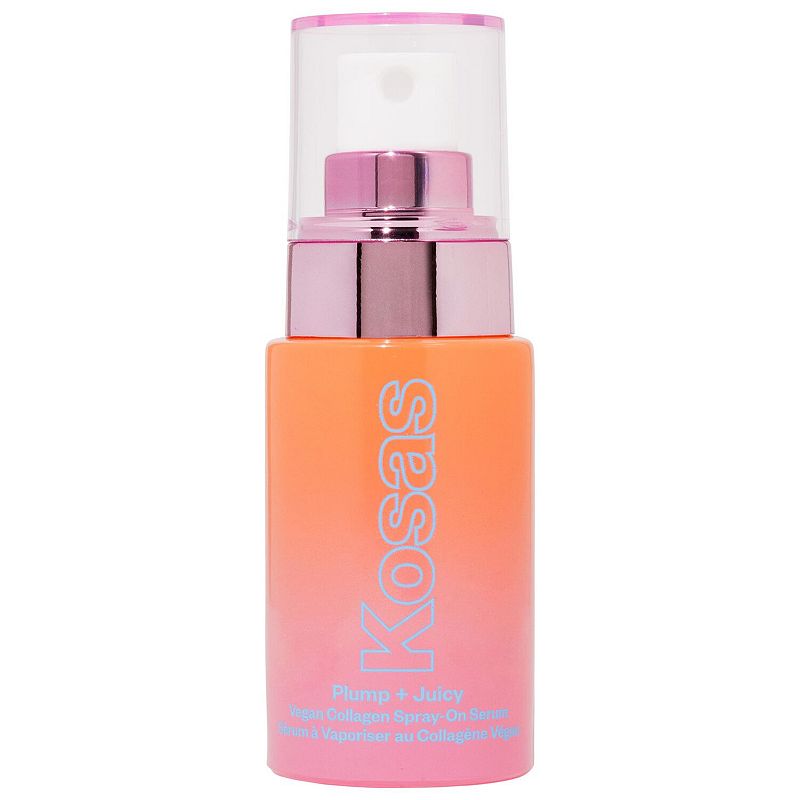
Kosas Plump + Juicy Vegan Collagen + Probiotic Spray-On Serum, Size: MINI, None
Analysis updated August 2026 · How Scout scores
At a glance
Summary
This product contains several beneficial ingredients such as glycerin, hydrolyzed proteins, and probiotics, which contribute to skin hydration and health. However, it includes phenethyl alcohol and benzyl alcohol, which can be drying and potentially irritating to the skin. The presence of multiple synthetic ingredients and the processed nature of the product slightly lower its overall score.
Key ingredients 30
Hydrolyzed Sodium HyaluronateVery Good
Hydrolyzed Sodium Hyaluronate is a form of hyaluronic acid used for its excellent moisturizing properties. It helps to retain moisture in the skin and improve elasticity. It is highly regarded in skincare for its hydrating benefits.
Risks
There are no significant risks associated with this ingredient.
Benefits
Provides excellent hydration and improves skin elasticity.
Palmitoyl Tripeptide-37Very Good
Palmitoyl Tripeptide-37 is a peptide used for its anti-aging and skin-conditioning properties. It helps to improve skin firmness and reduce the appearance of wrinkles. It is considered a beneficial ingredient in anti-aging skincare.
Risks
There are no significant risks associated with this ingredient.
Benefits
Improves skin firmness and reduces wrinkles.
GlycerinGood
Glycerin is a well-known humectant that attracts moisture to the skin. It helps to maintain skin hydration and improve barrier function. It is widely used in skincare for its moisturizing properties.
Risks
There are no significant risks associated with glycerin.
Benefits
Excellent for skin hydration and barrier support.
Hydrolyzed Rice ProteinGood
Hydrolyzed Rice Protein is used for its conditioning and moisturizing properties. It helps to improve skin texture and hydration. It is derived from rice and is considered safe for use in cosmetics.
Risks
There are no significant risks associated with this ingredient.
Benefits
Improves skin texture and hydration.
Hydrolyzed Vegetable ProteinGood
Hydrolyzed Vegetable Protein is used for its moisturizing and conditioning effects. It helps to enhance skin hydration and elasticity. It is derived from plant sources and is considered safe.
Risks
There are no significant risks associated with this ingredient.
Benefits
Enhances skin hydration and elasticity.
Hydrolyzed Pea ProteinGood
Hydrolyzed Pea Protein is used for its conditioning and moisturizing properties. It helps to improve skin texture and hydration. It is derived from peas and is considered safe.
Risks
There are no significant risks associated with this ingredient.
Benefits
Improves skin texture and hydration.
Caprylic/Capric TriglycerideGood
Caprylic/Capric Triglyceride is an emollient derived from coconut oil and glycerin. It helps to moisturize and soften the skin. It is widely used in cosmetics for its skin-conditioning properties.
Risks
There are no significant risks associated with this ingredient.
Benefits
Moisturizes and softens the skin.
Lactobacillus FermentGood
Lactobacillus Ferment is a probiotic ingredient used for its skin-conditioning properties. It helps to balance the skin's microbiome and improve skin health. It is considered safe for use in cosmetics.
Risks
There are no significant risks associated with this ingredient.
Benefits
Balances skin microbiome and improves skin health.
Artemisia Capillaris Flower ExtractGood
Artemisia Capillaris Flower Extract is used for its antioxidant and soothing properties. It helps to calm the skin and protect against environmental stressors. It is derived from the Artemisia plant and is considered safe.
Risks
There are no significant risks associated with this ingredient.
Benefits
Calms the skin and provides antioxidant protection.
Hibiscus Sabdariffa Fruit ExtractGood
Hibiscus Sabdariffa Fruit Extract is used for its antioxidant and exfoliating properties. It helps to improve skin texture and protect against free radicals. It is derived from the Hibiscus plant and is considered safe.
Risks
There are no significant risks associated with this ingredient.
Benefits
Improves skin texture and provides antioxidant protection.
Hibiscus Sabdariffa Flower ExtractGood
Hibiscus Sabdariffa Flower Extract is used for its antioxidant and soothing properties. It helps to calm the skin and protect against environmental stressors. It is derived from the Hibiscus plant and is considered safe.
Risks
There are no significant risks associated with this ingredient.
Benefits
Calms the skin and provides antioxidant protection.
GlycineGood
Beneficial ingredient — whole-food or functional value in this product class.
Risks
There are no significant risks associated with this ingredient.
Benefits
Improves skin texture and hydration.
Sodium HyaluronateGood
Sodium Hyaluronate is a salt form of hyaluronic acid known for its hydrating properties. It helps to attract and retain moisture in the skin. It is widely used in skincare for its ability to improve skin hydration.
Risks
There are no significant risks associated with this ingredient.
Benefits
Attracts and retains moisture, improving skin hydration.
Water/AquaNeutral
Water is a common solvent used in cosmetic formulations. It helps dissolve other ingredients and provides a base for the product. It does not have any direct benefits or risks.
Risks
There are no known risks associated with water in cosmetic products.
Benefits
Water acts as a solvent and carrier for other ingredients.
PropanediolNeutral
Propanediol is a glycol used as a solvent and humectant in cosmetics. It helps to improve the texture and moisture retention of the product. It is generally considered safe for use in cosmetics.
Risks
Propanediol can cause mild irritation in sensitive individuals.
Benefits
It helps to improve skin hydration and texture.
Pentylene GlycolNeutral
Pentylene Glycol is a synthetic humectant and solvent. It helps to retain moisture in the skin and enhances the penetration of other ingredients. It is generally considered safe for use in cosmetics.
Risks
May cause mild irritation in sensitive skin types.
Benefits
Improves skin hydration and enhances ingredient penetration.
Phenethyl AlcoholNeutral
Phenethyl Alcohol is used as a preservative and fragrance ingredient. It helps to prevent microbial growth in the product. It is generally considered safe in low concentrations.
Risks
Can cause irritation in high concentrations or sensitive individuals.
Benefits
Acts as a preservative to extend product shelf life.
Polyglyceryl-6 CaprylateNeutral
Polyglyceryl-6 Caprylate is an emulsifier and surfactant. It helps to stabilize formulations and improve texture. It is derived from natural sources and is considered safe.
Risks
There are no significant risks associated with this ingredient.
Benefits
Stabilizes formulations and improves texture.
Polyglyceryl-3 CocoateNeutral
Polyglyceryl-3 Cocoate is an emulsifier and surfactant. It helps to blend oil and water components in formulations. It is derived from coconut oil and is considered safe.
Risks
There are no significant risks associated with this ingredient.
Benefits
Helps blend oil and water components in formulations.
Polyglyceryl-4 CaprateNeutral
Polyglyceryl-4 Caprate is an emulsifier and surfactant. It helps to stabilize formulations and improve texture. It is derived from natural sources and is considered safe.
Risks
There are no significant risks associated with this ingredient.
Benefits
Stabilizes formulations and improves texture.
Polyglyceryl-6 RicinoleateNeutral
Polyglyceryl-6 Ricinoleate is an emulsifier and surfactant. It helps to stabilize formulations and improve texture. It is derived from castor oil and is considered safe.
Risks
There are no significant risks associated with this ingredient.
Benefits
Stabilizes formulations and improves texture.
Sodium GluconateNeutral
Sodium Gluconate is a chelating agent that helps to stabilize formulations. It prevents metal ions from affecting product stability. It is considered safe for use in cosmetics.
Risks
There are no significant risks associated with this ingredient.
Benefits
Stabilizes formulations by chelating metal ions.
ErythritolNeutral
Erythritol is a sugar alcohol used as a humectant. It helps to retain moisture in the skin. It is considered safe for use in cosmetics.
Risks
There are no significant risks associated with this ingredient.
Benefits
Helps retain moisture in the skin.
MaltodextrinNeutral
Maltodextrin is used as a binding agent and texture enhancer. It helps to improve the consistency of the product. It is considered safe for use in cosmetics.
Risks
There are no significant risks associated with this ingredient.
Benefits
Improves product consistency and texture.
Acacia Seyal Gum ExtractNeutral
Acacia Seyal Gum Extract is used as a thickening agent and stabilizer. It helps to improve the texture and stability of formulations. It is derived from the Acacia tree and is considered safe.
Risks
There are no significant risks associated with this ingredient.
Benefits
Improves texture and stability of formulations.
ProlineNeutral
Proline is an amino acid used for its skin-conditioning properties. It helps to improve skin texture and hydration. It is considered safe for use in cosmetics.
Risks
There are no significant risks associated with this ingredient.
Benefits
Improves skin texture and hydration.
Citric AcidNeutral
Citric Acid is used to adjust the pH of cosmetic formulations. It helps to maintain product stability and improve texture. It is considered safe for use in cosmetics.
Risks
Can cause irritation in high concentrations or sensitive skin.
Benefits
Adjusts pH and maintains product stability.
Potassium SorbateBad
Synthetic preservative — flagged in daily-use products.
Risks
Can cause mild irritation in sensitive individuals.
Benefits
Prevents microbial growth and extends product shelf life.
Benzyl AlcoholBad
Processed additive flagged under Scout's ingredient doctrine.
Risks
Can cause irritation in sensitive individuals.
Benefits
Prevents microbial growth and improves texture.
Sodium BenzoateBad
Synthetic preservative that can form benzene in the presence of vitamin C.
Risks
Can cause mild irritation in sensitive individuals.
Benefits
Prevents microbial growth and extends product shelf life.
Processing
Processed Foods
Get the full breakdown in the Scout appTake Scout shopping
Scan any product to see lab results, healthy alternatives, and your personalized analysis.
Download on theApp Store GET IT ONGoogle Play