
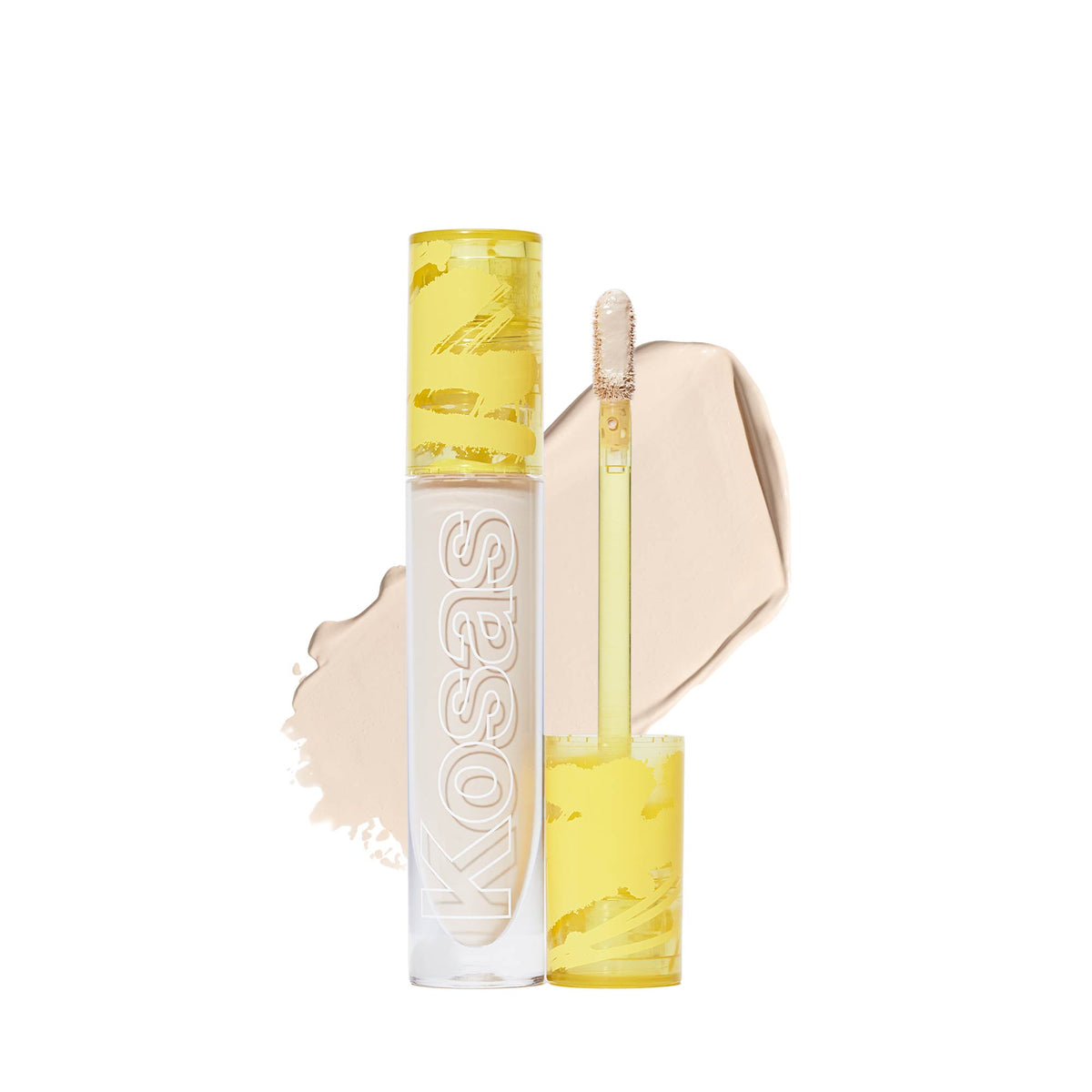

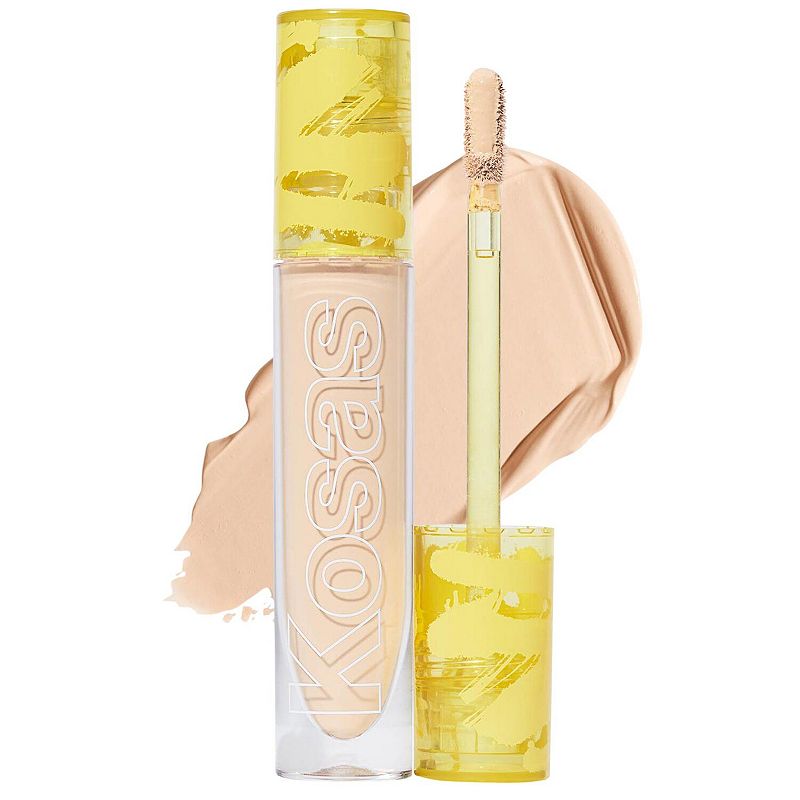

Kosas Revealer Super Creamy + Brightening Concealer with Caffeine and Hyaluronic Acid, Size: 0.2 Oz, Tone 0.7 C
Analysis updated August 2026 · How Scout scores
At a glance
Summary
This concealer features a blend of beneficial ingredients such as glycerin, sodium hyaluronate, and palmitoyl tripeptide-5, which provide hydration and anti-aging benefits. The inclusion of natural oils and extracts like sunflower seed oil and rosemary extract further enhances its skin-friendly profile. However, the presence of some synthetic emulsifiers and preservatives slightly lowers its overall rating, despite its predominantly safe and effective formulation.
Key ingredients 28
Palmitoyl Tripeptide-5Very Good
Palmitoyl Tripeptide-5 is a peptide used for its anti-aging properties in cosmetics. It helps to stimulate collagen production and improve skin elasticity. It is considered safe and effective for reducing the appearance of wrinkles.
Risks
There are minimal risks, though it may cause irritation in very sensitive skin.
Benefits
It helps to reduce the appearance of wrinkles and improve skin firmness.
PanthenolVery Good
Panthenol, also known as provitamin B5, is used for its moisturizing and soothing properties. It helps to improve skin hydration and reduce irritation. It is considered safe and beneficial for all skin types.
Risks
There are minimal risks, though it may cause irritation in very sensitive skin.
Benefits
It helps to moisturize and soothe the skin, reducing redness and irritation.
SqualaneVery Good
Squalane is a lightweight oil used for its moisturizing properties in cosmetics. It helps to hydrate and protect the skin without leaving a greasy residue. It is considered safe and beneficial for all skin types.
Risks
There are minimal risks, though it may cause irritation in very sensitive skin.
Benefits
It helps to moisturize and protect the skin, improving its texture and appearance.
Caprylic/Capric TriglycerideGood
Caprylic/Capric Triglyceride is derived from coconut oil and glycerin. It is used as an emollient and helps to smooth and soften the skin. It is well-tolerated by most skin types.
Risks
There are minimal risks, though it may cause breakouts in very sensitive skin.
Benefits
It provides a lightweight, non-greasy barrier of lubrication that helps to retain moisture.
MicaGood
Beneficial ingredient — whole-food or functional value in this product class.
Risks
Inhalation of mica particles can be a concern in loose powder forms.
Benefits
Mica enhances the appearance of the skin by adding a natural glow.
Ethylhexyl OlivateGood
Ethylhexyl Olivate is derived from olive oil and is used as an emollient. It provides a silky feel and helps to moisturize the skin. It is considered safe and beneficial for skin hydration.
Risks
There are minimal risks, though it may cause irritation in very sensitive skin.
Benefits
It enhances skin hydration and provides a smooth application.
GlycerinGood
Glycerin is a humectant that attracts moisture to the skin. It is widely used in cosmetics for its hydrating properties. It is safe and effective for all skin types.
Risks
There are minimal risks, though it may cause irritation in very sensitive skin.
Benefits
It helps to maintain skin hydration and improve skin barrier function.
Helianthus Annuus Seed OilGood
Helianthus Annuus Seed Oil, or sunflower seed oil, is used for its moisturizing properties. It is rich in fatty acids and vitamins that nourish the skin. It is considered safe and beneficial for skin hydration.
Risks
There are minimal risks, though it may cause irritation in very sensitive skin.
Benefits
It helps to moisturize and nourish the skin.
Sodium HyaluronateGood
Sodium Hyaluronate is a form of hyaluronic acid used for its hydrating properties. It helps to attract and retain moisture in the skin. It is considered safe and effective for improving skin hydration.
Risks
There are minimal risks, though it may cause irritation in very sensitive skin.
Benefits
It helps to deeply hydrate the skin, improving its texture and appearance.
TocopherolGood
Tocopherol, or vitamin E, is used for its antioxidant properties in cosmetics. It helps to protect the skin from environmental damage and improve skin health. It is considered safe and beneficial for skin protection.
Risks
There are minimal risks, though it may cause irritation in very sensitive skin.
Benefits
It provides antioxidant protection and helps to improve skin health.
WaterNeutral
Water is a common solvent used in cosmetics to dissolve other ingredients. It helps in the application and absorption of the product. It is generally considered safe and non-irritating.
Risks
There are no significant risks associated with water in cosmetics.
Benefits
Water helps in hydrating the skin and acts as a base for other ingredients.
OctyldodecanolNeutral
Octyldodecanol is a fatty alcohol used as an emollient and texture enhancer in cosmetics. It helps to improve the spreadability of the product. It is generally non-irritating and safe for use.
Risks
There are minimal risks, though it may cause irritation in very sensitive skin.
Benefits
It helps to soften and smooth the skin, enhancing the feel of the product.
Polyglyceryl-2 DipolyhydroxystearateNeutral
This ingredient is an emulsifier that helps to blend oil and water components in formulations. It is derived from natural sources and is considered safe for use. It stabilizes the product and improves its texture.
Risks
There are no significant risks associated with this ingredient.
Benefits
It helps to maintain the consistency and stability of the product.
UndecaneNeutral
Undecane is a hydrocarbon used as a solvent and emollient in cosmetics. It helps to improve the spreadability of the product. It is generally considered safe for use.
Risks
There are no significant risks associated with this ingredient.
Benefits
It helps to improve the texture and application of the product.
Polyhydroxystearic AcidNeutral
Polyhydroxystearic Acid is used as an emulsifier and thickening agent in cosmetics. It helps to stabilize formulations and improve texture. It is considered safe for use in cosmetics.
Risks
There are no significant risks associated with this ingredient.
Benefits
It helps to maintain the consistency and stability of the product.
Polyglyceryl-3 DiisostearateNeutral
This ingredient is an emulsifier that helps to blend oil and water components in formulations. It is derived from natural sources and is considered safe for use. It stabilizes the product and improves its texture.
Risks
There are no significant risks associated with this ingredient.
Benefits
It helps to maintain the consistency and stability of the product.
GalactoarabinanNeutral
Galactoarabinan is a polysaccharide derived from the larch tree. It is used as a film-forming agent and helps to improve the texture of cosmetics. It is considered safe for use.
Risks
There are no significant risks associated with this ingredient.
Benefits
It helps to enhance the texture and feel of the product on the skin.
Helianthus Annuus Seed WaxNeutral
This wax is derived from sunflower seeds and is used as a thickening agent in cosmetics. It helps to improve the texture and stability of formulations. It is considered safe for use.
Risks
There are no significant risks associated with this ingredient.
Benefits
It helps to enhance the texture and stability of the product.
Arnica Montana Flower ExtractNeutral
Arnica Montana Flower Extract is used for its soothing properties in cosmetics. It is believed to help reduce inflammation and irritation. It is generally considered safe for topical use.
Risks
There is a potential for allergic reactions in sensitive individuals.
Benefits
It may help to soothe and calm irritated skin.
CaffeineNeutral
Standard formulation ingredient — neither beneficial nor harmful at typical use.
Risks
There are minimal risks, though it may cause irritation in very sensitive skin.
Benefits
It helps to reduce puffiness and improve the appearance of the skin.
Dunaliella Salina ExtractNeutral
Dunaliella Salina Extract is derived from microalgae and is used for its antioxidant properties. It helps to protect the skin from environmental stressors. It is considered safe for use in cosmetics.
Risks
There are no significant risks associated with this ingredient.
Benefits
It provides antioxidant protection to the skin.
Foeniculum Vulgare OilNeutral
Foeniculum Vulgare Oil, or fennel oil, is used for its aromatic properties in cosmetics. It is believed to have soothing and toning effects on the skin. It is generally considered safe for use.
Risks
There is a potential for allergic reactions in sensitive individuals.
Benefits
It may help to soothe and tone the skin.
Glyceryl OleateNeutral
Glyceryl Oleate is an emulsifier and emollient used in cosmetics. It helps to blend ingredients and improve the texture of the product. It is considered safe for use.
Risks
There are no significant risks associated with this ingredient.
Benefits
It helps to improve the texture and application of the product.
MaltodextrinNeutral
Maltodextrin is used as a binding and stabilizing agent in cosmetics. It helps to improve the texture and consistency of formulations. It is considered safe for use.
Risks
There are no significant risks associated with this ingredient.
Benefits
It helps to stabilize and improve the texture of the product.
Rosmarinus Officinalis ExtractNeutral
Rosmarinus Officinalis Extract, or rosemary extract, is used for its antioxidant properties in cosmetics. It helps to protect the skin from environmental stressors. It is considered safe for use.
Risks
There is a potential for allergic reactions in sensitive individuals.
Benefits
It provides antioxidant protection to the skin.
LecithinBad
Processed additive flagged under Scout's ingredient doctrine.
Risks
There are no significant risks associated with this ingredient.
Benefits
It helps to improve the texture and application of the product.
Potassium SorbateBad
Synthetic preservative — flagged in daily-use products.
Risks
There is a potential for allergic reactions in sensitive individuals.
Benefits
It helps to preserve the product and prevent microbial growth.
Sodium BenzoateBad
Synthetic preservative that can form benzene in the presence of vitamin C.
Risks
There is a potential for allergic reactions in sensitive individuals.
Benefits
It helps to preserve the product and prevent microbial growth.
Get the full breakdown in the Scout appTake Scout shopping
Scan any product to see lab results, healthy alternatives, and your personalized analysis.
Download on theApp Store GET IT ONGoogle PlayAmazon pricing & content
Amazon price as of . Product prices and availability are accurate as of the date/time indicated and are subject to change. Any price and availability information displayed on Amazon.com at the time of purchase will apply to the purchase of this product.
CERTAIN CONTENT THAT APPEARS ON THIS SITE COMES FROM AMAZON. THIS CONTENT IS PROVIDED “AS IS” AND IS SUBJECT TO CHANGE OR REMOVAL AT ANY TIME.