
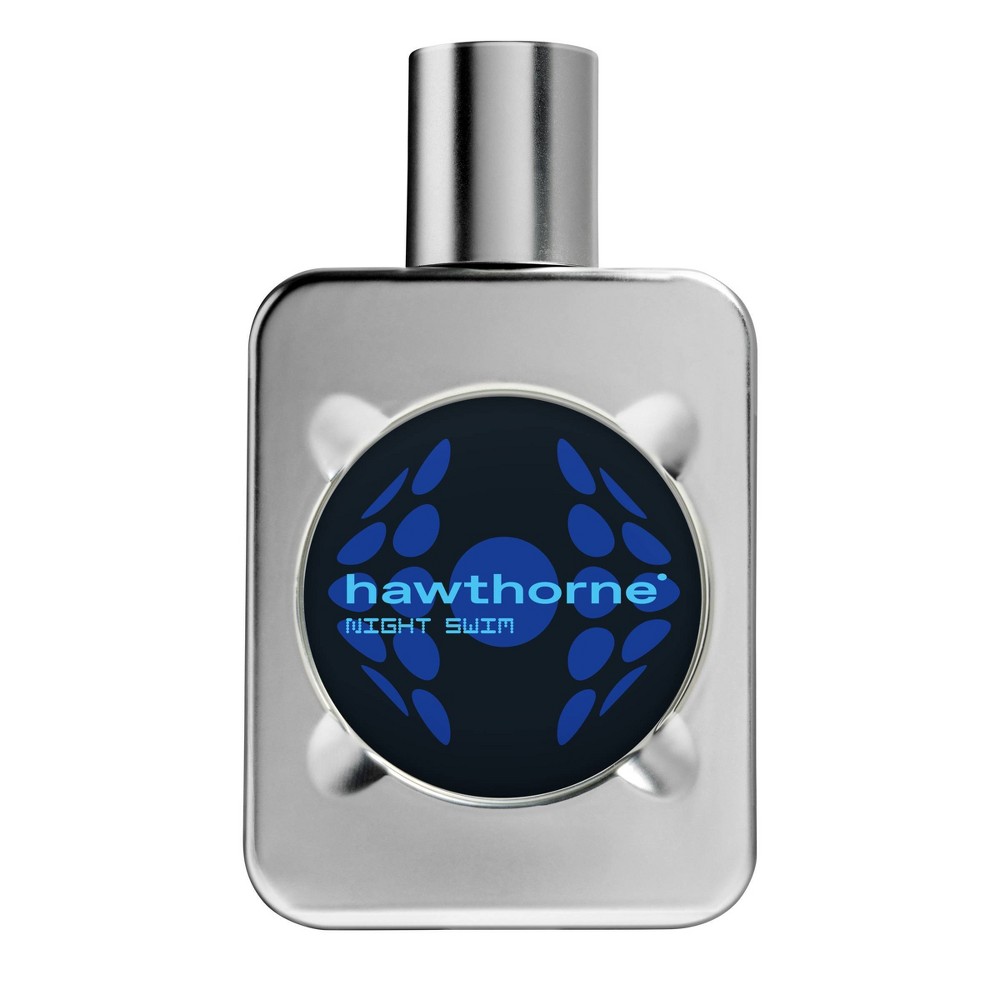
Hawthorne Night Swim Cologne- 50 ml: Spray, Fresh Scent, Package Quantity 1
Summary
This cologne contains synthetic fragrance, which can include a variety of undisclosed chemicals, some of which may be potential allergens or irritants. The product is processed, which typically involves the use of synthetic ingredients and preservatives. While it does not contain any of the most heavily penalized substances, the presence of synthetic fragrance and the level of processing prevent it from scoring higher.
At a glance
Key ingredients 20
Water (Aqua)
Water is a universal solvent used to dissolve other ingredients. It helps in the even distribution of the product on the skin. It is generally considered safe and non-irritating.
Risks
There are no significant risks associated with water in cosmetic formulations.
Benefits
Water hydrates the skin and helps in the absorption of other beneficial ingredients.
SD Alcohol 40B (Ethyl Alcohol)
SD Alcohol 40B is a denatured alcohol used as a solvent and astringent. It helps in the quick drying of the product on the skin. However, it can be drying and irritating to sensitive skin.
Risks
Prolonged use can lead to skin dryness and irritation, especially in sensitive individuals.
Benefits
It provides a refreshing and cooling effect upon application.
Sorbitan Oleate Decylglucoside Crosspolymer
This ingredient is an emulsifier that helps to mix oil and water-based components. It stabilizes the formulation and ensures a smooth texture. It is generally considered safe for use in cosmetics.
Risks
There are minimal risks associated with this ingredient, though some individuals may experience mild irritation.
Benefits
It enhances the texture and stability of the product, improving user experience.
Fragrance (Parfum)
Fragrance is added to provide a pleasant scent to the product. It is a common ingredient in personal care products. However, it can cause allergic reactions and skin irritation in sensitive individuals.
Risks
Fragrance can be a skin irritant and may cause allergic reactions.
Benefits
It enhances the sensory experience of the product.
Glycerin
Glycerin is a humectant that attracts moisture to the skin. It helps to keep the skin hydrated and soft. It is widely used in cosmetics for its moisturizing properties.
Risks
There are minimal risks associated with glycerin, though it can be sticky in high concentrations.
Benefits
It effectively moisturizes the skin, improving its texture and appearance.
Saccharomyces Ferment Filtrate
This ingredient is a byproduct of yeast fermentation and is used for its skin conditioning properties. It is believed to enhance skin's natural repair processes. It is generally considered safe and beneficial for the skin.
Risks
There are minimal risks, though some individuals may experience mild irritation.
Benefits
It can improve skin texture and provide antioxidant benefits.
Sodium Benzoate
Sodium Benzoate is a preservative used to prevent microbial growth in products. It is effective in maintaining product safety and longevity. It is generally recognized as safe in low concentrations.
Risks
In high concentrations, it can cause skin irritation and allergic reactions.
Benefits
It helps to preserve the product, ensuring its safety and efficacy over time.
Sodium Levulinate
Sodium Levulinate is a preservative derived from levulinic acid. It helps to inhibit the growth of bacteria and fungi in cosmetic products. It is considered safe and effective as a natural preservative.
Risks
There are minimal risks associated with this ingredient.
Benefits
It provides antimicrobial protection, enhancing product safety.
Hamamelis Virginiana (Witch Hazel) Leaf Water
Witch Hazel is known for its astringent and anti-inflammatory properties. It is used to soothe and tone the skin. It is a natural ingredient commonly used in skincare products.
Risks
Some individuals may experience irritation or allergic reactions.
Benefits
It can reduce skin irritation and inflammation, providing a calming effect.
Salvia Officinalis (Sage) Leaf Extract
Sage Leaf Extract is used for its antioxidant and antimicrobial properties. It helps to protect the skin from environmental damage. It is a natural ingredient valued for its skin benefits.
Risks
There are minimal risks, though it may cause irritation in sensitive individuals.
Benefits
It provides antioxidant protection and can improve skin health.
Citric Acid
Citric Acid is used to adjust the pH of cosmetic formulations. It helps to maintain the stability and effectiveness of the product. It is generally considered safe in low concentrations.
Risks
In high concentrations, it can cause skin irritation.
Benefits
It helps to balance the pH, ensuring product stability and skin compatibility.
Tocopherol
Tocopherol, or Vitamin E, is an antioxidant that helps to protect the skin from free radical damage. It is used to enhance the shelf life of products and provide skin benefits. It is widely recognized for its protective and moisturizing properties.
Risks
There are minimal risks, though it may cause irritation in very sensitive individuals.
Benefits
It provides antioxidant protection and helps to moisturize and nourish the skin.
Citral
Citral is a fragrance component that provides a lemon-like scent. It is used to enhance the fragrance profile of the product. However, it can be an allergen for some individuals.
Risks
It can cause allergic reactions and skin irritation in sensitive individuals.
Benefits
It contributes a fresh, citrus scent to the product.
Coumarin
Coumarin is a fragrance ingredient that provides a sweet, vanilla-like scent. It is used to enhance the olfactory experience of the product. However, it can be an allergen for some individuals.
Risks
It can cause allergic reactions and skin irritation.
Benefits
It adds a pleasant scent to the product.
Eugenol
Eugenol is a fragrance ingredient with a spicy, clove-like scent. It is used to enhance the fragrance profile of the product. However, it can be an allergen for some individuals.
Risks
It can cause allergic reactions and skin irritation.
Benefits
It contributes a warm, spicy scent to the product.
Geraniol
Geraniol is a fragrance ingredient with a rose-like scent. It is used to enhance the fragrance profile of the product. However, it can be an allergen for some individuals.
Risks
It can cause allergic reactions and skin irritation.
Benefits
It adds a floral scent to the product.
Hydroxycitronellal
Hydroxycitronellal is a fragrance ingredient with a sweet, floral scent. It is used to enhance the fragrance profile of the product. However, it can be an allergen for some individuals.
Risks
It can cause allergic reactions and skin irritation.
Benefits
It contributes a sweet, floral scent to the product.
Isoeugenol
Isoeugenol is a fragrance ingredient with a spicy, clove-like scent. It is used to enhance the fragrance profile of the product. However, it can be an allergen for some individuals.
Risks
It can cause allergic reactions and skin irritation.
Benefits
It adds a warm, spicy scent to the product.
Limonene
Limonene is a fragrance ingredient with a citrus scent. It is used to enhance the fragrance profile of the product. However, it can be an allergen for some individuals.
Risks
It can cause allergic reactions and skin irritation.
Benefits
It contributes a fresh, citrus scent to the product.
Linalool
Linalool is a fragrance ingredient with a floral scent. It is used to enhance the fragrance profile of the product. However, it can be an allergen for some individuals.
Risks
It can cause allergic reactions and skin irritation.
Benefits
It adds a floral scent to the product.
Processing
Processed Foods
Get the full breakdown in the Scout app
Scan any product to see lab results, healthy alternatives, and your personalized analysis.
Download on theApp Store