
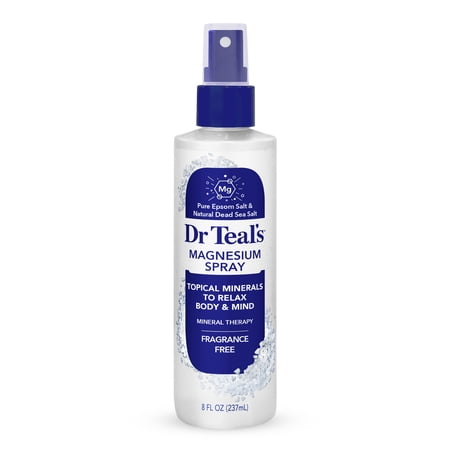

Dr Teal s Fragrance Free Magnesium Spray 8 fl oz
Analysis updated July 2026 · How Scout scores
At a glance
Summary
This magnesium spray contains a simple and clean ingredient list with water, magnesium sulfate, magnesium chloride, and minimal preservatives like sodium benzoate and citric acid. The absence of synthetic fragrances, parabens, and harsh surfactants contributes to its high score, making it a safe choice for those seeking a fragrance-free product with minimal processing.
Key ingredients 6
WaterNeutral
Water is a common solvent used in many cosmetic products. It helps dissolve other ingredients and provides a base for the formulation. It is generally considered safe and non-irritating.
Risks
There are no significant risks associated with water in cosmetics.
Benefits
Water helps to hydrate the skin and is essential for the formulation of many skincare products.
Magnesium SulfateNeutral
Magnesium sulfate, also known as Epsom salt, is used for its soothing properties. It can help relax muscles and reduce inflammation when applied topically. It is generally safe for use in cosmetics.
Risks
Overuse may lead to skin dryness or irritation in sensitive individuals.
Benefits
It can provide soothing and anti-inflammatory benefits to the skin.
Magnesium ChlorideNeutral
Magnesium chloride is used for its potential skin-soothing properties. It is often included in formulations for its ability to support skin health. It is considered safe for topical use.
Risks
High concentrations may cause skin irritation in some individuals.
Benefits
It may help improve skin hydration and reduce inflammation.
Pentylene GlycolNeutral
Pentylene glycol is a synthetic humectant and solvent that helps retain moisture in the skin. It also has antimicrobial properties, which can help preserve the product. It is generally considered safe for use in cosmetics.
Risks
In rare cases, it may cause skin irritation or allergic reactions.
Benefits
It helps to hydrate the skin and improve the texture of cosmetic formulations.
Citric AcidNeutral
Citric acid is used to adjust the pH of cosmetic products and has mild exfoliating properties. It is derived from citrus fruits and is generally considered safe for use in cosmetics. It can help improve the texture and appearance of the skin.
Risks
In high concentrations, it may cause skin irritation or sensitivity.
Benefits
It helps to balance the pH of formulations and can provide mild exfoliation.
Sodium BenzoateBad
Sodium benzoate is a preservative used to prevent microbial growth in cosmetic products. While effective, it can form benzene, a known carcinogen, when combined with ascorbic acid under certain conditions. It is generally recognized as safe in low concentrations.
Risks
There is a potential risk of benzene formation, especially in the presence of vitamin C.
Benefits
It effectively inhibits the growth of bacteria and fungi, extending the shelf life of products.
Get the full breakdown in the Scout appTake Scout shopping
Scan any product to see lab results, healthy alternatives, and your personalized analysis.
Download on theApp Store GET IT ONGoogle PlayAmazon pricing & content
Amazon price as of . Product prices and availability are accurate as of the date/time indicated and are subject to change. Any price and availability information displayed on Amazon.com at the time of purchase will apply to the purchase of this product.
CERTAIN CONTENT THAT APPEARS ON THIS SITE COMES FROM AMAZON. THIS CONTENT IS PROVIDED “AS IS” AND IS SUBJECT TO CHANGE OR REMOVAL AT ANY TIME.