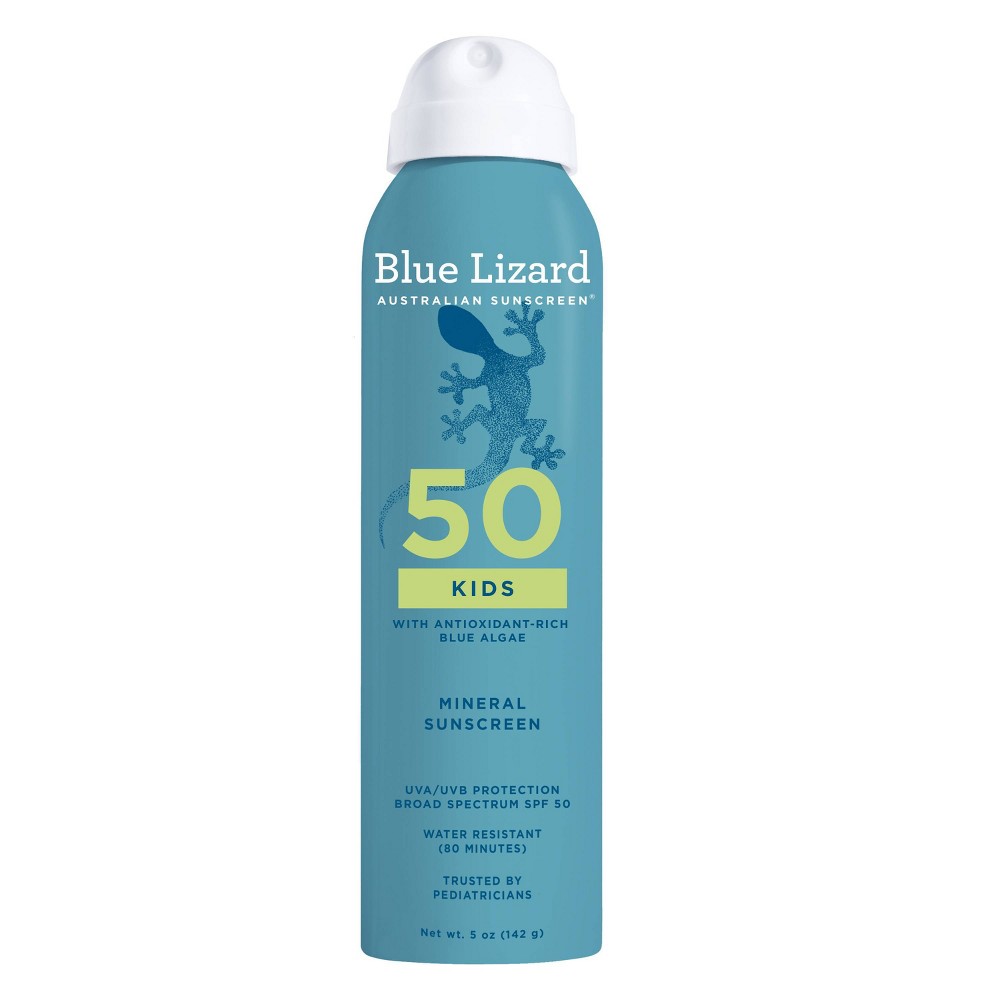
Blue Lizard Kids' Mineral Sunscreen Spray - SPF 50+ - 5 oz: Paraben-Free, Vegan, Whole Body, Contains Zinc Oxide
At a glance
Summary
This sunscreen spray features zinc oxide as its primary active ingredient, providing effective broad-spectrum UV protection without the use of chemical filters. The formulation is free from parabens and includes beneficial ingredients like glycerin, which helps maintain skin hydration. The absence of harsh chemicals and the use of safe, effective ingredients contribute to its high rating.
Key ingredients 24
Zinc OxideGood
Zinc Oxide is a mineral sunscreen agent that provides broad-spectrum UV protection. It is considered safe and effective for sensitive skin, including children's skin. It is non-comedogenic and does not penetrate the skin, making it a preferred choice for physical sunblock.
Risks
There are minimal risks associated with Zinc Oxide when used in topical applications, but inhalation of its particles in spray form can be a concern.
Benefits
Zinc Oxide offers excellent protection against both UVA and UVB rays and is often recommended for sensitive skin types.
GlycerinGood
Glycerin is a humectant that attracts moisture to the skin, helping to maintain hydration. It is widely used in skincare products and is considered safe and effective. It is non-irritating and suitable for all skin types.
Risks
There are minimal risks associated with Glycerin, though it may cause a sticky feeling if used in high concentrations.
Benefits
It helps keep the skin hydrated and improves the skin's barrier function.
Aphanizomenon Flosaquae ExtractNeutral
Aphanizomenon Flosaquae Extract is derived from blue-green algae and is used for its potential antioxidant properties. It is not commonly associated with adverse effects in topical applications. However, its efficacy in skincare is not well-documented.
Risks
There is limited research on the safety of this extract in skincare, and potential contamination with microcystins is a concern.
Benefits
It may provide antioxidant benefits, which can help protect the skin from environmental damage.
C12-15 Alkyl BenzoateNeutral
C12-15 Alkyl Benzoate is an emollient that helps improve the texture and feel of skincare products. It is widely used in cosmetics and is considered safe. It also acts as a solvent for other ingredients.
Risks
There are minimal risks associated with this ingredient, though it may cause irritation in sensitive skin.
Benefits
It provides a silky feel to the skin and helps stabilize formulations.
Caprylyl GlycolNeutral
Caprylyl Glycol is a skin-conditioning agent that also acts as a preservative booster. It is generally considered safe and is used to improve the moisture content of the skin. It is effective in small concentrations.
Risks
There are minimal risks associated with Caprylyl Glycol, though it may cause irritation in sensitive individuals.
Benefits
It helps maintain skin hydration and enhances the efficacy of preservatives.
Cetyl Diglyceryl Tris(Trimethylsiloxy)silylethyl DimethiconeNeutral
This ingredient is a silicone-based compound used to improve the texture and spreadability of products. It is considered safe for use in cosmetics. It provides a smooth, silky feel to the skin.
Risks
There are minimal risks associated with this ingredient, though silicones can sometimes cause build-up on the skin.
Benefits
It enhances the sensory attributes of the product, making it more pleasant to apply.
EthylhexylglycerinNeutral
Ethylhexylglycerin is used as a skin-conditioning agent and preservative enhancer. It is considered safe for use in cosmetics and is effective in small concentrations. It helps improve the efficacy of preservatives.
Risks
There are minimal risks associated with Ethylhexylglycerin, though it may cause irritation in sensitive individuals.
Benefits
It enhances the preservation of the product and provides skin-conditioning benefits.
Hydrogen DimethiconeNeutral
Hydrogen Dimethicone is a silicone-based compound used to improve the texture and spreadability of products. It is considered safe for use in cosmetics. It provides a smooth, silky feel to the skin.
Risks
There are minimal risks associated with this ingredient, though silicones can sometimes cause build-up on the skin.
Benefits
It enhances the sensory attributes of the product, making it more pleasant to apply.
Hydrogenated PolydeceneNeutral
Hydrogenated Polydecene is an emollient that provides a silky feel to the skin. It is used to improve the texture and spreadability of skincare products. It is considered safe for use in cosmetics.
Risks
There are minimal risks associated with this ingredient, though it may cause irritation in sensitive individuals.
Benefits
It provides a smooth application and enhances the sensory experience of the product.
Isopropyl MyristateNeutral
Isopropyl Myristate is an emollient that helps improve the texture and absorption of skincare products. It is widely used in cosmetics and is considered safe. It provides a smooth, non-greasy feel to the skin.
Risks
There are minimal risks associated with Isopropyl Myristate, though it may cause irritation in sensitive skin.
Benefits
It enhances the spreadability of products and provides a pleasant skin feel.
Pentylene GlycolNeutral
Pentylene Glycol is a humectant and solvent used to improve the moisture content of the skin. It is considered safe for use in cosmetics and is effective in small concentrations. It also acts as a preservative booster.
Risks
There are minimal risks associated with Pentylene Glycol, though it may cause irritation in sensitive individuals.
Benefits
It helps maintain skin hydration and enhances the efficacy of preservatives.
Polyhydroxystearic AcidNeutral
Polyhydroxystearic Acid is used as a thickening agent and emulsifier in cosmetics. It is considered safe for use and helps stabilize formulations. It improves the texture and consistency of products.
Risks
There are minimal risks associated with this ingredient, though it may cause irritation in sensitive skin.
Benefits
It helps maintain the stability and consistency of the product.
PropanediolNeutral
Propanediol is a solvent and humectant used to improve the texture and moisture content of skincare products. It is considered safe for use in cosmetics. It enhances the absorption of other ingredients.
Risks
There are minimal risks associated with Propanediol, though it may cause irritation in sensitive skin.
Benefits
It helps maintain skin hydration and improves the texture of the product.
SilicaNeutral
Silica is used as an absorbent and anti-caking agent in cosmetics. It is considered safe for use and helps improve the texture and feel of products. It provides a matte finish to the skin.
Risks
There are minimal risks associated with Silica, though inhalation of its particles can be a concern.
Benefits
It helps control oil and provides a smooth, matte finish to the skin.
Sodium ChlorideNeutral
Sodium Chloride is used as a thickening agent and to adjust the viscosity of formulations. It is considered safe for use in cosmetics. It helps improve the texture and consistency of products.
Risks
There are minimal risks associated with Sodium Chloride, though it may cause irritation in sensitive skin.
Benefits
It helps maintain the stability and consistency of the product.
Sodium PhytateNeutral
Sodium Phytate is used as a chelating agent to improve the stability of formulations. It is considered safe for use in cosmetics. It helps prevent the degradation of active ingredients.
Risks
There are minimal risks associated with Sodium Phytate, though it may cause irritation in sensitive skin.
Benefits
It enhances the stability and efficacy of the product.
Sorbitan OlivateNeutral
Sorbitan Olivate is an emulsifier derived from olive oil, used to stabilize formulations. It is considered safe for use in cosmetics. It helps improve the texture and spreadability of products.
Risks
There are minimal risks associated with Sorbitan Olivate, though it may cause irritation in sensitive skin.
Benefits
It provides a smooth application and enhances the sensory experience of the product.
TetrafluoropropeneNeutral
Tetrafluoropropene is used as a propellant in aerosol products. It is considered safe for use in cosmetics. It helps dispense the product evenly.
Risks
There are minimal risks associated with Tetrafluoropropene, though inhalation of aerosolized particles can be a concern.
Benefits
It provides an effective means of product delivery in spray formulations.
WaterNeutral
Water is used as a solvent and base in many cosmetic formulations. It is considered safe and is a fundamental component of most skincare products. It helps dissolve other ingredients and provides hydration.
Risks
There are no significant risks associated with water in cosmetic formulations.
Benefits
It acts as a solvent and provides hydration to the skin.
Butyloctyl SalicylateBad
Processed additive flagged under Scout's ingredient doctrine.
Risks
There are minimal risks associated with this ingredient, though it may cause irritation in very sensitive individuals.
Benefits
It enhances the performance of sunscreen agents and provides a smooth application.
DimethiconeBad
Occlusive silicone film-former — flagged under clean-beauty doctrine.
Risks
There are minimal risks associated with Dimethicone, though it can cause build-up on the skin over time.
Benefits
It provides a smooth application and helps lock in moisture, protecting the skin from environmental damage.
Potassium SorbateBad
Synthetic preservative — flagged in daily-use products.
Risks
There are minimal risks associated with Potassium Sorbate, though it may cause irritation in sensitive individuals.
Benefits
It effectively preserves the product, preventing microbial growth.
Sodium BenzoateBad
Synthetic preservative that can form benzene in the presence of vitamin C.
Risks
There are minimal risks associated with Sodium Benzoate, though it may cause irritation in sensitive individuals.
Benefits
It effectively preserves the product, preventing microbial growth.
Synthetic BeeswaxBad
Processed additive flagged under Scout's ingredient doctrine.
Risks
There are minimal risks associated with Synthetic Beeswax, though it may cause irritation in sensitive skin.
Benefits
It enhances the texture and spreadability of the product, providing a pleasant skin feel.
Processing
Processed Foods
Get the full breakdown in the Scout appTake Scout shopping
Scan any product to see lab results, healthy alternatives, and your personalized analysis.
Amazon pricing & content
Amazon price as of . Product prices and availability are accurate as of the date/time indicated and are subject to change. Any price and availability information displayed on Amazon.com at the time of purchase will apply to the purchase of this product.
CERTAIN CONTENT THAT APPEARS ON THIS SITE COMES FROM AMAZON. THIS CONTENT IS PROVIDED “AS IS” AND IS SUBJECT TO CHANGE OR REMOVAL AT ANY TIME.