
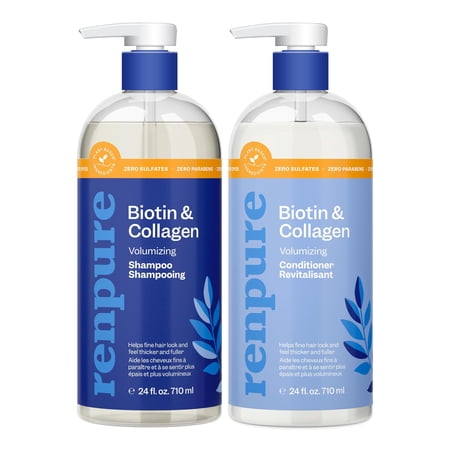
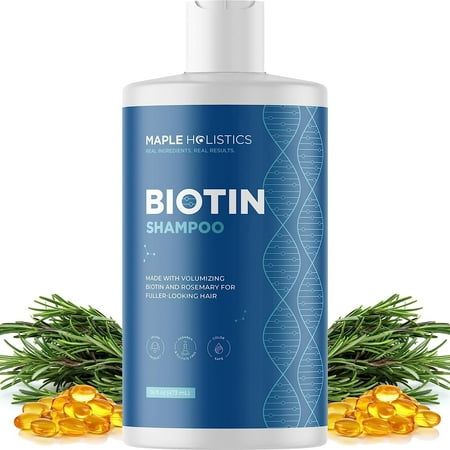

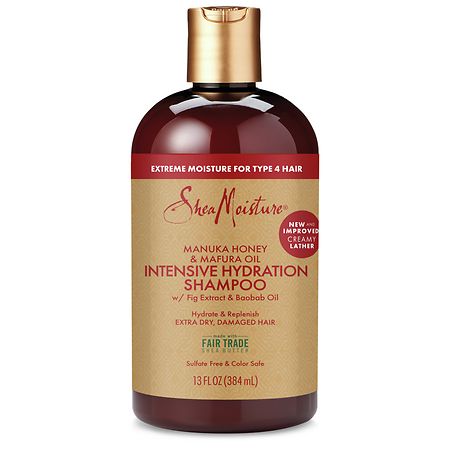
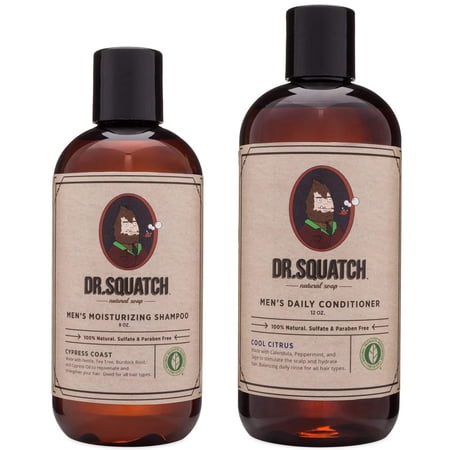
Renpure Biotin & Collagen Shampoo & Conditioner Set Plant- Based - Nutrient Infused Formulas for Fuller Thicker Looking Hair - For Fine Hair - Vitamin B7 (Biotin) & Collagen - 24 Fl Oz each 2 Pack
Analysis updated August 2026 · How Scout scores
At a glance
Summary
This shampoo and conditioner set contains a variety of beneficial ingredients such as coconut oil, biotin, and hydrolyzed collagen, which support hair health and strength. The formula uses gentle surfactants like cocamidopropyl betaine and lauryl glucoside, which are less irritating than harsher alternatives. However, the presence of phenoxyethanol and synthetic fragrance, which can cause irritation and allergic reactions, slightly detracts from the overall safety and quality of the product.
Key ingredients 30
Lauryl GlucosideVery Good
Lauryl Glucoside is a non-ionic surfactant derived from glucose and coconut oil, known for its mildness and biodegradability. It is suitable for sensitive skin and helps to create a stable foam. It is considered very safe and environmentally friendly.
Risks
There are minimal risks associated with this ingredient.
Benefits
It provides gentle cleansing and is eco-friendly.
Cocos Nucifera (Coconut) OilVery Good
Coconut oil is a natural emollient that helps to condition and moisturize the hair. It is rich in fatty acids that nourish and protect the hair. It is considered very safe and beneficial for hair health.
Risks
May cause buildup if not rinsed properly.
Benefits
It deeply conditions and nourishes the hair.
Coco GlucosideVery Good
Coco Glucoside is a mild, non-ionic surfactant derived from coconut oil and glucose. It is known for its gentle cleansing properties and is suitable for sensitive skin. It is biodegradable and considered very safe.
Risks
There are minimal risks associated with this ingredient.
Benefits
It provides gentle cleansing and is eco-friendly.
Decyl GlucosideGood
Decyl Glucoside is a mild, non-ionic surfactant derived from corn glucose and coconut oil. It is known for its gentle cleansing properties and is suitable for sensitive skin. It is biodegradable and considered very safe.
Risks
There are minimal risks associated with this ingredient.
Benefits
It offers gentle cleansing and is environmentally friendly.
Biotin (Vitamin B7)Good
Biotin is a water-soluble vitamin that supports hair health and strength. It is often used in hair care products to promote thicker, fuller hair. It is considered safe and beneficial for hair growth.
Risks
There are no significant risks associated with topical application.
Benefits
It supports hair strength and promotes healthy hair growth.
Hydrolyzed CollagenGood
Hydrolyzed Collagen is a protein that helps to strengthen and condition the hair. It is used to improve hair elasticity and moisture retention. It is generally considered safe and beneficial for hair health.
Risks
There are no significant risks associated with this ingredient.
Benefits
It strengthens hair and improves moisture retention.
Theobroma Cacao (Cocoa) ExtractGood
Cocoa extract is rich in antioxidants and helps to protect the hair from environmental damage. It also provides conditioning benefits. It is generally considered safe and beneficial.
Risks
There are no significant risks associated with this ingredient.
Benefits
It protects and conditions the hair.
Hydrolyzed Pea ProteinGood
Hydrolyzed Pea Protein is a plant-based protein that helps to strengthen and protect the hair. It is used to improve hair texture and manageability. It is considered safe and beneficial for hair health.
Risks
There are no significant risks associated with this ingredient.
Benefits
It strengthens and improves hair texture.
GlycerinGood
Glycerin is a humectant that helps to draw moisture into the hair, keeping it hydrated. It is widely used in hair care products for its moisturizing properties. It is considered safe and effective.
Risks
There are no significant risks associated with this ingredient.
Benefits
It hydrates and moisturizes the hair.
Aqua/Water/EauNeutral
Water is the primary solvent in most cosmetic products, providing a base for other ingredients. It helps to dissolve and distribute active ingredients evenly. It is generally considered safe and non-reactive.
Risks
There are no significant risks associated with water in cosmetic formulations.
Benefits
Water hydrates and helps in the application of the product.
Cocamidopropyl BetaineNeutral
Standard formulation ingredient — neither beneficial nor harmful at typical use.
Risks
In rare cases, it may cause allergic reactions or irritation.
Benefits
It provides gentle cleansing and helps maintain the hair's natural moisture balance.
Sodium Lauroyl LactylateNeutral
Standard formulation ingredient — neither beneficial nor harmful at typical use.
Risks
May cause mild irritation in very sensitive individuals.
Benefits
It provides mild cleansing and conditioning benefits.
Aesculus Hippocastanum (Horse Chestnut) Seed ExtractNeutral
Horse Chestnut Seed Extract is used for its anti-inflammatory and antioxidant properties. It may help to soothe the scalp and improve hair health. It is generally considered safe.
Risks
May cause irritation in sensitive individuals.
Benefits
It may soothe the scalp and improve hair health.
Glycol DistearateNeutral
Glycol Distearate is used as an opacifying agent and emollient in hair care products. It helps to give the product a pearlescent appearance and improve texture. It is generally considered safe.
Risks
There are no significant risks associated with this ingredient.
Benefits
It improves product texture and appearance.
Methyl Gluceth-10Neutral
Methyl Gluceth-10 is a humectant and emollient used to improve the moisture content of hair. It is derived from glucose and is considered safe for use in cosmetics. It is generally well-tolerated.
Risks
There are no significant risks associated with this ingredient.
Benefits
It helps to improve hair moisture content.
PEG-120 Methyl Glucose DioleateNeutral
PEG-120 Methyl Glucose Dioleate is used as a thickener and emulsifier in hair care products. It helps to stabilize formulations and improve texture. It is generally considered safe for use in cosmetics.
Risks
May cause irritation in very sensitive individuals.
Benefits
It stabilizes formulations and improves texture.
Trisodium Ethylenediamine DisuccinateNeutral
Trisodium Ethylenediamine Disuccinate is a chelating agent that helps to bind metal ions and improve product stability. It is used to enhance the effectiveness of preservatives. It is generally considered safe.
Risks
There are no significant risks associated with this ingredient.
Benefits
It improves product stability and preservative effectiveness.
Butylene GlycolNeutral
Butylene Glycol is a solvent and humectant used to improve the texture and moisture content of hair care products. It is generally considered safe for use in cosmetics. It is well-tolerated by most skin types.
Risks
May cause irritation in very sensitive individuals.
Benefits
It improves texture and moisture content.
Caprylyl GlycolNeutral
Caprylyl Glycol is used as a skin conditioning agent and preservative booster. It helps to improve the moisture content of hair and enhance the effectiveness of preservatives. It is generally considered safe.
Risks
There are no significant risks associated with this ingredient.
Benefits
It conditions the hair and boosts preservative effectiveness.
Polyquaternium-10Neutral
Polyquaternium-10 is a conditioning agent that helps to improve hair texture and manageability. It is used to reduce static and enhance the feel of hair. It is generally considered safe for use in cosmetics.
Risks
There are no significant risks associated with this ingredient.
Benefits
It improves hair texture and reduces static.
Citric AcidNeutral
Citric Acid is used to adjust the pH of hair care products and improve stability. It is derived from citrus fruits and is generally considered safe for use in cosmetics. It is well-tolerated by most skin types.
Risks
May cause irritation in very sensitive individuals.
Benefits
It adjusts pH and improves product stability.
Silicone Quaternium-17Neutral
Silicone Quaternium-17 is a conditioning agent that helps to improve hair texture and manageability. It is used to reduce frizz and enhance shine. It is generally considered safe for use in cosmetics.
Risks
May cause buildup if not rinsed properly.
Benefits
It reduces frizz and enhances shine.
EthylhexylglycerinNeutral
Ethylhexylglycerin is used as a skin conditioning agent and preservative booster. It helps to improve the moisture content of hair and enhance the effectiveness of preservatives. It is generally considered safe.
Risks
There are no significant risks associated with this ingredient.
Benefits
It conditions the hair and boosts preservative effectiveness.
Phenethyl AlcoholNeutral
Phenethyl Alcohol is used as a fragrance ingredient and preservative in hair care products. It provides a pleasant scent and helps to preserve the product. It is generally considered safe for use in cosmetics.
Risks
May cause irritation in very sensitive individuals.
Benefits
It provides fragrance and preservative benefits.
Hexyl CinnamalNeutral
Hexyl Cinnamal is a fragrance ingredient used to impart a floral scent. It is generally considered safe but can cause allergic reactions in sensitive individuals. It is used to enhance the fragrance profile of the product.
Risks
May cause allergic reactions in sensitive individuals.
Benefits
Provides a floral scent to the product.
Sodium Lauroyl SarcosinateBad
Processed additive flagged under Scout's ingredient doctrine.
Risks
May cause mild irritation in very sensitive individuals.
Benefits
It offers mild cleansing and helps maintain hair's natural moisture.
PhenoxyethanolBad
Phenoxyethanol is a preservative used to prevent microbial growth in cosmetics. It is effective but can cause irritation in some individuals. It is considered safe in low concentrations but has potential for skin irritation.
Risks
May cause skin irritation and allergic reactions.
Benefits
It effectively preserves the product by preventing microbial growth.
LimoneneBad
Processed additive flagged under Scout's ingredient doctrine.
Risks
May cause skin irritation upon oxidation.
Benefits
Provides a fresh citrus scent.
LinaloolBad
Processed additive flagged under Scout's ingredient doctrine.
Risks
May cause skin irritation in sensitive individuals.
Benefits
Provides a pleasant floral scent.
Parfum/FragranceVery Bad
Synthetic fragrances are used to provide a pleasant scent but can contain a mixture of undisclosed chemicals. They are known to cause allergic reactions and sensitivities in some individuals. They are considered a potential irritant.
Risks
May cause allergic reactions and skin irritation.
Benefits
Provides a pleasant scent to the product.
Get the full breakdown in the Scout appTake Scout shopping
Scan any product to see lab results, healthy alternatives, and your personalized analysis.
Download on theApp Store GET IT ONGoogle PlayAmazon pricing & content
Amazon price as of . Product prices and availability are accurate as of the date/time indicated and are subject to change. Any price and availability information displayed on Amazon.com at the time of purchase will apply to the purchase of this product.
CERTAIN CONTENT THAT APPEARS ON THIS SITE COMES FROM AMAZON. THIS CONTENT IS PROVIDED “AS IS” AND IS SUBJECT TO CHANGE OR REMOVAL AT ANY TIME.