
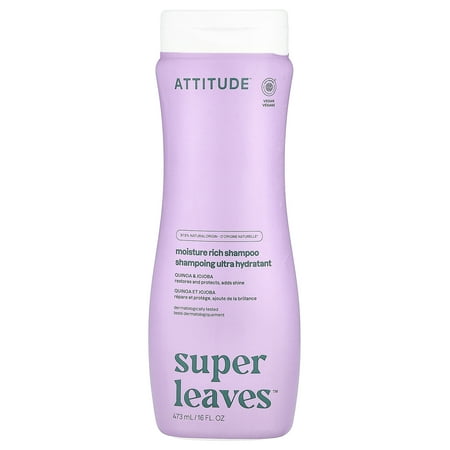
Attitude Super Leaves Moisture Rich Shampoo - 16 oz
Analysis updated August 2026 · How Scout scores
At a glance
Summary
This shampoo features several beneficial ingredients like coconut-derived surfactants and proteins that support hair health and moisture retention. However, the presence of sodium chloride as a thickener and synthetic fragrance, which can cause irritation, slightly detracts from its overall safety profile. The product is moderately processed, which also influences its rating.
Key ingredients 25
Sodium Coco-SulfateVery Good
Sodium Coco-Sulfate is a coconut-derived surfactant that gently cleanses the hair. It is less harsh than traditional sulfates like SLS. It helps to create a rich lather without stripping natural oils.
Risks
In rare cases, it may cause mild irritation for sensitive scalps.
Benefits
It effectively cleanses the hair while maintaining moisture balance.
Coco-GlucosideVery Good
Coco-Glucoside is a mild, non-ionic surfactant derived from coconut oil and glucose. It is gentle on the skin and hair, making it suitable for sensitive scalps. It helps to cleanse without causing dryness.
Risks
Generally considered safe with minimal risk of irritation.
Benefits
Provides gentle cleansing and helps maintain the natural moisture barrier.
Sodium Cocoyl IsethionateVery Good
Sodium Cocoyl Isethionate is a mild surfactant derived from coconut oil. It is known for its ability to cleanse without stripping natural oils. It produces a creamy lather that is gentle on the hair.
Risks
Rarely, it may cause mild irritation in very sensitive individuals.
Benefits
It provides effective cleansing while maintaining hair's natural moisture.
GlycerinGood
Glycerin is a humectant that attracts moisture to the hair and scalp. It helps to keep hair hydrated and soft. It is derived from natural sources and is safe for most users.
Risks
Overuse can lead to a sticky feeling if not properly rinsed.
Benefits
It enhances moisture retention, improving hair texture and softness.
InulinGood
Beneficial ingredient — whole-food or functional value in this product class.
Risks
There are no significant risks associated with inulin in cosmetic formulations.
Benefits
Improves hair texture and provides a conditioning effect.
PanthenolGood
Panthenol is a form of Vitamin B5 that acts as a moisturizer and conditioner. It helps to improve hair elasticity and shine. It is well-tolerated and beneficial for hair health.
Risks
Rarely, it may cause mild irritation in sensitive individuals.
Benefits
Enhances hair moisture, elasticity, and shine.
Hydrolyzed Jojoba ProteinGood
Hydrolyzed Jojoba Protein is a conditioning agent that strengthens and protects hair. It helps to improve hair texture and manageability. It is derived from jojoba oil and is safe for use in cosmetics.
Risks
There are no significant risks associated with hydrolyzed jojoba protein.
Benefits
Strengthens and protects hair, improving texture and manageability.
Hydrolyzed QuinoaGood
Hydrolyzed Quinoa is a protein that helps to strengthen and protect hair. It improves hair elasticity and moisture retention. It is derived from quinoa and is safe for use in cosmetics.
Risks
There are no significant risks associated with hydrolyzed quinoa.
Benefits
Strengthens hair and improves moisture retention and elasticity.
Aqua/Water/EauNeutral
Water is a universal solvent used to dissolve other ingredients. It acts as a base for the formulation. It does not have any direct benefits or risks.
Risks
There are no inherent risks associated with water in cosmetic formulations.
Benefits
Water helps to evenly distribute the other ingredients in the product.
Lauryl HydroxysultaineNeutral
Lauryl Hydroxysultaine is a surfactant and foam booster. It helps to stabilize the foam and improve the texture of the shampoo. It is generally considered safe for use in cosmetics.
Risks
May cause mild irritation if used in high concentrations.
Benefits
Enhances the foaming properties of the shampoo, improving user experience.
Citric AcidNeutral
Citric Acid is used to adjust the pH of the product. It helps to maintain the stability and effectiveness of the formulation. It is naturally derived and commonly used in cosmetics.
Risks
In high concentrations, it can cause irritation to the skin and eyes.
Benefits
Helps to maintain the pH balance of the shampoo, ensuring product stability.
Glyceryl OleateNeutral
Glyceryl Oleate is an emulsifier and conditioning agent. It helps to blend oil and water components in the formulation. It is derived from natural sources and is generally safe.
Risks
May cause mild irritation if used in high concentrations.
Benefits
Improves the texture and stability of the shampoo.
Sodium ChlorideNeutral
Standard formulation ingredient — neither beneficial nor harmful at typical use.
Risks
May lead to dryness and irritation, especially for sensitive scalps.
Benefits
Helps to thicken the shampoo, improving its consistency.
Guar Hydroxypropyltrimonium ChlorideNeutral
Guar Hydroxypropyltrimonium Chloride is a conditioning agent derived from guar gum. It helps to improve hair manageability and reduce static. It is generally considered safe for use in cosmetics.
Risks
May cause mild irritation if used in high concentrations.
Benefits
Improves hair manageability and reduces static.
Nasturtium Officinale (Watercress) ExtractNeutral
Watercress extract is used for its antioxidant properties. It helps to protect hair from environmental damage. It is derived from natural sources and is generally safe.
Risks
There are no significant risks associated with watercress extract.
Benefits
Provides antioxidant protection for hair.
Tropaeolum Majus (Indian Cress) ExtractNeutral
Indian Cress extract is used for its conditioning properties. It helps to improve hair texture and shine. It is derived from natural sources and is generally safe.
Risks
There are no significant risks associated with Indian Cress extract.
Benefits
Improves hair texture and shine.
Leuconostoc/Radish Root Ferment FiltrateNeutral
This ingredient is used as a natural preservative. It helps to inhibit microbial growth in the product. It is derived from natural fermentation processes and is generally safe.
Risks
There are no significant risks associated with this ingredient.
Benefits
Provides natural preservation, ensuring product safety.
1,2-DihydrolinaloolNeutral
1,2-Dihydrolinalool is a fragrance component used to impart scent. It is commonly used in cosmetics for its pleasant aroma. It is generally considered safe in low concentrations.
Risks
May cause allergic reactions in sensitive individuals.
Benefits
Adds a pleasant fragrance to the product.
Cis-3-Hexenyl SalicylateNeutral
Cis-3-Hexenyl Salicylate is a fragrance ingredient used to impart a fresh scent. It is commonly used in cosmetics for its aromatic properties. It is generally considered safe in low concentrations.
Risks
May cause allergic reactions in sensitive individuals.
Benefits
Contributes a fresh scent to the product.
MethyldihydrojasmonateNeutral
Methyldihydrojasmonate is a fragrance ingredient used to impart a floral scent. It is commonly used in cosmetics for its aromatic properties. It is generally considered safe in low concentrations.
Risks
May cause allergic reactions in sensitive individuals.
Benefits
Adds a floral fragrance to the product.
PentadecalactoneNeutral
Pentadecalactone is a fragrance ingredient used to impart a musky scent. It is commonly used in cosmetics for its aromatic properties. It is generally considered safe in low concentrations.
Risks
May cause allergic reactions in sensitive individuals.
Benefits
Contributes a musky scent to the product.
Triethyl CitrateNeutral
Triethyl Citrate is used as a fragrance fixative and stabilizer. It helps to prolong the scent of the product. It is generally considered safe for use in cosmetics.
Risks
May cause mild irritation if used in high concentrations.
Benefits
Stabilizes and prolongs the fragrance of the product.
Sodium BenzoateBad
Synthetic preservative that can form benzene in the presence of vitamin C.
Risks
In rare cases, it may cause mild irritation or allergic reactions.
Benefits
Prevents microbial growth, ensuring product safety and longevity.
Potassium SorbateBad
Synthetic preservative — flagged in daily-use products.
Risks
May cause mild irritation or allergic reactions in sensitive individuals.
Benefits
Prevents microbial growth, ensuring product safety and longevity.
Fragrance (Parfum)Very Bad
Fragrance is a synthetic blend used to impart scent to the product. It can contain undisclosed chemicals that may cause irritation or allergic reactions. It is often criticized for lack of transparency in ingredient disclosure.
Risks
May cause irritation, allergic reactions, or sensitivity in some individuals.
Benefits
Provides a pleasant scent to the product.
Get the full breakdown in the Scout appTake Scout shopping
Scan any product to see lab results, healthy alternatives, and your personalized analysis.
Download on theApp Store GET IT ONGoogle PlayAmazon pricing & content
Amazon price as of . Product prices and availability are accurate as of the date/time indicated and are subject to change. Any price and availability information displayed on Amazon.com at the time of purchase will apply to the purchase of this product.
CERTAIN CONTENT THAT APPEARS ON THIS SITE COMES FROM AMAZON. THIS CONTENT IS PROVIDED “AS IS” AND IS SUBJECT TO CHANGE OR REMOVAL AT ANY TIME.