
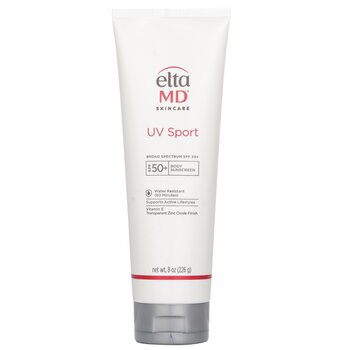

EltaMD UV Sport Sunscreen Lotion SPF 50 Body Sunscreen Water and Sweat Resistant Oil-Free Zinc Oxide Formula 8 oz Tube
Analysis updated August 2026 · How Scout scores
At a glance
Summary
This sunscreen contains both mineral and chemical UV filters, with zinc oxide providing a safer option for UV protection. However, the presence of octinoxate, a chemical filter linked to hormone disruption, and iodopropynyl butylcarbamate, a preservative associated with skin sensitization, lowers its safety profile. The inclusion of beneficial ingredients like beeswax and tocopheryl acetate helps to balance the formulation, but the overall processing level and presence of concerning chemicals prevent a higher score.
Key ingredients 18
BeeswaxVery Good
Beeswax is a natural wax produced by honeybees and is used as an emollient and thickening agent. It helps to lock in moisture and provides a protective barrier on the skin. It is highly valued for its natural origin and skin-conditioning properties.
Risks
There is a low risk of allergic reactions in individuals sensitive to bee products.
Benefits
It provides excellent moisturizing and protective benefits, enhancing skin hydration.
Zinc OxideGood
Zinc Oxide is a mineral sunscreen agent that provides broad-spectrum UV protection. It is considered safe and effective for sensitive skin. It is often used in physical sunscreens due to its ability to reflect UV rays.
Risks
There are minimal risks associated with Zinc Oxide, though it can leave a white cast on the skin.
Benefits
It offers excellent protection against both UVA and UVB rays and is non-irritating.
Tocopheryl AcetateGood
Tocopheryl Acetate is a form of Vitamin E used as an antioxidant in cosmetic formulations. It helps to protect the skin from free radical damage and improve skin health. It is valued for its skin-conditioning and protective properties.
Risks
There is a minimal risk of skin irritation.
Benefits
It offers antioxidant benefits, protecting the skin from environmental damage.
OctisalateNeutral
Octisalate is used to stabilize other sunscreen ingredients and enhance their effectiveness. It is generally considered safe for use in sunscreens. It helps to increase the water resistance of sunscreen formulations.
Risks
There is a low risk of skin irritation, especially for sensitive skin types.
Benefits
It helps to stabilize sunscreen formulations and improve their efficacy.
WaterNeutral
Water is used as a solvent in cosmetic formulations. It helps to dissolve other ingredients and provides a base for the product. It is essential for the consistency and application of the lotion.
Risks
There are no significant risks associated with water in cosmetic formulations.
Benefits
It acts as a solvent and helps in the even application of the product.
Isopropyl PalmitateNeutral
Isopropyl Palmitate is an emollient that helps to soften and smooth the skin. It is derived from palm oil and is commonly used in lotions and creams. It enhances the spreadability of the product.
Risks
It may cause acne or skin irritation in some individuals with sensitive skin.
Benefits
It provides a smooth, silky feel to the skin and improves the texture of the product.
Octyldodecyl NeopentanoateNeutral
Octyldodecyl Neopentanoate is an emollient that provides a silky feel to the skin. It is used to improve the texture and spreadability of cosmetic products. It is generally considered safe for use in cosmetics.
Risks
There is a low risk of skin irritation, particularly for sensitive skin types.
Benefits
It enhances the texture and application of the product, leaving the skin feeling smooth.
Cetyl PEG/PPG-10/1 DimethiconeNeutral
Cetyl PEG/PPG-10/1 Dimethicone is a silicone-based compound used as an emulsifier and conditioning agent. It helps to improve the texture and spreadability of the product. It is commonly used in skincare products for its smoothing properties.
Risks
There is a potential risk of skin irritation, especially for those with silicone sensitivities.
Benefits
It provides a smooth application and helps to condition the skin.
Hexyl LaurateNeutral
Hexyl Laurate is an ester used as an emollient and thickening agent in cosmetics. It helps to improve the texture and feel of the product. It is generally considered safe for use in cosmetic formulations.
Risks
There is a low risk of skin irritation, particularly for sensitive skin types.
Benefits
It enhances the texture and spreadability of the product, providing a smooth feel.
Polyglyceryl-4 IsostearateNeutral
Polyglyceryl-4 Isostearate is an emulsifier that helps to blend oil and water-based ingredients. It is derived from natural sources and is considered safe for use in cosmetics. It helps to stabilize formulations and improve texture.
Risks
There is a minimal risk of skin irritation.
Benefits
It aids in the stability and consistency of the product, ensuring even application.
Cetyl DimethiconeNeutral
Cetyl Dimethicone is a silicone-based compound used as an emollient and conditioning agent. It provides a smooth, silky feel to the skin and improves the texture of the product. It is commonly used in skincare products for its smoothing properties.
Risks
There is a potential risk of skin irritation, especially for those with silicone sensitivities.
Benefits
It enhances the texture and application of the product, leaving the skin feeling smooth.
Sodium ChlorideNeutral
Sodium Chloride, or table salt, is used as a thickening agent in cosmetic formulations. It helps to improve the texture and consistency of the product. It is generally considered safe for use in cosmetics.
Risks
There is a minimal risk of skin irritation.
Benefits
It aids in the thickening of the product, improving its texture and application.
Hydrogenated Castor OilNeutral
Standard formulation ingredient — neither beneficial nor harmful at typical use.
Risks
There is a minimal risk of skin irritation.
Benefits
It offers excellent moisturizing benefits, enhancing skin softness and hydration.
TriethoxycaprylylsilaneNeutral
Triethoxycaprylylsilane is a silicone-based compound used as a surface modifier in cosmetics. It helps to improve the dispersion of pigments and enhance the texture of the product. It is generally considered safe for use in cosmetics.
Risks
There is a potential risk of skin irritation, especially for those with silicone sensitivities.
Benefits
It enhances the texture and application of the product, ensuring even distribution.
Butylene GlycolNeutral
Butylene Glycol is a humectant used to retain moisture in cosmetic formulations. It helps to improve the texture and spreadability of the product. It is generally considered safe for use in cosmetics.
Risks
There is a low risk of skin irritation, particularly for sensitive skin types.
Benefits
It provides moisturizing benefits, enhancing skin hydration and smoothness.
Disodium EDTABad
Processed additive flagged under Scout's ingredient doctrine.
Risks
There is a minimal risk of skin irritation.
Benefits
It enhances the stability and longevity of the product, ensuring consistent performance.
Iodopropynyl ButylcarbamateBad
Iodopropynyl Butylcarbamate is a preservative used to prevent microbial growth in cosmetic products. It is effective at low concentrations but has been associated with skin sensitization. It is used to extend the shelf life of products.
Risks
It may cause skin irritation or allergic reactions, particularly in sensitive individuals.
Benefits
It helps to preserve the product, preventing spoilage and microbial contamination.
OctinoxateVery Bad
Octinoxate is a chemical UV filter that absorbs UVB rays. It is commonly used in sunscreens but has been linked to hormone disruption. Environmental concerns have also been raised due to its potential to harm coral reefs.
Risks
It may cause skin irritation and has been associated with endocrine disruption.
Benefits
It effectively absorbs UVB radiation, preventing sunburn.
Get the full breakdown in the Scout appTake Scout shopping
Scan any product to see lab results, healthy alternatives, and your personalized analysis.
Download on theApp Store GET IT ONGoogle PlayAmazon pricing & content
Amazon price as of . Product prices and availability are accurate as of the date/time indicated and are subject to change. Any price and availability information displayed on Amazon.com at the time of purchase will apply to the purchase of this product.
CERTAIN CONTENT THAT APPEARS ON THIS SITE COMES FROM AMAZON. THIS CONTENT IS PROVIDED “AS IS” AND IS SUBJECT TO CHANGE OR REMOVAL AT ANY TIME.