
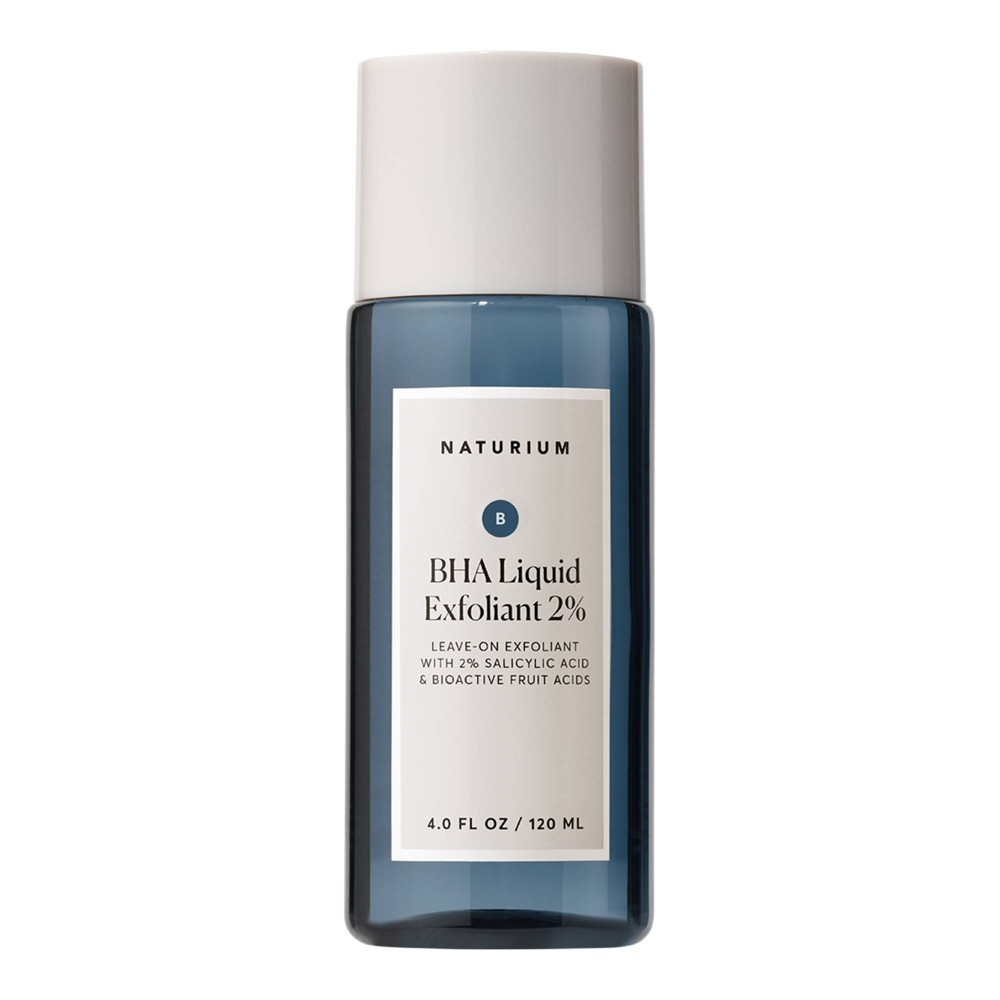

Naturium BHA Liquid Exfoliant 2% - 4 fl oz: Paraben-Free, Vegan, Pore Cleansing, Face Application
Analysis updated July 2026 · How Scout scores
At a glance
Summary
This product contains beneficial ingredients like salicylic acid and glycerin, which are known for their skin-cleansing and moisturizing properties. However, the presence of phenoxyethanol, a synthetic preservative, and sodium polyacrylate, a synthetic polymer, slightly lowers its score due to potential skin irritation concerns. The product is moderately processed, which also impacts its overall rating.
Key ingredients 18
Salicylic AcidVery Good
Salicylic Acid is a beta hydroxy acid (BHA) known for its exfoliating properties. It helps in unclogging pores and reducing acne. It is widely used in skincare for its ability to improve skin texture.
Risks
Overuse can lead to skin irritation and dryness.
Benefits
It effectively exfoliates the skin and helps in treating acne.
GlycerinGood
Glycerin is a well-known humectant that attracts moisture to the skin. It is widely used in skincare for its hydrating properties. It is considered safe and effective for all skin types.
Risks
There are no significant risks associated with glycerin.
Benefits
It provides excellent hydration and helps maintain skin moisture levels.
TocopherolGood
Tocopherol, also known as Vitamin E, is an antioxidant that helps protect the skin from free radical damage. It is widely used in skincare for its moisturizing and protective properties. It is considered safe and beneficial for all skin types.
Risks
There are no significant risks associated with tocopherol.
Benefits
It provides antioxidant protection and helps maintain skin health.
WaterNeutral
Water is a common solvent used in cosmetic formulations. It helps dissolve other ingredients and provides a base for the product. It does not have any direct benefits or risks.
Risks
There are no significant risks associated with water in cosmetics.
Benefits
Water helps in the application and absorption of other ingredients.
Butylene GlycolNeutral
Butylene Glycol is a common humectant that helps retain moisture in the skin. It also acts as a solvent and improves the texture of the product. It is generally considered safe for use in cosmetics.
Risks
In rare cases, it may cause irritation in sensitive skin.
Benefits
It helps in keeping the skin hydrated and enhances the product's texture.
PropanediolNeutral
Propanediol is used as a solvent and skin-conditioning agent. It is derived from corn sugar and is considered a safer alternative to propylene glycol. It is generally well-tolerated by the skin.
Risks
May cause mild irritation in very sensitive individuals.
Benefits
It enhances the absorption of other ingredients and provides moisture to the skin.
Sodium PolyacrylateNeutral
Sodium Polyacrylate is used as a thickening agent and film-former in cosmetics. It helps in improving the texture and stability of the product. It is generally considered safe for use in cosmetics.
Risks
There are minimal risks associated with its use in cosmetics.
Benefits
It enhances the product's texture and stability.
Citric AcidNeutral
Citric Acid is used to adjust the pH of cosmetic products. It also has mild exfoliating properties. It is generally safe for use in cosmetics.
Risks
May cause irritation if used in high concentrations.
Benefits
It helps in maintaining the product's pH balance and provides mild exfoliation.
DiglycerinNeutral
Diglycerin is similar to glycerin and acts as a humectant. It helps in retaining moisture in the skin. It is generally considered safe for use in cosmetics.
Risks
There are minimal risks associated with its use.
Benefits
It helps in keeping the skin hydrated.
Citrus Glauca Fruit ExtractNeutral
Citrus Glauca Fruit Extract is used for its antioxidant properties. It may help in protecting the skin from environmental damage. It is generally considered safe for use in cosmetics.
Risks
May cause irritation in sensitive skin.
Benefits
It provides antioxidant benefits and helps protect the skin.
Microcitrus Australasica Fruit ExtractNeutral
Microcitrus Australasica Fruit Extract is known for its antioxidant properties. It may help in improving skin radiance and texture. It is generally safe for use in cosmetics.
Risks
Potential for irritation in sensitive individuals.
Benefits
It offers antioxidant protection and enhances skin appearance.
Microcitrus Australis Fruit ExtractNeutral
Microcitrus Australis Fruit Extract is used for its antioxidant and skin-conditioning properties. It may help in improving skin texture and appearance. It is generally considered safe for use in cosmetics.
Risks
May cause irritation in sensitive skin.
Benefits
It provides antioxidant benefits and improves skin texture.
HydroxyacetophenoneNeutral
Hydroxyacetophenone is used as an antioxidant and skin-conditioning agent. It helps in stabilizing the product and providing skin benefits. It is generally considered safe for use in cosmetics.
Risks
There are minimal risks associated with its use.
Benefits
It offers antioxidant protection and enhances product stability.
Sodium PhytateNeutral
Sodium Phytate is used as a chelating agent in cosmetics. It helps in stabilizing the product by binding metal ions. It is generally considered safe for use in cosmetics.
Risks
There are minimal risks associated with its use.
Benefits
It enhances product stability and effectiveness.
Caprylyl GlycolNeutral
Caprylyl Glycol is used as a skin-conditioning agent and preservative booster. It helps in improving skin hydration and product preservation. It is generally considered safe for use in cosmetics.
Risks
There are minimal risks associated with its use.
Benefits
It enhances skin hydration and product preservation.
PhenylpropanolNeutral
Phenylpropanol is used as a fragrance ingredient and preservative in cosmetics. It helps in enhancing the scent and stability of the product. It is generally considered safe for use in cosmetics.
Risks
May cause irritation in sensitive individuals.
Benefits
It enhances the product's scent and preservation.
CarrageenanBad
Processed additive flagged under Scout's ingredient doctrine.
Risks
There are minimal risks associated with its use.
Benefits
It enhances the product's texture and stability.
PhenoxyethanolBad
Phenoxyethanol is a preservative used to prevent microbial growth in cosmetics. It is effective but can be irritating to the skin and eyes. It is often criticized for potential toxicity concerns.
Risks
May cause irritation and allergic reactions in sensitive individuals.
Benefits
It helps in preserving the product and extending its shelf life.
Get the full breakdown in the Scout appTake Scout shopping
Scan any product to see lab results, healthy alternatives, and your personalized analysis.
Download on theApp Store GET IT ONGoogle PlayAmazon pricing & content
Amazon price as of . Product prices and availability are accurate as of the date/time indicated and are subject to change. Any price and availability information displayed on Amazon.com at the time of purchase will apply to the purchase of this product.
CERTAIN CONTENT THAT APPEARS ON THIS SITE COMES FROM AMAZON. THIS CONTENT IS PROVIDED “AS IS” AND IS SUBJECT TO CHANGE OR REMOVAL AT ANY TIME.