
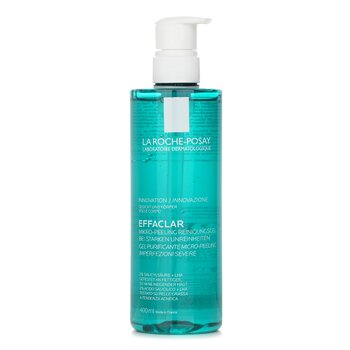

La Roche PosayEffaclar Micro-Peeling Purifying Gel - For Acne-Prone Skin(Random Packaging) 400ml/13.5oz
Analysis updated July 2026 · How Scout scores
At a glance
Summary
This product contains beneficial ingredients like Decyl Glucoside, Glycerin, Salicylic Acid, and LHA, which are known for their gentle cleansing and exfoliating properties. However, the presence of Sodium Laureth Sulfate, a surfactant with potential contamination risks, lowers its safety profile. The overall formulation is moderately processed, which affects its rating.
Key ingredients 9
Decyl GlucosideGood
Decyl Glucoside is a mild, non-ionic surfactant derived from glucose and coconut oil. It is gentle on the skin and suitable for sensitive skin types. It is biodegradable and considered environmentally friendly.
Risks
There are minimal risks associated with Decyl Glucoside, making it suitable for most skin types.
Benefits
It provides gentle cleansing without stripping the skin's natural oils, maintaining skin barrier integrity.
GlycerinGood
Glycerin is a humectant that attracts moisture to the skin, helping to keep it hydrated. It is widely used in skincare for its moisturizing properties. It is non-irritating and suitable for all skin types.
Risks
There are no significant risks associated with glycerin in cosmetic formulations.
Benefits
It helps to maintain skin hydration and improve skin barrier function.
Salicylic AcidGood
Salicylic Acid is a beta hydroxy acid (BHA) known for its exfoliating and anti-inflammatory properties. It helps to unclog pores and reduce acne. It is effective in treating acne-prone skin.
Risks
It may cause irritation or dryness, especially in sensitive skin or with overuse.
Benefits
It helps to exfoliate the skin, reduce acne, and improve skin texture.
LHAGood
LHA, or Lipo Hydroxy Acid, is a derivative of salicylic acid with similar exfoliating properties. It is gentler and provides targeted exfoliation. It is effective in improving skin texture and clarity.
Risks
There is a low risk of irritation, making it suitable for sensitive skin.
Benefits
It offers gentle exfoliation, helping to refine skin texture and reduce acne.
ZincGood
Beneficial ingredient — whole-food or functional value in this product class.
Risks
There are minimal risks associated with topical zinc, though it may cause dryness in some cases.
Benefits
It helps to calm inflammation and reduce acne, promoting clearer skin.
AquaNeutral
Aqua, or water, is a common solvent used in cosmetic formulations. It helps dissolve other ingredients and provides a base for the product. It is generally considered safe and non-reactive.
Risks
There are no significant risks associated with water in cosmetic products.
Benefits
Water helps to hydrate the skin and acts as a carrier for other beneficial ingredients.
Sodium ChlorideNeutral
Sodium Chloride, or table salt, is used to adjust the viscosity of cosmetic products. It is generally considered safe and non-irritating. It can also act as a mild exfoliant.
Risks
In high concentrations, it may cause dryness or irritation.
Benefits
It helps to thicken formulations and can enhance the cleansing process.
Polyquaternium-47Neutral
Polyquaternium-47 is a conditioning agent used to improve the texture and feel of hair and skin. It forms a protective film on the surface, enhancing smoothness. It is generally considered safe for use in cosmetics.
Risks
There are minimal risks associated with its use, though it may cause build-up with excessive use.
Benefits
It provides conditioning benefits, leaving skin and hair feeling soft and smooth.
Sodium Laureth SulfateBad
Sodium Laureth Sulfate is a surfactant used for its cleansing and foaming properties. It is milder than Sodium Lauryl Sulfate but can still strip natural oils from the skin. There is a risk of contamination with 1,4-dioxane, a potential carcinogen.
Risks
It can cause skin irritation and dryness, especially in sensitive individuals.
Benefits
It effectively removes dirt and oil from the skin, contributing to a clean feeling.
Get the full breakdown in the Scout appTake Scout shopping
Scan any product to see lab results, healthy alternatives, and your personalized analysis.
Download on theApp Store GET IT ONGoogle Play