
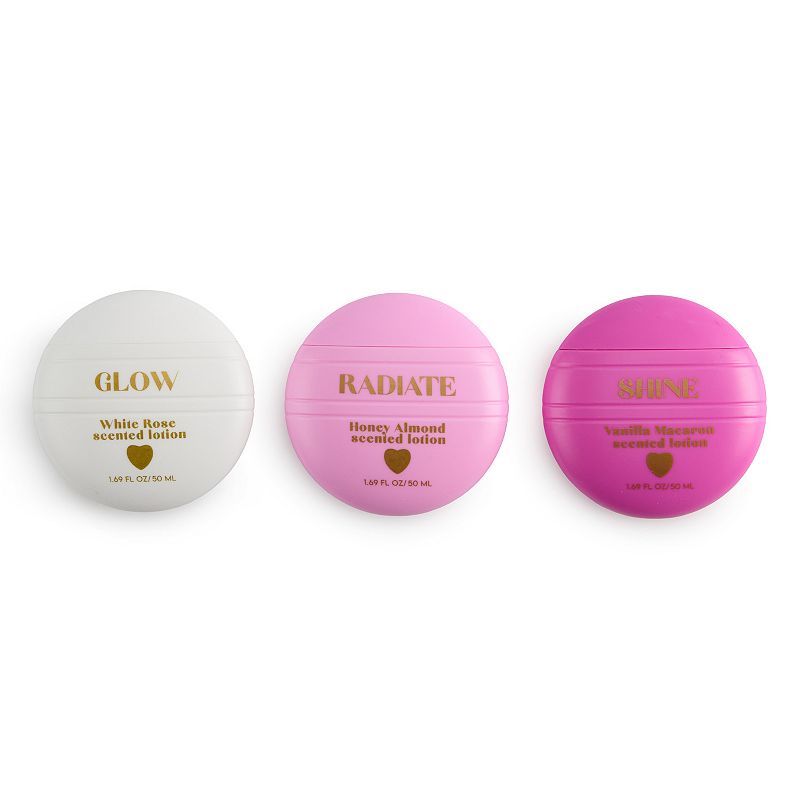

Simple Pleasures 3-pc. Travel Lotion Set, Bejeweled
Analysis updated July 2026 · How Scout scores
At a glance
Summary
This lotion set contains a mix of natural and synthetic ingredients. Beneficial components like grape seed oil, sweet almond oil, and cocoa seed butter provide moisturizing properties. However, the presence of synthetic fragrance and phenoxyethanol, a preservative with potential irritation concerns, lowers the overall safety profile. The product's processing level and inclusion of several synthetic additives further impact its rating.
Key ingredients 23
vitis vinifera (grape) seed oilVery Good
Grape seed oil is a natural oil rich in antioxidants and fatty acids. It is known for its moisturizing and anti-inflammatory properties.
Risks
There are minimal risks associated with grape seed oil, though it may cause mild irritation in rare cases.
Benefits
It helps moisturize the skin and provides antioxidant protection.
prunus amygdalus dulcis (sweet almond) oilVery Good
Sweet almond oil is a natural oil rich in vitamins and fatty acids. It is known for its moisturizing and nourishing properties.
Risks
It may cause allergic reactions in individuals with nut allergies.
Benefits
It helps moisturize and soothe the skin, improving its texture.
panthenolVery Good
Panthenol is a provitamin of B5 known for its moisturizing and soothing properties. It helps improve skin hydration and elasticity.
Risks
There are minimal risks associated with panthenol.
Benefits
It helps soothe and hydrate the skin, promoting healing.
theobroma cacao (cocoa) seed butterVery Good
Cocoa seed butter is a natural fat extracted from cocoa beans. It is known for its rich emollient properties and ability to deeply moisturize the skin.
Risks
It may cause breakouts in acne-prone skin due to its occlusive nature.
Benefits
It helps nourish and hydrate the skin, improving its softness.
glycerinGood
Glycerin is a humectant that attracts moisture to the skin. It is widely used in skincare for its hydrating properties.
Risks
There are no significant risks associated with glycerin.
Benefits
It helps keep the skin hydrated and soft.
tocopheryl acetateGood
Tocopheryl acetate is a form of vitamin E used for its antioxidant properties. It helps protect the skin from free radical damage.
Risks
It may cause mild irritation in sensitive skin types.
Benefits
It provides antioxidant protection and helps maintain skin health.
tocopherolGood
Tocopherol is a form of vitamin E used for its antioxidant properties. It helps protect the skin from free radical damage.
Risks
It may cause mild irritation in sensitive skin types.
Benefits
It provides antioxidant protection and helps maintain skin health.
aqua (water)Neutral
Water is a common solvent used in cosmetic formulations. It helps dissolve other ingredients and provides a base for the product. It is generally considered safe and non-irritating.
Risks
There are no significant risks associated with water in cosmetics.
Benefits
Water helps hydrate the skin by providing moisture.
cetearyl alcoholNeutral
Cetearyl alcohol is a fatty alcohol used as an emollient and thickener in cosmetics. It helps stabilize and thicken formulations. It is generally considered safe for use in skincare products.
Risks
In rare cases, it may cause skin irritation in sensitive individuals.
Benefits
It helps soften and smooth the skin, improving texture.
stearic acidNeutral
Stearic acid is a fatty acid used as an emulsifier and thickener in cosmetics. It helps stabilize formulations and improve texture.
Risks
It may cause mild irritation in sensitive skin types.
Benefits
It helps maintain the consistency and stability of the product.
ceteareth-20Neutral
Ceteareth-20 is an emulsifier used to blend oil and water-based ingredients. It helps stabilize formulations.
Risks
There is a potential risk of contamination with 1,4-dioxane, a byproduct of ethoxylation.
Benefits
It helps maintain the consistency and stability of the product.
carbomerNeutral
Carbomer is a thickening agent used to stabilize and thicken cosmetic formulations. It helps improve the texture and consistency of products.
Risks
There are no significant risks associated with carbomer.
Benefits
It helps maintain the desired consistency of the product.
sodium hydroxideNeutral
Sodium hydroxide is used to adjust the pH of cosmetic formulations. It is used in small amounts to ensure product stability.
Risks
In high concentrations, it can be corrosive and cause skin irritation.
Benefits
It helps maintain the stability and effectiveness of the product.
ethylhexylglycerinNeutral
Ethylhexylglycerin is a preservative and skin conditioning agent. It is used to enhance the efficacy of other preservatives.
Risks
It may cause mild irritation in sensitive individuals.
Benefits
It helps preserve the product and improve skin feel.
dimethiconeBad
Occlusive silicone film-former — flagged under clean-beauty doctrine.
Risks
It can potentially clog pores, leading to breakouts in acne-prone skin.
Benefits
It provides a silky, smooth feel and helps lock in moisture.
phenoxyethanolBad
Phenoxyethanol is a preservative used to prevent microbial growth. It can cause skin irritation and allergic reactions in some individuals.
Risks
It may cause skin irritation and allergic reactions.
Benefits
It helps preserve the product by preventing microbial contamination.
citronellolBad
Citronellol is a fragrance component that can cause allergic reactions and skin irritation. It is a common allergen in cosmetics.
Risks
It may cause allergic reactions and skin irritation.
Benefits
It provides a pleasant scent to the product.
geraniolBad
Geraniol is a fragrance component that can cause allergic reactions and skin irritation. It is a common allergen in cosmetics.
Risks
It may cause allergic reactions and skin irritation.
Benefits
It provides a floral scent to the product.
disodium edtaBad
Processed additive flagged under Scout's ingredient doctrine.
Risks
There are no significant risks associated with disodium EDTA.
Benefits
It helps maintain the stability and effectiveness of the product.
citralBad
Citral is a fragrance component that can cause allergic reactions and skin irritation. It is a common allergen in cosmetics.
Risks
It may cause allergic reactions and skin irritation.
Benefits
It provides a citrus scent to the product.
alpha-isomethyl iononeBad
Alpha-isomethyl ionone is a fragrance component that can cause allergic reactions and skin irritation. It is a common allergen in cosmetics.
Risks
It may cause allergic reactions and skin irritation.
Benefits
It provides a floral scent to the product.
linaloolBad
Linalool is a fragrance component that can cause allergic reactions and skin irritation. It is a common allergen in cosmetics.
Risks
It may cause allergic reactions and skin irritation.
Benefits
It provides a floral scent to the product.
parfum (fragrance)Very Bad
Fragrance is used to impart a pleasant scent to products but can cause allergic reactions and skin irritation. It is a common allergen in cosmetics.
Risks
Fragrance can trigger allergic reactions and skin sensitivities.
Benefits
It provides a pleasant scent to the product, enhancing user experience.
Get the full breakdown in the Scout appTake Scout shopping
Scan any product to see lab results, healthy alternatives, and your personalized analysis.
Download on theApp Store GET IT ONGoogle Play