
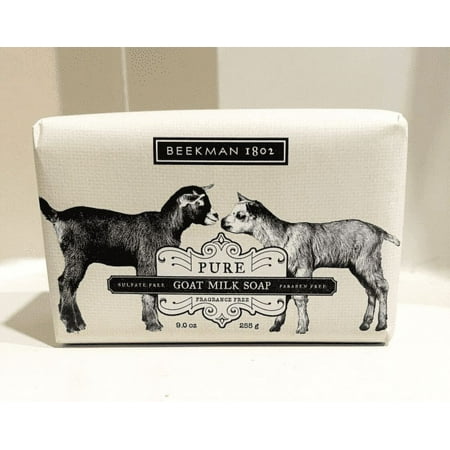


Beekman 1802 Pure Goat Milk Bar Soap Fragrance Free 9 Oz
At a glance
Summary
This goat milk bar soap features beneficial ingredients like glycerin and goat milk, which provide moisturizing and nourishing properties. The ingredient list is relatively clean, with no synthetic fragrances or harsh chemicals, contributing to its favorable rating. However, the presence of processing agents like pentasodium pentetate and tetrasodium etidronate, which are common in processed products, slightly lowers the score.
Key ingredients 11
GlycerinGood
Glycerin is a humectant that attracts moisture to the skin, helping to keep it hydrated. It is widely used in skincare products for its moisturizing properties. Glycerin is considered safe and beneficial for most skin types.
Risks
There are minimal risks associated with glycerin, though it may cause irritation in very rare cases.
Benefits
It helps to maintain skin hydration and improve skin barrier function.
Caprae Lac (Goat Milk)Good
Goat milk is rich in vitamins and minerals, providing nourishing benefits to the skin. It contains lactic acid, which can help exfoliate and soften the skin. Goat milk is often used in skincare for its gentle and moisturizing properties.
Risks
There is a potential for allergic reactions in individuals sensitive to dairy products.
Benefits
It nourishes and hydrates the skin, making it feel softer and smoother.
Sodium PalmateNeutral
Sodium Palmate is a common soap base ingredient derived from palm oil. It acts as a surfactant and cleansing agent. It is generally considered safe for use in cosmetics.
Risks
There are environmental concerns related to palm oil production, including deforestation.
Benefits
It effectively cleanses the skin by removing dirt and oils.
Sodium Cocoate And/Or Palm KernelateNeutral
Sodium Cocoate and Palm Kernelate are surfactants derived from coconut oil and palm kernel oil, respectively. They are used for their cleansing properties in soap formulations. These ingredients are generally considered safe for use in cosmetics.
Risks
Similar to palm oil, palm kernel oil production can contribute to environmental issues.
Benefits
They help to create a rich lather and effectively cleanse the skin.
Water (Aqua)Neutral
Water is a universal solvent used in cosmetics to dissolve other ingredients. It is essential for the formulation of many products. Water itself poses no risk in cosmetic formulations.
Risks
There are no direct risks associated with water in cosmetics.
Benefits
It helps to hydrate the skin and dissolve other beneficial ingredients.
Disodium Cocoyl GlutamateNeutral
Disodium Cocoyl Glutamate is a mild surfactant derived from coconut oil and glutamic acid. It is used for its gentle cleansing properties. This ingredient is considered safe and non-irritating for most skin types.
Risks
There are minimal risks associated with this ingredient, though it may cause irritation in very sensitive skin.
Benefits
It provides gentle cleansing without stripping the skin of its natural oils.
Sodium Cocoyl GlutamateNeutral
Sodium Cocoyl Glutamate is a mild surfactant derived from coconut oil and glutamic acid. It is used for its gentle cleansing properties. This ingredient is considered safe and non-irritating for most skin types.
Risks
There are minimal risks associated with this ingredient, though it may cause irritation in very sensitive skin.
Benefits
It provides gentle cleansing without stripping the skin of its natural oils.
Sodium Cocoyl ThreoninateNeutral
Sodium Cocoyl Threoninate is a surfactant derived from coconut oil and threonine. It is used for its cleansing properties in cosmetic formulations. This ingredient is generally considered safe for use in cosmetics.
Risks
There are minimal risks associated with this ingredient, though it may cause irritation in very sensitive skin.
Benefits
It helps to cleanse the skin while maintaining its natural moisture balance.
Sodium ChlorideNeutral
Sodium Chloride, or table salt, is used in cosmetics as a thickening agent and to adjust the viscosity of products. It is generally considered safe for use in cosmetics. Sodium Chloride is non-irritating in typical cosmetic concentrations.
Risks
In high concentrations, it may cause dryness or irritation.
Benefits
It helps to improve the texture and consistency of cosmetic products.
Pentasodium PentetateNeutral
Pentasodium Pentetate is a chelating agent used to bind metal ions in cosmetic formulations. It helps to stabilize products and improve their shelf life. This ingredient is considered safe for use in cosmetics.
Risks
There are minimal risks associated with this ingredient.
Benefits
It helps to maintain the stability and efficacy of cosmetic products.
Tetrasodium EtidronateNeutral
Tetrasodium Etidronate is a chelating agent used to bind metal ions in cosmetic formulations. It helps to stabilize products and improve their shelf life. This ingredient is considered safe for use in cosmetics.
Risks
There are minimal risks associated with this ingredient.
Benefits
It helps to maintain the stability and efficacy of cosmetic products.
Get the full breakdown in the Scout appTake Scout shopping
Scan any product to see lab results, healthy alternatives, and your personalized analysis.
Download on theApp Store GET IT ONGoogle PlayAmazon pricing & content
Amazon price as of . Product prices and availability are accurate as of the date/time indicated and are subject to change. Any price and availability information displayed on Amazon.com at the time of purchase will apply to the purchase of this product.
CERTAIN CONTENT THAT APPEARS ON THIS SITE COMES FROM AMAZON. THIS CONTENT IS PROVIDED “AS IS” AND IS SUBJECT TO CHANGE OR REMOVAL AT ANY TIME.