
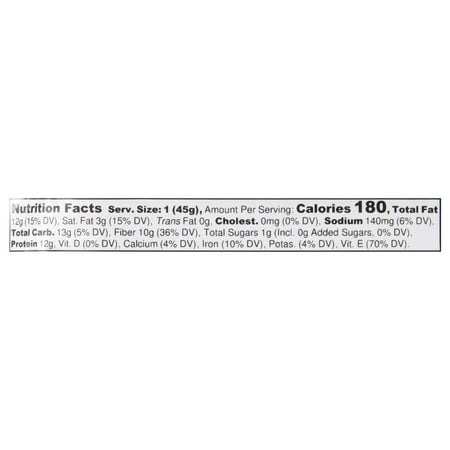


Iq Bar: Peanut Butter Chip Bar 1.6 Oz
Summary
The Iq Bar: Peanut Butter Chip Bar contains a variety of beneficial ingredients such as peanuts, almonds, pea protein, and flaxseeds, which contribute to its nutritional value. However, it is considered ultra-processed due to the presence of multiple additives like natural flavors and emulsifiers. While it avoids artificial sweeteners and seed oils, the processing level and use of several additives moderately impact its overall healthiness.
At a glance
Key ingredients 16
PeanutsGood
Peanuts are a good source of protein and healthy fats, particularly monounsaturated fats. They are minimally processed and provide essential nutrients like magnesium and vitamin E. Peanuts can support heart health and provide sustained energy.
Risks
Peanuts can be allergenic for some individuals, potentially causing severe allergic reactions.
Benefits
Rich in protein and healthy fats, supporting heart health and providing energy.
AlmondsGood
Almonds are nutrient-dense nuts high in monounsaturated fats, fiber, and vitamin E. They are minimally processed and contribute to heart health and improved cholesterol levels. Almonds also provide antioxidants that support overall health.
Risks
Almonds can cause allergic reactions in sensitive individuals.
Benefits
High in healthy fats and antioxidants, supporting heart health and reducing inflammation.
Tapioca FiberNeutral
Tapioca fiber is a soluble fiber derived from the cassava root, often used as a low-calorie bulking agent. It is processed to remove starch, leaving behind fiber that can aid digestion. While it provides fiber, it lacks significant nutritional benefits beyond this.
Benefits
Provides soluble fiber that can aid in digestion and promote satiety.
Pea ProteinGood
Pea protein is a plant-based protein source that is rich in essential amino acids. It is minimally processed compared to soy protein and is hypoallergenic. Pea protein supports muscle growth and repair, making it a good alternative for those avoiding animal proteins.
Benefits
Provides a complete amino acid profile and supports muscle growth and repair.
FlaxseedsGood
Flaxseeds are a rich source of omega-3 fatty acids, fiber, and lignans. They are minimally processed and can support heart health and reduce inflammation. Flaxseeds also provide antioxidants and can aid in digestion.
Risks
Flaxseeds may cause digestive discomfort if consumed in large quantities.
Benefits
Rich in omega-3 fatty acids and fiber, supporting heart health and digestion.
Peanut FlourGood
Peanut flour is made by grinding peanuts and removing most of the fat, resulting in a high-protein, low-fat product. It retains the nutritional benefits of peanuts, including protein and essential nutrients. Peanut flour can enhance the protein content of foods without adding significant fat.
Risks
May cause allergic reactions in individuals with peanut allergies.
Benefits
High in protein and low in fat, enhancing nutritional value without excess calories.
Unsweetened ChocolateGood
Unsweetened chocolate is rich in antioxidants and flavonoids, which can support heart health. It is minimally processed and contains no added sugars, making it a healthier chocolate option. The presence of cocoa solids provides beneficial compounds that may improve mood and cognitive function.
Risks
Excessive consumption may lead to caffeine-related side effects.
Benefits
Rich in antioxidants and flavonoids, supporting heart health and cognitive function.
Gum AcaciaNeutral
Gum acacia is a natural gum derived from the sap of acacia trees, used as a stabilizer and thickener. It is minimally processed and generally recognized as safe. While it provides some soluble fiber, it does not offer significant nutritional benefits.
Benefits
Provides soluble fiber and acts as a natural stabilizer in food products.
Coconut OilNeutral
Coconut oil is a source of medium-chain triglycerides (MCTs), which can be quickly metabolized for energy. It is minimally processed and often used for its flavor and texture in foods. While it provides energy, its high saturated fat content may be a concern for heart health if consumed in excess.
Risks
High in saturated fats, which may impact heart health if consumed excessively.
Benefits
Contains MCTs that can be quickly metabolized for energy.
Cocoa ButterNeutral
Cocoa butter is a natural fat extracted from cocoa beans, used for its smooth texture and flavor. It is minimally processed and contains antioxidants that may support skin health. While it provides a rich texture, it is high in saturated fats.
Risks
High in saturated fats, which may impact heart health if consumed excessively.
Benefits
Contains antioxidants that may support skin health.
Sunflower LecithinNeutral
Sunflower lecithin is a natural emulsifier derived from sunflower seeds, used to improve texture and consistency in foods. It is minimally processed and free from GMOs. While it aids in emulsification, it does not provide significant nutritional benefits.
Benefits
Acts as a natural emulsifier, improving texture and consistency in foods.
Sea SaltGood
Unrefined sea salt — a minimally processed, natural source of sodium and essential trace minerals, and a legitimate whole-food seasoning. Treated as a positive ingredient.
Risks
Excessive consumption can lead to high blood pressure and related health issues.
Benefits
Provides essential minerals and enhances flavor in foods.
WaterNeutral
Water is a fundamental component used to hydrate and mix ingredients in food products. It is essential for life and is not processed. While it is crucial for hydration, it does not provide additional nutritional benefits in this context.
Benefits
Essential for hydration and mixing ingredients in food products.
Non GMO Steviol GlycosidesNeutral
Non GMO steviol glycosides are natural sweeteners derived from the stevia plant, providing sweetness without calories. They are minimally processed and do not affect blood sugar levels. While they offer a sugar alternative, they do not provide additional nutritional benefits.
Benefits
Provides sweetness without calories, making it a suitable sugar alternative.
Lion's ManeGood
Lion's mane is a medicinal mushroom known for its potential cognitive and neurological benefits. It is minimally processed and may support brain health and nerve regeneration. Lion's mane is valued for its potential to enhance cognitive function and reduce inflammation.
Benefits
May support brain health and cognitive function, with potential anti-inflammatory properties.
Vitamin EGood
Vitamin E is a fat-soluble antioxidant that helps protect cells from oxidative damage. It is minimally processed and supports immune function and skin health. Vitamin E is essential for maintaining healthy skin and preventing oxidative stress.
Risks
Excessive intake can lead to toxicity and interfere with blood clotting.
Benefits
Acts as an antioxidant, supporting immune function and skin health.
Processing
Ultra-Processed Foods
Get the full breakdown in the Scout app
Scan any product to see lab results, healthy alternatives, and your personalized analysis.
Download on theApp Store