

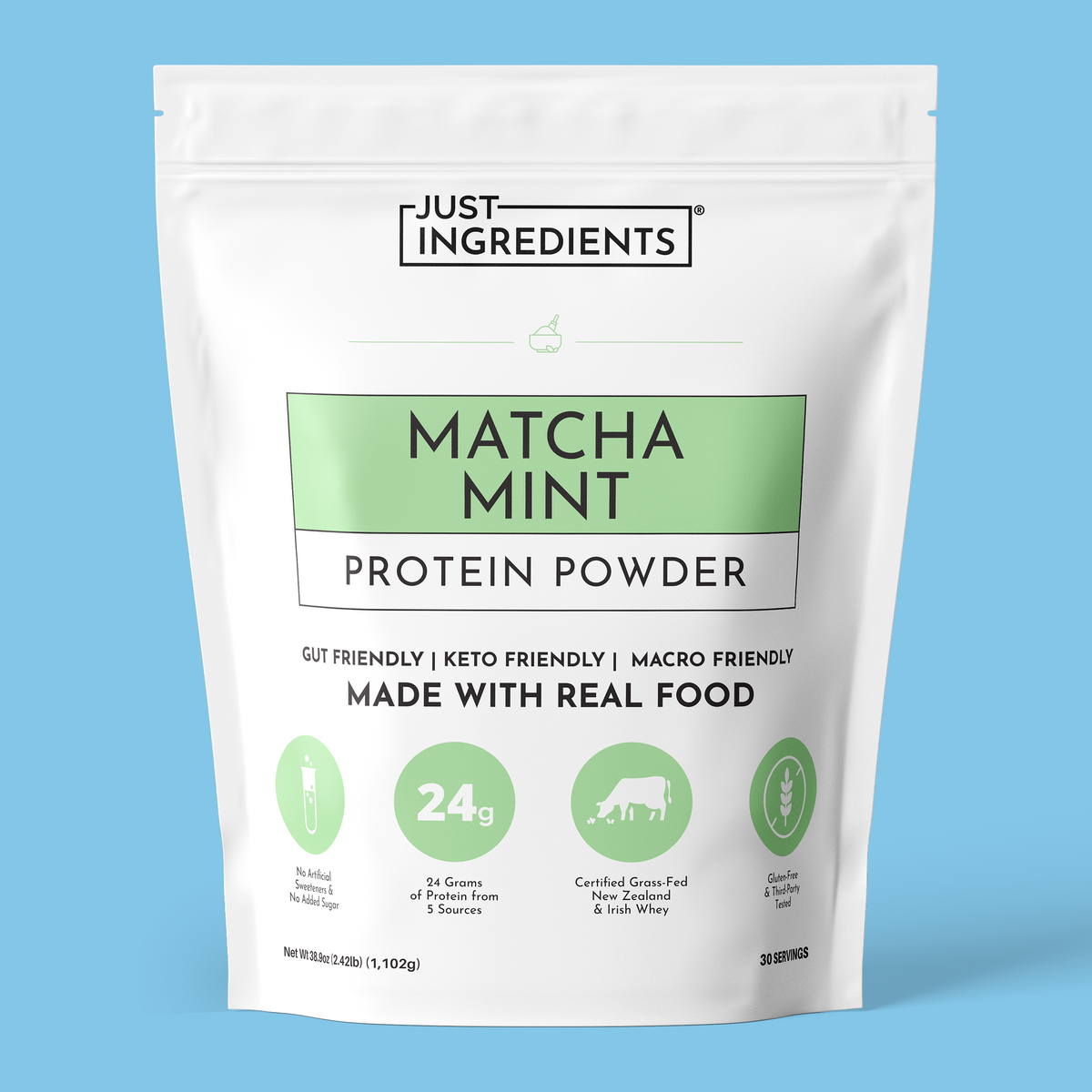

Mint Chocolate Protein Powder
Analysis updated October 2026 · How Scout scores
At a glance
Summary
This protein powder features high-quality ingredients such as grass-fed non-denatured whey protein isolate and a variety of plant-based proteins, which are minimally processed and provide a complete amino acid profile. The use of natural sweeteners like stevia and monk fruit, along with the absence of artificial additives, enhances its health profile. The inclusion of beneficial ingredients like cacao and peppermint oil further supports its nutritional value, making it a top-tier choice in its category.
Key ingredients 11
Grass-Fed Non-Denatured Whey Protein IsolateVery Good
This ingredient is a high-quality source of protein with a complete amino acid profile, beneficial for muscle repair and growth. Being grass-fed and non-denatured indicates minimal processing and higher nutrient retention. It is superior to many other protein sources due to its bioavailability and purity.
Benefits
Provides essential amino acids and supports muscle recovery and growth.
Coconut MilkGood
Coconut milk is a natural source of healthy fats, including medium-chain triglycerides (MCTs), which can provide quick energy. It is minimally processed and adds a creamy texture to the product. Compared to other milk alternatives, it is free from common allergens like soy and nuts.
Risks
Excessive consumption may lead to increased calorie intake.
Benefits
Rich in MCTs that support energy metabolism and may aid in weight management.
CacaoGood
Cacao is rich in antioxidants, particularly flavonoids, which can support heart health. It is a natural source of caffeine and theobromine, providing a mild energy boost. Compared to processed chocolate, raw cacao retains more nutrients and health benefits.
Risks
Contains caffeine, which may affect sensitive individuals.
Benefits
High in antioxidants that support cardiovascular health.
Pumpkin Seed ProteinGood
Pumpkin seed protein is a nutrient-dense source of plant-based protein, rich in magnesium, zinc, and other minerals. It is minimally processed and provides a nutty flavor. Compared to other seed proteins, it is well-tolerated and nutritious.
Benefits
Rich in minerals and provides a complete protein source.
Grass-Fed CollagenGood
Collagen supports joint health, skin elasticity, and overall connective tissue strength. Being grass-fed indicates higher quality and better nutrient profile. It is beneficial for those looking to support skin and joint health.
Benefits
Supports joint health and skin elasticity.
Chia Seed ProteinGood
Chia seed protein is a plant-based protein source high in omega-3 fatty acids and fiber. It is minimally processed and provides additional nutrients like calcium and iron. It is a versatile ingredient that supports digestive health.
Benefits
High in omega-3s and fiber, supporting heart and digestive health.
Sea SaltGood
Beneficial ingredient — whole-food or functional value in this product class.
Risks
Excessive consumption may lead to high blood pressure.
Benefits
Provides trace minerals and enhances flavor.
Pea ProteinNeutral
Standard formulation ingredient — neither beneficial nor harmful at typical use.
Benefits
Offers a plant-based protein alternative with a good amino acid profile.
Stevia LeafNeutral
Stevia leaf is a natural, zero-calorie sweetener that does not affect blood sugar levels. It is derived from the leaves of the stevia plant and is minimally processed. It is a preferred alternative to artificial sweeteners.
Benefits
Provides sweetness without calories or blood sugar impact.
Monk FruitNeutral
Monk fruit is a natural sweetener that provides sweetness without calories. It is derived from the monk fruit and is minimally processed. It is a suitable alternative for those avoiding sugar.
Benefits
Offers a natural, calorie-free sweetening option.
Peppermint OilNeutral
Peppermint oil is used for flavoring and has a refreshing taste. It is derived from peppermint leaves and is minimally processed. It can provide a cooling sensation and enhance the product's flavor profile.
Benefits
Enhances flavor with a natural minty taste.
Processing
Unprocessed or Minimally Processed Foods
Get the full breakdown in the Scout appTake Scout shopping
Scan any product to see lab results, healthy alternatives, and your personalized analysis.
Download on theApp Store GET IT ONGoogle Play