
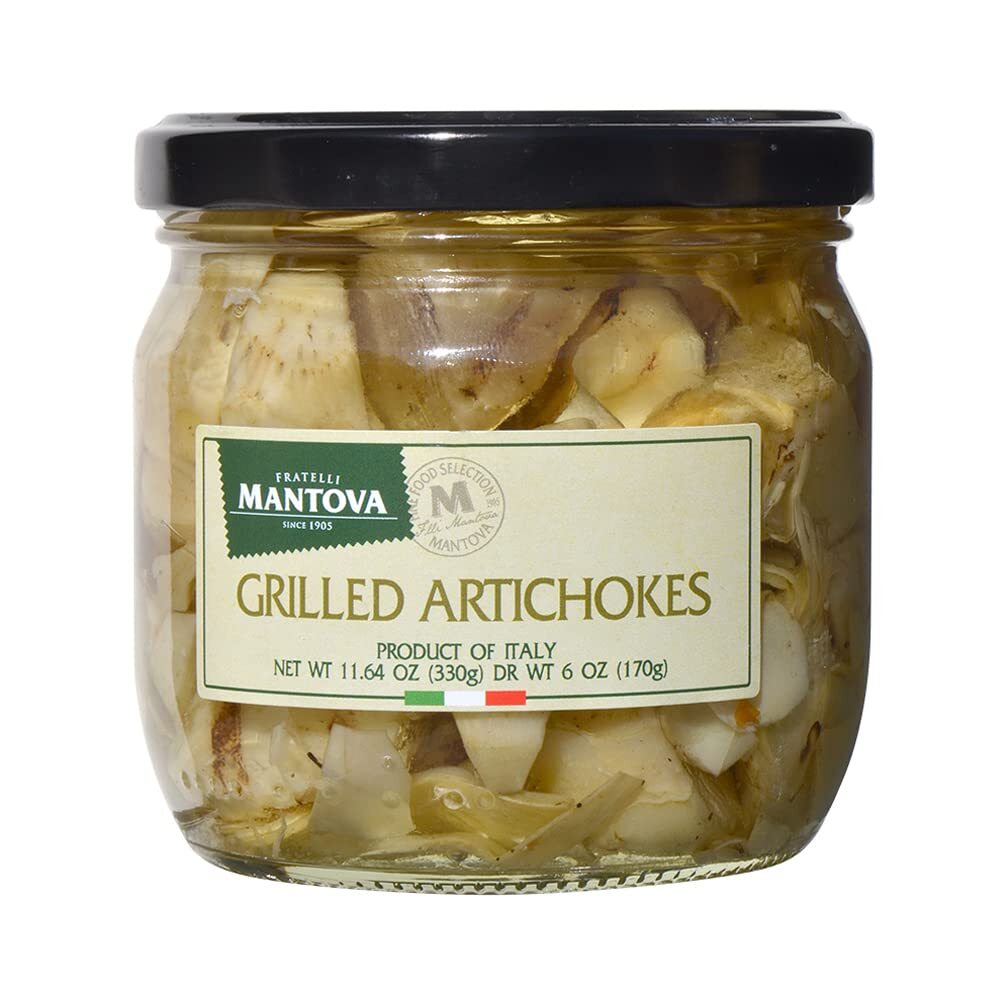

Grilled Artichokes
Analysis updated July 2026 · How Scout scores
At a glance
Summary
This product contains beneficial ingredients such as baby artichokes, extra virgin olive oil, and herbs, which contribute to its nutritional value. However, the presence of sunflower oil, a seed oil high in omega-6 fatty acids, detracts from its healthiness due to potential inflammatory effects. The product is processed, which limits its score despite the inclusion of some high-quality ingredients.
Key ingredients 8
Extra virgin olive oilVery Good
Extra virgin olive oil is a healthy fat known for its heart-healthy properties and antioxidant content.
See more about Extra virgin olive oil →Baby artichokesGood
Baby artichokes are a nutritious vegetable rich in fiber, vitamins, and antioxidants, supporting overall health.
HerbsNeutral
Herbs add flavor and some antioxidants without significantly impacting nutritional value.
Wine vinegarNeutral
Wine vinegar provides acidity and flavor enhancement with minimal nutritional impact.
SaltNeutral
Standard formulation ingredient — neither beneficial nor harmful at typical use.
See more about Salt →Acidity regulator: citric acidNeutral
Citric acid is a common additive that helps maintain product stability and acidity.
Antioxidant: ascorbic acidNeutral
Ascorbic acid acts as an antioxidant to preserve freshness and prevent spoilage.
Sunflower oilVery Bad
Sunflower oil is high in omega-6 fatty acids and may contribute to inflammation if consumed excessively.
See more about Sunflower oil →Processing
Processed Foods
Get the full breakdown in the Scout appTake Scout shopping
Scan any product to see lab results, healthy alternatives, and your personalized analysis.
Download on theApp Store GET IT ONGoogle PlayAmazon pricing & content
Amazon price as of . Product prices and availability are accurate as of the date/time indicated and are subject to change. Any price and availability information displayed on Amazon.com at the time of purchase will apply to the purchase of this product.
CERTAIN CONTENT THAT APPEARS ON THIS SITE COMES FROM AMAZON. THIS CONTENT IS PROVIDED “AS IS” AND IS SUBJECT TO CHANGE OR REMOVAL AT ANY TIME.