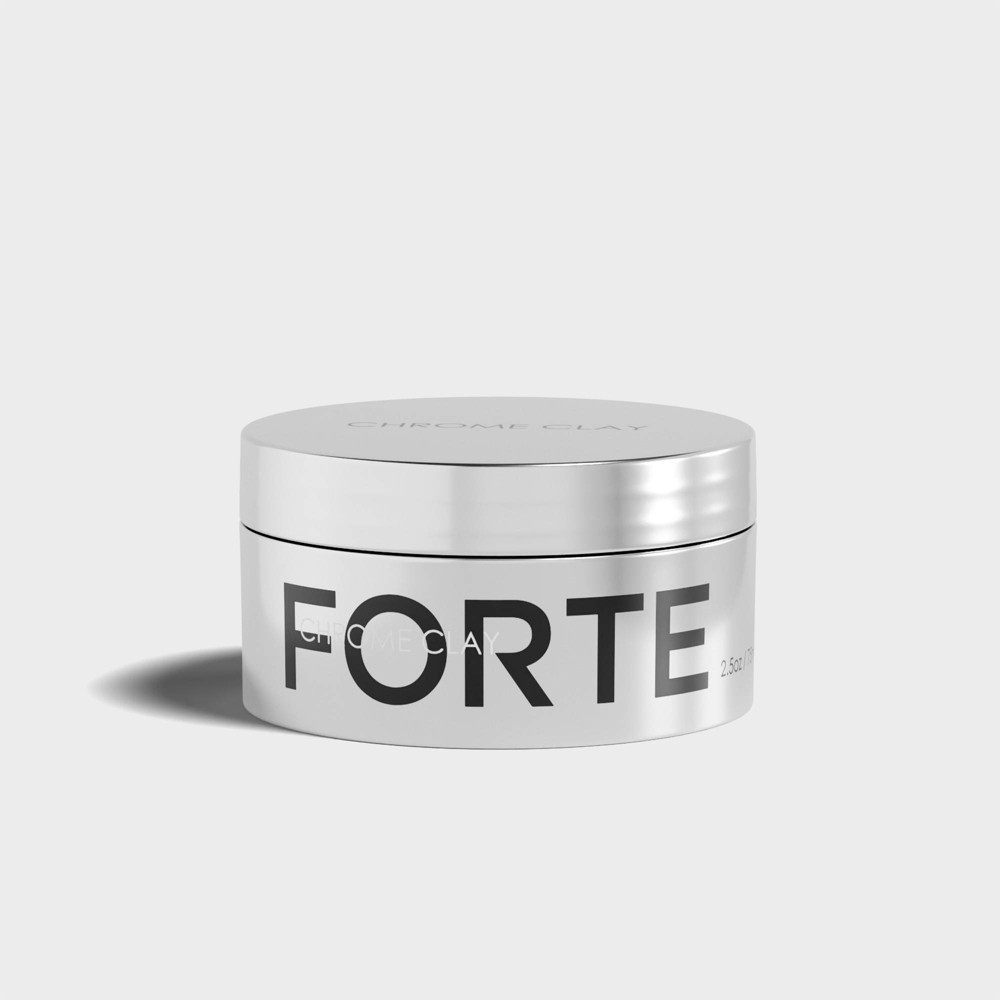
Forte Series Chrome Clay Hair Wax - 2.5oz
At a glance
Summary
This hair wax contains beneficial ingredients like kaolin clay, rice bran oil, and castor oil, which provide nourishment and conditioning properties. However, the presence of phenoxyethanol and fragrance, which can cause irritation and allergic reactions, slightly lowers its safety profile. The product has a balanced mix of natural and synthetic components, resulting in a moderate processing level.
Key ingredients 19
Rice Bran OilVery Good
Rice Bran Oil is rich in antioxidants and vitamins, providing nourishment to the skin. It is known for its moisturizing properties and ability to improve skin texture. It is a natural oil that is well-tolerated by most skin types.
Risks
There are minimal risks, though it may cause mild irritation in very sensitive individuals.
Benefits
Rice Bran Oil helps to moisturize and protect the skin with its antioxidant content.
Ricinus Communis Seed OilVery Good
Ricinus Communis Seed Oil, also known as Castor Oil, is a natural oil known for its moisturizing and conditioning properties. It is rich in fatty acids and helps to nourish the skin and hair. It is well-tolerated and widely used in cosmetics.
Risks
There are minimal risks, though it may cause mild irritation in very sensitive individuals.
Benefits
Castor Oil helps to moisturize and condition the skin and hair.
Aloe Barbadensis ExtractVery Good
Aloe Barbadensis Extract, also known as Aloe Vera, is known for its soothing and moisturizing properties. It helps to calm irritated skin and provide hydration. It is a natural ingredient that is well-tolerated by most skin types.
Risks
There are minimal risks, though it may cause mild irritation in very sensitive individuals.
Benefits
Aloe Vera helps to soothe and hydrate the skin.
Kaolin ClayGood
Kaolin Clay is a natural clay known for its absorbent properties. It helps to control oil and provides a matte finish. It is gentle on the skin and suitable for sensitive skin types.
Risks
Overuse may lead to dryness in some skin types.
Benefits
Kaolin Clay helps to absorb excess oil and impurities from the skin.
KaoliniteGood
Kaolinite is a type of clay mineral used for its absorbent properties. It helps to control oil and provides a matte finish. It is gentle on the skin and suitable for sensitive skin types.
Risks
Overuse may lead to dryness in some skin types.
Benefits
Kaolinite helps to absorb excess oil and impurities from the skin.
Tocopheryl AcetateGood
Tocopheryl Acetate is a form of Vitamin E used for its antioxidant properties. It helps to protect the skin from free radical damage and improve skin health. It is well-tolerated and commonly used in cosmetics.
Risks
There are minimal risks, though it may cause mild irritation in very sensitive individuals.
Benefits
It helps to protect and nourish the skin with its antioxidant properties.
BiotinGood
Biotin is a B-vitamin known for its role in maintaining healthy skin, hair, and nails. It is often included in cosmetic products for its conditioning properties. It is well-tolerated and beneficial for hair and skin health.
Risks
There are minimal risks associated with topical use of Biotin.
Benefits
Biotin helps to strengthen and condition hair and skin.
Hydrolyzed Quinoa ProteinGood
Hydrolyzed Quinoa Protein is used for its conditioning and strengthening properties. It helps to improve hair texture and protect against damage. It is derived from quinoa and is well-tolerated.
Risks
There are minimal risks associated with Hydrolyzed Quinoa Protein.
Benefits
It helps to strengthen and condition hair, improving texture.
Water/Aqua/EauNeutral
Water is a common solvent used in cosmetic formulations. It helps to dissolve other ingredients and provides a base for the product. It is generally considered safe and non-irritating.
Risks
There are no significant risks associated with water in cosmetics.
Benefits
Water helps to hydrate and blend other ingredients effectively.
Rice Bran WaxNeutral
Rice Bran Wax is used as a thickening agent and emollient in cosmetics. It helps to stabilize formulations and provide a smooth texture. It is derived from rice bran oil and is generally considered safe.
Risks
There are no significant risks associated with Rice Bran Wax.
Benefits
It helps to improve the texture and stability of cosmetic products.
Hydrogenated Castor OilNeutral
Standard formulation ingredient — neither beneficial nor harmful at typical use.
Risks
Rarely, it may cause mild irritation in sensitive individuals.
Benefits
It helps to moisturize and provide a smooth application.
PEG-40 Hydrogenated Castor OilNeutral
PEG-40 Hydrogenated Castor Oil is an emulsifier that helps to mix oil and water-based ingredients. It is commonly used in cosmetics for its stabilizing properties. It is generally considered safe but may contain impurities.
Risks
There is a potential risk of contamination with 1,4-dioxane, a byproduct of ethoxylation.
Benefits
It helps to stabilize and emulsify formulations, improving texture.
Microcrystalline WaxNeutral
Microcrystalline Wax is used as a thickening agent and stabilizer in cosmetics. It provides structure and improves the texture of products. It is derived from petroleum but is highly refined and considered safe.
Risks
There are minimal risks, though it may cause mild irritation in sensitive individuals.
Benefits
It helps to provide structure and stability to cosmetic formulations.
C12-15 Alkyl BenzoateNeutral
C12-15 Alkyl Benzoate is an emollient that provides a silky feel to cosmetic products. It helps to improve the spreadability and absorption of formulations. It is generally considered safe and non-irritating.
Risks
There are no significant risks associated with C12-15 Alkyl Benzoate.
Benefits
It helps to improve the texture and application of cosmetic products.
VP/VA CopolymerNeutral
VP/VA Copolymer is a film-forming agent used in cosmetics to provide hold and structure. It is commonly used in hair styling products for its ability to create a flexible film. It is generally considered safe for use in cosmetics.
Risks
There are no significant risks associated with VP/VA Copolymer.
Benefits
It helps to provide hold and structure in hair styling products.
PEG-100 StearateNeutral
PEG-100 Stearate is an emulsifier used to blend oil and water-based ingredients. It helps to stabilize formulations and improve texture. It is generally considered safe but may contain impurities.
Risks
There is a potential risk of contamination with 1,4-dioxane, a byproduct of ethoxylation.
Benefits
It helps to stabilize and emulsify cosmetic formulations.
Polysorbate 80Bad
Processed additive flagged under Scout's ingredient doctrine.
Risks
There is a potential risk of contamination with 1,4-dioxane, a byproduct of ethoxylation.
Benefits
It helps to stabilize and emulsify cosmetic formulations.
PhenoxyethanolBad
Phenoxyethanol is a preservative used to prevent microbial growth in cosmetics. It is effective but can cause irritation in some individuals. It is considered a potential allergen and should be used in low concentrations.
Risks
Phenoxyethanol can cause skin irritation and allergic reactions in sensitive individuals.
Benefits
It helps to preserve the product and extend its shelf life.
FragranceVery Bad
Fragrance is used to add scent to cosmetic products. It can cause irritation and allergic reactions in sensitive individuals. Fragrance formulations are proprietary and may contain undisclosed chemicals.
Risks
Fragrance can cause skin irritation and allergic reactions.
Benefits
It provides a pleasant scent to the product.
Processing
Processed Foods
Get the full breakdown in the Scout appTake Scout shopping
Scan any product to see lab results, healthy alternatives, and your personalized analysis.
Are you Forte Grooming? Fix an error Get the badge Get tested