
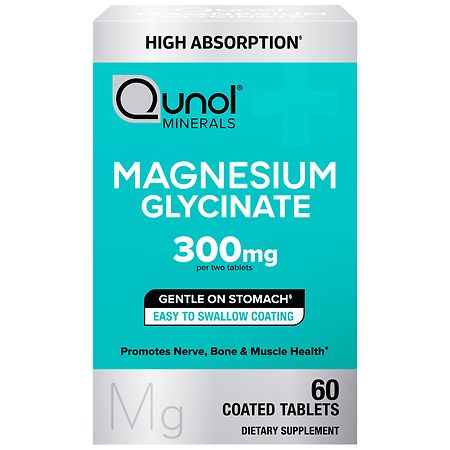



Qunol Minerals Magnesium Glycinate 300mg Tablets - 60.0 ea
Analysis updated July 2026 · How Scout scores
At a glance
Summary
This magnesium supplement contains magnesium glycinate, a highly bioavailable and beneficial form of magnesium. However, the presence of maltodextrin and talc, which are considered less desirable due to potential health concerns, affects the overall formulation quality. The product also includes several additives, which contribute to a moderate level of processing.
Key ingredients 10
Magnesium GlycinateVery Good
Magnesium glycinate is a highly bioavailable form of magnesium, which is essential for numerous bodily functions including muscle and nerve function, blood glucose control, and bone health. It is well-tolerated and less likely to cause gastrointestinal issues compared to other forms of magnesium. This form of magnesium is often recommended for its calming effects and support in reducing anxiety and improving sleep quality.
Benefits
Supports muscle and nerve function, promotes relaxation, and may improve sleep quality.
Stearic AcidNeutral
Stearic acid is a saturated fatty acid used as a lubricant and binder in supplements. It is generally considered safe and is naturally found in various animal and plant fats. While it is a common additive, it does not provide significant nutritional benefits.
See more about Stearic Acid →Microcrystalline CelluloseNeutral
Microcrystalline cellulose is a refined wood pulp used as a bulking agent and stabilizer in supplements. It is inert and does not affect the nutritional value of the product. It is widely used in the food industry for its ability to improve texture and stability.
See more about Microcrystalline Cellulose →Dicalcium PhosphateNeutral
Dicalcium phosphate is used as a dietary supplement and tableting agent. It provides calcium and phosphorus, which are essential for bone health. However, in the amounts typically used in supplements, it does not significantly contribute to daily nutrient intake.
Risks
Excessive intake may lead to imbalances in calcium and phosphorus levels.
Benefits
Provides calcium and phosphorus, essential for bone health.
Croscarmellose SodiumNeutral
Croscarmellose sodium is a cross-linked polymer used as a disintegrant in tablets. It helps tablets dissolve quickly in the digestive tract, improving the absorption of active ingredients. It is considered safe and inert.
Benefits
Improves the dissolution and absorption of active ingredients in tablets.
Guar GumNeutral
Guar gum is a natural thickening agent derived from guar beans. It is used to improve the texture and stability of supplements. It is generally safe but can cause digestive issues in sensitive individuals.
Risks
May cause digestive issues such as gas and bloating in sensitive individuals.
Benefits
Improves texture and stability of supplements.
Hydroxypropyl MethylcelluloseNeutral
Hydroxypropyl methylcellulose is a synthetic polymer used as a thickener and emulsifier in supplements. It is considered safe and is commonly used in the food industry. It does not provide any nutritional benefits.
See more about Hydroxypropyl Methylcellulose →PolyvinylNeutral
Polyvinyl is a synthetic polymer used as a binder in tablets. It is considered safe for use in food and supplements. It does not contribute to the nutritional value of the product.
MaltodextrinBad
Maltodextrin is a polysaccharide used as a filler and stabilizer in supplements. It is highly processed and can cause spikes in blood sugar levels. It is often used in processed foods and may contribute to poor dietary quality.
Risks
May cause blood sugar spikes and contribute to poor dietary quality.
TalcBad
Talc is used as an anti-caking agent in supplements. There are concerns about contamination with asbestos, a known carcinogen, although food-grade talc is generally considered safe. Its use in supplements is controversial due to potential health risks.
Risks
Potential contamination with asbestos, a known carcinogen.
Processing
Processed Foods
Get the full breakdown in the Scout appTake Scout shopping
Scan any product to see lab results, healthy alternatives, and your personalized analysis.
Download on theApp Store GET IT ONGoogle Play