
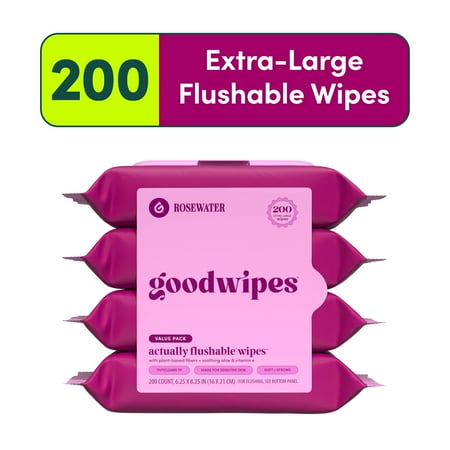

goodwipes Flushable Butt Wipes Rosewater Scented 4 Pack 200 Total XL Wipes
Analysis updated August 2026 · How Scout scores
At a glance
Summary
This product contains beneficial ingredients like aloe vera, chamomile, and vitamin E, which provide soothing and moisturizing properties. However, the presence of fragrance and benzyl alcohol, which can cause skin irritation and allergic reactions, lowers its safety profile. The product is moderately processed, which also impacts its overall rating.
Key ingredients 15
Aloe Barbadensis Leaf ExtractVery Good
Aloe vera is known for its soothing and moisturizing properties. It helps calm irritated skin and provides hydration.
Risks
Rarely, aloe vera can cause allergic reactions in sensitive individuals.
Benefits
Aloe vera is excellent for soothing sunburns and reducing skin inflammation.
Chamomilla Recutita (Matricaria) Leaf ExtractVery Good
Chamomile extract is known for its anti-inflammatory and calming properties. It helps soothe irritated skin and reduce redness.
Risks
Chamomile can cause allergic reactions in people sensitive to the Asteraceae family.
Benefits
Chamomile is beneficial for sensitive skin due to its calming effects.
GlycerinGood
Glycerin is a humectant that attracts moisture to the skin. It helps maintain skin hydration and improves the skin barrier function.
Risks
There are minimal risks associated with glycerin, though it can be sticky.
Benefits
Glycerin is beneficial for dry skin as it helps retain moisture.
Lavandula Angustifolia (Lavender) Flower ExtractGood
Lavender extract has soothing and antimicrobial properties. It can help calm the skin and reduce acne-causing bacteria.
Risks
Lavender can cause skin irritation in some individuals.
Benefits
Lavender is known for its calming scent and skin-soothing properties.
Tocopheryl AcetateGood
Tocopheryl acetate is a form of vitamin E, an antioxidant that helps protect the skin from free radical damage. It also has moisturizing properties.
Risks
In rare cases, it can cause skin irritation.
Benefits
Vitamin E is beneficial for its antioxidant properties and skin conditioning effects.
AllantoinGood
Allantoin is known for its skin-soothing and moisturizing properties. It helps promote skin healing and reduces irritation.
Risks
Allantoin is generally safe with minimal risk of irritation.
Benefits
It is beneficial for sensitive skin due to its calming and healing properties.
WaterNeutral
Water is a common solvent used in many cosmetic products. It helps dissolve other ingredients and provides a base for the formulation.
Risks
There are no significant risks associated with water in cosmetics.
Benefits
Water hydrates and helps in the application of the product.
Citric AcidNeutral
Citric acid is used to adjust the pH of cosmetic products. It can also act as a mild exfoliant.
Risks
High concentrations can cause skin irritation.
Benefits
Citric acid helps maintain the stability and effectiveness of the product.
Sodium CitrateNeutral
Sodium citrate is used as a buffering agent to control the pH of the product. It helps maintain product stability.
Risks
There are minimal risks associated with sodium citrate in cosmetics.
Benefits
It helps in maintaining the desired pH level of the formulation.
Benzoic AcidNeutral
Benzoic acid is used as a preservative in cosmetics. It helps prevent microbial growth and extends the shelf life of the product.
Risks
In high concentrations, it can cause skin irritation.
Benefits
It helps in preserving the product and preventing spoilage.
Dehydroacetic AcidNeutral
Dehydroacetic acid is a preservative used to inhibit the growth of microorganisms. It helps maintain product safety and longevity.
Risks
There are minimal risks associated with its use in cosmetics.
Benefits
It effectively preserves the product without significant irritation.
PEG-6 Caprylic/Capric GlyceridesNeutral
PEG-6 caprylic/capric glycerides are used as emulsifiers and skin conditioning agents. They help blend ingredients and improve product texture.
Risks
There is a potential risk of contamination with ethylene oxide or 1,4-dioxane.
Benefits
They enhance the texture and application of the product.
Disodium CocoamphodiacetateNeutral
Disodium cocoamphodiacetate is a mild surfactant used to cleanse the skin. It helps create foam and remove dirt and oil.
Risks
It is generally considered safe with low irritation potential.
Benefits
It provides gentle cleansing without stripping the skin.
Benzyl AlcoholBad
Benzyl alcohol is used as a preservative and solvent in cosmetics. It can cause skin irritation and allergic reactions in sensitive individuals.
Risks
It can be irritating to the skin and eyes.
Benefits
It helps preserve the product and prevent microbial growth.
FragranceVery Bad
Fragrance is often a mixture of various chemicals used to impart scent. It can cause allergic reactions and skin irritation.
Risks
Fragrance is a common allergen and can cause skin sensitivity.
Benefits
It provides a pleasant scent to the product.
Processing
Processed Foods
Get the full breakdown in the Scout appTake Scout shopping
Scan any product to see lab results, healthy alternatives, and your personalized analysis.
Download on theApp Store GET IT ONGoogle PlayAmazon pricing & content
Amazon price as of . Product prices and availability are accurate as of the date/time indicated and are subject to change. Any price and availability information displayed on Amazon.com at the time of purchase will apply to the purchase of this product.
CERTAIN CONTENT THAT APPEARS ON THIS SITE COMES FROM AMAZON. THIS CONTENT IS PROVIDED “AS IS” AND IS SUBJECT TO CHANGE OR REMOVAL AT ANY TIME.