
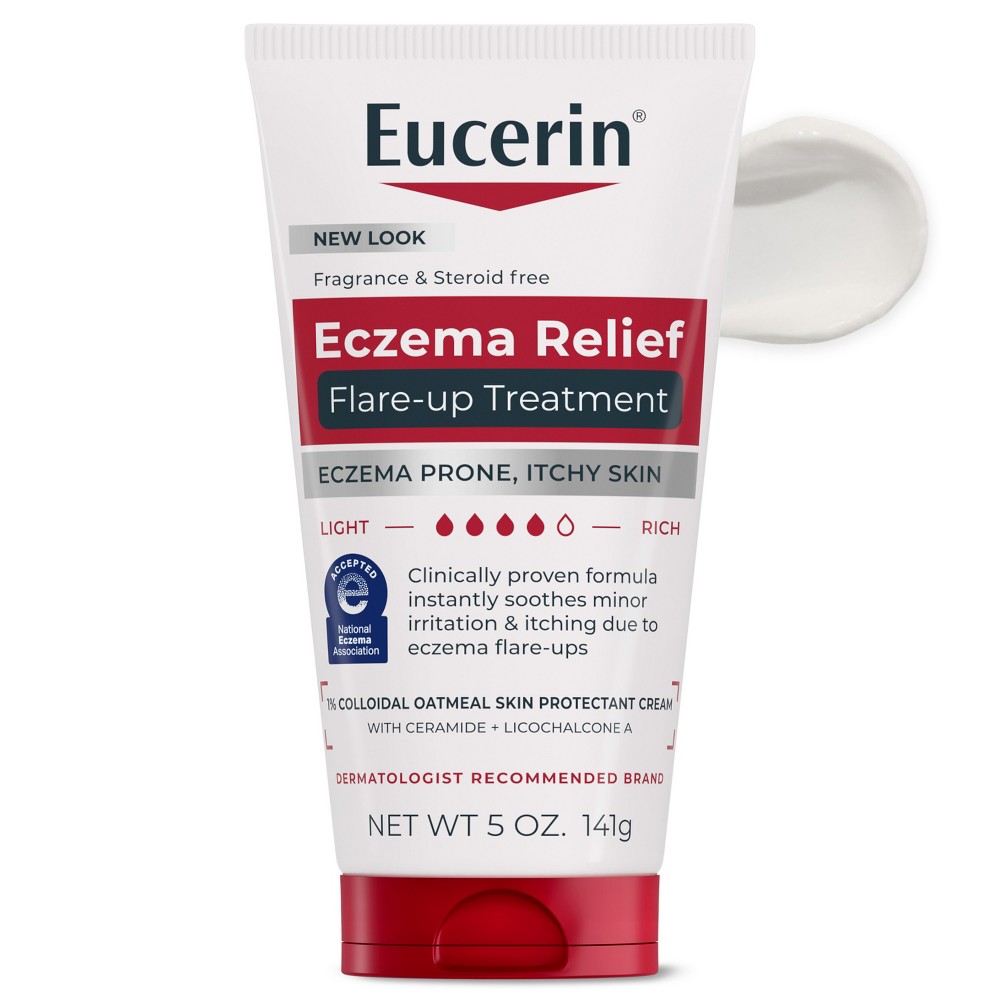

Eucerin Eczema Relief Flare-Up Treatment - 5oz
Analysis updated August 2026 · How Scout scores
At a glance
Summary
This product contains beneficial ingredients like glycerin, castor seed oil, and ceramide 3, which are known for their moisturizing and skin-soothing properties. However, it also includes mineral oil, which can be a concern due to potential contamination risks, and preservatives like phenoxyethanol and benzyl alcohol, which may cause irritation for some users. The presence of these preservatives and mineral oil affects the overall safety profile, resulting in a moderate score.
Key ingredients 24
Ricinus Communis (Castor) Seed OilVery Good
Castor seed oil is a natural oil known for its emollient properties. It helps to soften and soothe the skin, making it beneficial for dry and irritated skin.
Risks
There is a low risk of allergic reactions, though it is rare.
Benefits
Castor seed oil provides deep moisturization and has anti-inflammatory properties.
Ceramide 3Very Good
Ceramide 3 is a lipid that helps to restore the skin's natural barrier. It is essential for maintaining skin hydration and protecting against environmental damage.
Risks
There are no significant risks associated with ceramide 3.
Benefits
Ceramide 3 helps to strengthen the skin barrier and retain moisture.
Colloidal OatmealVery Good
Colloidal oatmeal is known for its soothing and anti-inflammatory properties. It helps to relieve dry, itchy, and irritated skin.
Risks
There are minimal risks associated with colloidal oatmeal.
Benefits
It provides soothing relief for eczema and other skin irritations.
GlycerinGood
Glycerin is a humectant that attracts moisture to the skin, helping to keep it hydrated. It is well-tolerated by most skin types and enhances the skin's natural barrier function.
Risks
There are minimal risks associated with glycerin, though it may cause irritation in very sensitive individuals.
Benefits
Glycerin provides excellent moisturizing properties and improves skin hydration.
Caprylic/Capric TriglycerideGood
This ingredient is derived from coconut oil and glycerin, and is used as an emollient and skin-repairing ingredient. It helps to improve the spreadability of the product.
Risks
There are minimal risks associated with this ingredient.
Benefits
Caprylic/Capric Triglyceride provides a silky feel and helps to moisturize the skin.
Glycyrrhiza Inflata Root ExtractGood
This extract is known for its anti-inflammatory and soothing properties. It helps to calm irritated skin and reduce redness.
Risks
There are minimal risks associated with this natural extract.
Benefits
It provides soothing benefits and helps to reduce skin irritation.
WaterNeutral
Water is a common solvent used in cosmetic formulations. It helps dissolve other ingredients and provides a base for the product. It does not have any direct benefits or risks.
Risks
There are no significant risks associated with water in cosmetic products.
Benefits
Water helps in the application and absorption of the product.
OctyldodecanolNeutral
Octyldodecanol is a fatty alcohol used as an emollient and emulsifier in cosmetics. It helps to improve the texture and spreadability of the product.
Risks
There are no significant risks associated with octyldodecanol.
Benefits
It helps to soften the skin and improve product application.
Cetyl AlcoholNeutral
Cetyl alcohol is a fatty alcohol used as an emollient and thickening agent. It helps to stabilize emulsions and improve the texture of the product.
Risks
It is generally safe, though it may cause irritation in very sensitive skin.
Benefits
Cetyl alcohol helps to soften and smooth the skin.
Glyceryl StearateNeutral
Glyceryl stearate is an emulsifier that helps to blend oil and water components. It also acts as a lubricant on the skin's surface.
Risks
There are minimal risks associated with glyceryl stearate.
Benefits
It helps to maintain the stability and consistency of the product.
Cetyl PalmitateNeutral
Cetyl palmitate is an ester used as an emollient and thickening agent. It helps to improve the texture and feel of the product.
Risks
There are no significant risks associated with cetyl palmitate.
Benefits
It provides a smooth application and helps to soften the skin.
PEG-40 StearateNeutral
PEG-40 stearate is an emulsifier that helps to mix oil and water components. It is commonly used in cosmetics for its stabilizing properties.
Risks
There is a potential risk of contamination with ethylene oxide and 1,4-dioxane.
Benefits
It helps to maintain product consistency and improve texture.
Decylene GlycolNeutral
Decylene glycol is used as a skin conditioning agent and antimicrobial. It helps to improve the product's shelf life.
Risks
There are minimal risks associated with decylene glycol.
Benefits
It helps to condition the skin and preserve the product.
1, 2-HexanediolNeutral
1, 2-Hexanediol is a humectant and preservative booster. It helps to retain moisture and enhance the efficacy of preservatives.
Risks
There are minimal risks associated with 1, 2-hexanediol.
Benefits
It helps to keep the skin hydrated and prolongs product shelf life.
Piroctone OlamineNeutral
Piroctone olamine is an antifungal agent used to treat dandruff and other skin conditions. It helps to control the growth of fungi and bacteria.
Risks
There are minimal risks associated with piroctone olamine.
Benefits
It helps to maintain a healthy scalp and skin by controlling microbial growth.
Caprylyl GlycolNeutral
Caprylyl glycol is a skin conditioning agent and preservative booster. It helps to improve the product's texture and efficacy.
Risks
There are minimal risks associated with caprylyl glycol.
Benefits
It helps to condition the skin and enhance preservative effectiveness.
EthylhexylglycerinNeutral
Ethylhexylglycerin is a conditioning agent and preservative enhancer. It helps to improve the skin feel and extend product shelf life.
Risks
There are minimal risks associated with ethylhexylglycerin.
Benefits
It helps to condition the skin and boost preservative performance.
Citric AcidNeutral
Citric acid is used to adjust the pH of cosmetic formulations. It also acts as a mild exfoliant and antioxidant.
Risks
In high concentrations, it may cause irritation, but it is generally safe in cosmetic products.
Benefits
It helps to maintain the product's pH balance and provides mild exfoliation.
MenthoxypropanediolNeutral
Menthoxypropanediol is a cooling agent derived from menthol. It provides a cooling sensation on the skin.
Risks
There are minimal risks associated with menthoxypropanediol.
Benefits
It provides a refreshing and cooling effect on the skin.
Trisodium EDTANeutral
Trisodium EDTA is a chelating agent that helps to stabilize cosmetic formulations. It binds to metal ions, preventing them from affecting the product's stability.
Risks
There are minimal risks associated with trisodium EDTA.
Benefits
It helps to maintain the stability and efficacy of the product.
Mineral OilBad
Processed additive flagged under Scout's ingredient doctrine.
Risks
Some concerns exist about its comedogenic potential, but it is generally considered safe.
Benefits
Mineral oil helps to prevent moisture loss from the skin.
PhenoxyethanolBad
Phenoxyethanol is a preservative used to prevent microbial growth. It is effective but can cause irritation and allergic reactions in some individuals.
Risks
It may cause skin irritation and allergic reactions, especially in sensitive individuals.
Benefits
It helps to preserve the product and prevent contamination.
Benzyl AlcoholBad
Benzyl alcohol is used as a preservative and solvent in cosmetics. It can cause skin irritation and allergic reactions in some individuals.
Risks
It may cause skin irritation and allergic reactions, especially in sensitive individuals.
Benefits
It helps to preserve the product and enhance its fragrance.
BHTBad
Processed additive flagged under Scout's ingredient doctrine.
Risks
There are some concerns about its potential as an endocrine disruptor, but it is generally considered safe in low concentrations.
Benefits
It helps to maintain the stability and efficacy of the product.
Get the full breakdown in the Scout appTake Scout shopping
Scan any product to see lab results, healthy alternatives, and your personalized analysis.
Download on theApp Store GET IT ONGoogle PlayAmazon pricing & content
Amazon price as of . Product prices and availability are accurate as of the date/time indicated and are subject to change. Any price and availability information displayed on Amazon.com at the time of purchase will apply to the purchase of this product.
CERTAIN CONTENT THAT APPEARS ON THIS SITE COMES FROM AMAZON. THIS CONTENT IS PROVIDED “AS IS” AND IS SUBJECT TO CHANGE OR REMOVAL AT ANY TIME.