
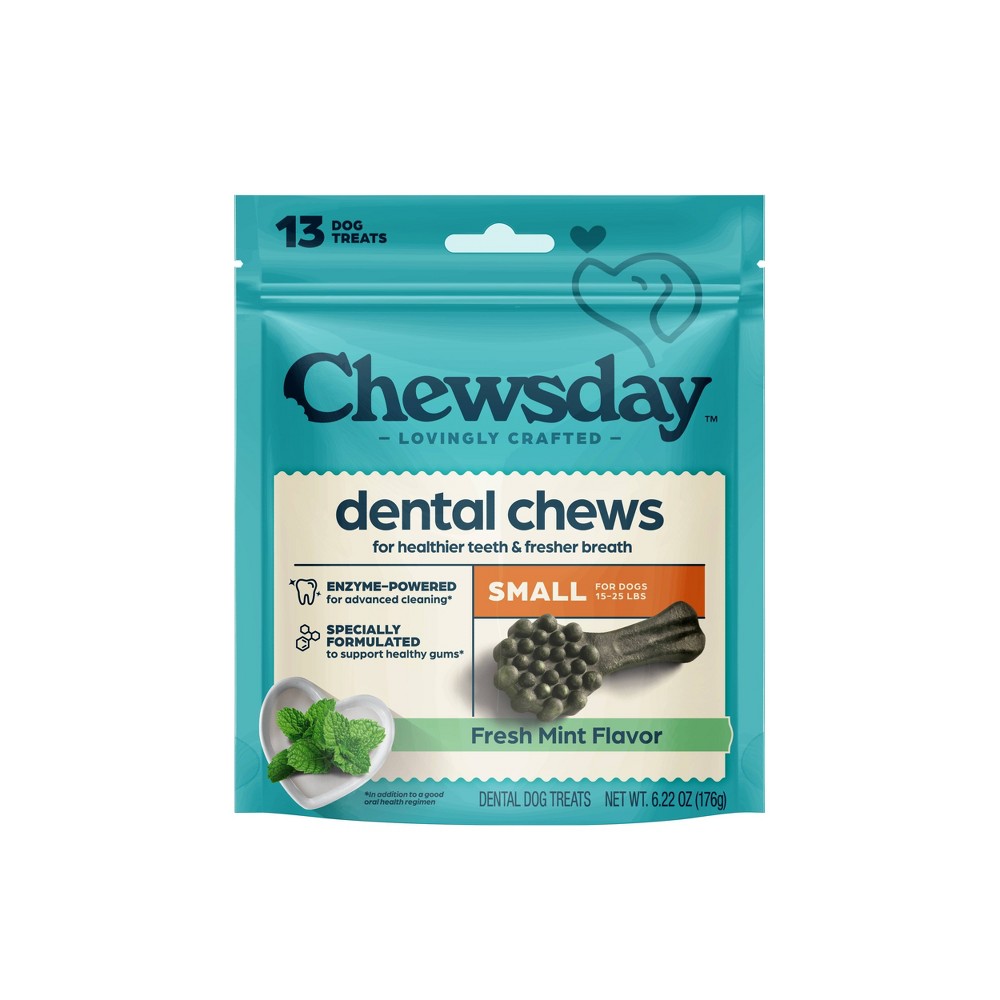
Chewsday Mint Flavor Dental and Hard Chew with Enzyme Dog Treats - 6.22oz/13ct
Analysis updated August 2026 · How Scout scores
At a glance
Summary
This product is ultra-processed, which limits its potential score. While it contains beneficial ingredients like gelatin, brewers yeast, and turmeric, which support joint health and digestion, the presence of sunflower seed lecithin as an emulsifier and the overall processing level reduce its health rating. The use of sunflower oil, although not as harmful as other seed oils, also contributes to the processing concerns.
Key ingredients 15
GelatinGood
Gelatin is a protein derived from animal collagen. It supports joint health and provides a source of amino acids. It is beneficial for maintaining healthy skin and coat in pets.
Benefits
Supports joint health and provides essential amino acids.
Brewers YeastGood
Brewers yeast is a rich source of B vitamins and protein. It supports immune health and promotes a healthy coat. It is often used as a natural supplement in pet foods.
Risks
May cause allergic reactions in some pets.
Benefits
Rich in B vitamins and supports immune health.
Dried Bacillus Subtilis Fermentation ProductGood
This ingredient is a probiotic that supports digestive health. It helps maintain a healthy gut flora in pets. It is beneficial for improving digestion and nutrient absorption.
Benefits
Supports digestive health and improves gut flora.
Ground TurmericGood
Turmeric is known for its anti-inflammatory properties. It contains curcumin, which supports joint health and overall well-being. It is a beneficial addition to pet foods for its health-promoting effects.
Benefits
Provides anti-inflammatory benefits and supports joint health.
Rice FlourNeutral
Rice flour is a common carbohydrate source in pet foods. It is gluten-free and provides energy. However, it lacks significant nutritional benefits beyond being a carbohydrate source.
Benefits
Provides a source of carbohydrates for energy.
Pea StarchNeutral
Pea starch is used as a thickening agent and carbohydrate source. It is derived from peas and is gluten-free. It does not offer significant nutritional benefits beyond its role as a carbohydrate.
Benefits
Provides a source of carbohydrates and helps with texture.
Vegetable GlycerinNeutral
Vegetable glycerin is used as a humectant to retain moisture in pet treats. It is derived from plant oils and is generally considered safe. It does not provide significant nutritional benefits.
Risks
Excessive consumption may lead to digestive upset.
Benefits
Helps maintain moisture and palatability in pet treats.
Tapioca StarchNeutral
Tapioca starch is a carbohydrate extracted from cassava root. It is used as a thickener and binder in pet foods. It is gluten-free but lacks significant nutritional benefits.
Benefits
Provides a source of carbohydrates and aids in texture.
BetaineNeutral
Betaine is a compound that supports liver function and cellular hydration. It is derived from sugar beets and is used in pet foods for its health benefits. It does not have significant risks when used appropriately.
Benefits
Supports liver function and cellular hydration.
Citric AcidNeutral
Citric acid is used as a preservative and flavor enhancer in pet foods. It is naturally found in citrus fruits and is generally recognized as safe. It does not provide nutritional benefits.
Risks
Excessive consumption may lead to digestive upset.
Benefits
Acts as a preservative and enhances flavor.
Sunflower OilNeutral
Sunflower oil is a source of fatty acids used in pet foods. In pet food, it is considered neutral due to its role in providing essential fatty acids. It is not as beneficial as other oils like fish oil.
Benefits
Provides essential fatty acids for skin and coat health.
Fruit JuiceNeutral
Fruit juice is used for flavoring in pet treats. It provides natural sweetness and some vitamins. However, it does not offer significant nutritional benefits in small amounts.
Benefits
Adds natural flavor and some vitamins.
Buffered VinegarNeutral
Buffered vinegar is used as a preservative in pet foods. It helps maintain freshness and prevent spoilage. It does not offer significant nutritional benefits.
Benefits
Acts as a preservative to maintain freshness.
Peppermint OilNeutral
Peppermint oil is used for flavoring and may aid in digestion. It provides a fresh scent and taste to pet treats. It should be used in moderation to avoid potential digestive upset.
Risks
May cause digestive upset if consumed in large amounts.
Benefits
Provides a fresh flavor and may aid digestion.
Sunflower Seed LecithinBad
Sunflower seed lecithin is used as an emulsifier in pet foods. It is a processed ingredient that can contribute to an excessive intake of emulsifiers. It does not provide significant nutritional benefits.
Risks
May contribute to digestive issues if consumed in large amounts.
Benefits
Helps maintain texture and consistency in pet foods.
Processing
Ultra-Processed Foods
Get the full breakdown in the Scout appTake Scout shopping
Scan any product to see lab results, healthy alternatives, and your personalized analysis.
Download on theApp Store GET IT ONGoogle PlayAmazon pricing & content
Amazon price as of . Product prices and availability are accurate as of the date/time indicated and are subject to change. Any price and availability information displayed on Amazon.com at the time of purchase will apply to the purchase of this product.
CERTAIN CONTENT THAT APPEARS ON THIS SITE COMES FROM AMAZON. THIS CONTENT IS PROVIDED “AS IS” AND IS SUBJECT TO CHANGE OR REMOVAL AT ANY TIME.