
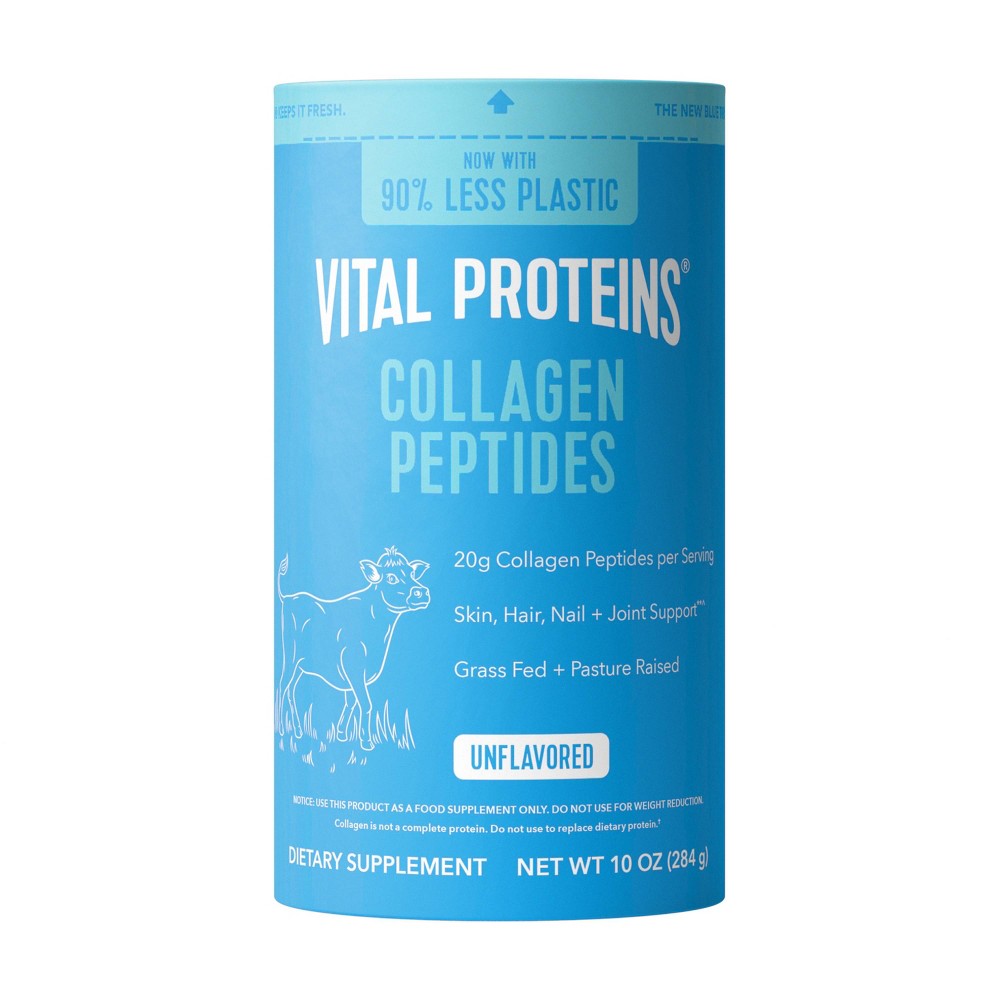
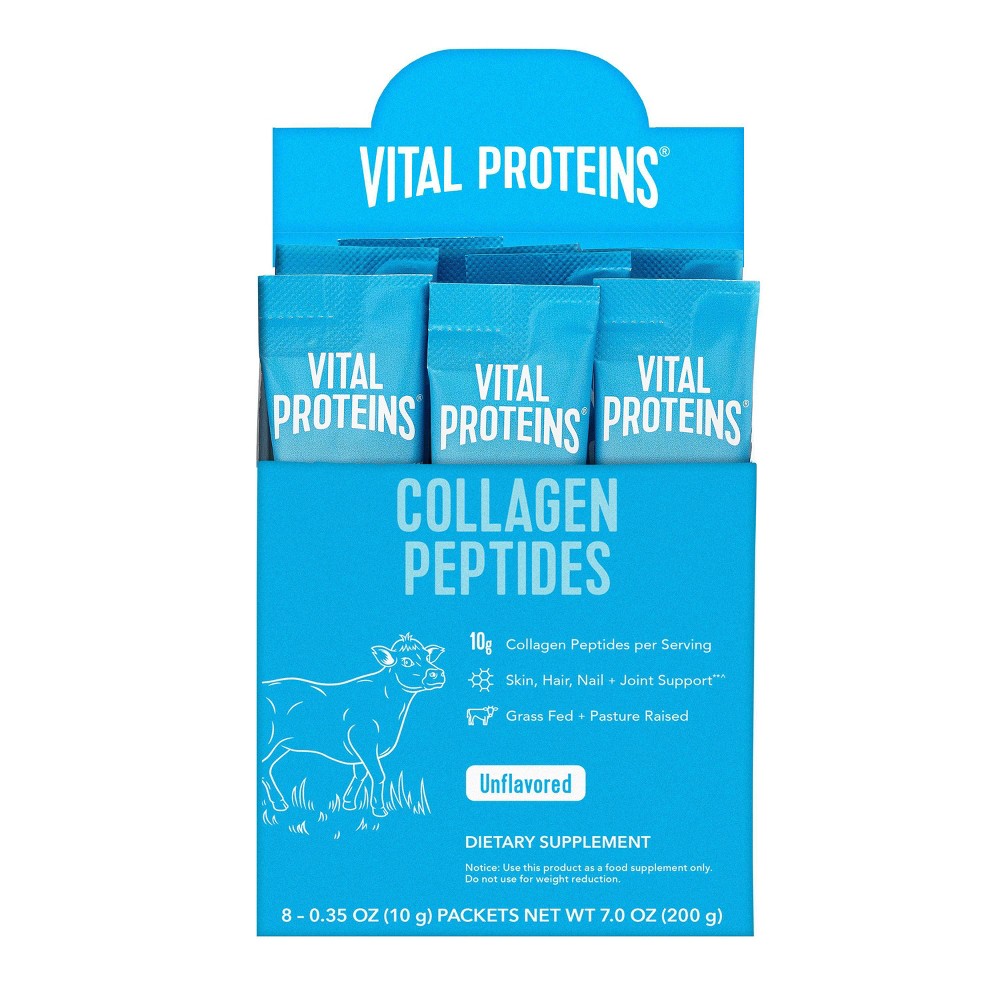


Vital Proteins Unflavored Collagen Peptides Powder - 10oz: Protein Powders and Collagen, 20g Protein per Serving
Analysis updated July 2026 · How Scout scores
At a glance
Summary
This collagen peptide powder provides a high protein content with a simple ingredient list focused on amino acids. However, the presence of additives like E620 and E641, which are used as flavor enhancers, raises concerns about unnecessary processing. While these additives are not severely harmful, they detract from the overall purity and quality of the product compared to cleaner protein supplements.
Key ingredients 23
GlycineGood
Beneficial ingredient — whole-food or functional value in this product class.
Benefits
Glycine supports collagen formation and joint health.
AlanineNeutral
Alanine is a non-essential amino acid involved in energy production and immune function. It is naturally occurring in protein-rich foods and supplements. No significant health concerns are associated with alanine consumption.
Benefits
Alanine supports energy production and immune function.
ArginineNeutral
Arginine is a semi-essential amino acid that plays a role in nitric oxide production and cardiovascular health. It is commonly found in protein supplements and naturally in foods. While beneficial, it is not considered a high-impact ingredient in this context.
Risks
Excessive intake may lead to gastrointestinal discomfort.
Benefits
Arginine supports cardiovascular health and nitric oxide production.
Aspartic AcidNeutral
Aspartic acid is a non-essential amino acid involved in hormone production and nervous system function. It is naturally present in protein sources. It does not pose significant health risks or benefits in typical dietary amounts.
Benefits
Aspartic acid aids in hormone production and nervous system function.
Glutamic AcidNeutral
Glutamic acid is a non-essential amino acid important for brain function and metabolism. It is naturally occurring in many foods and supplements. It is generally safe and beneficial in normal dietary amounts.
Benefits
Glutamic acid supports brain function and metabolism.
HistidineNeutral
Histidine is an essential amino acid involved in the production of histamine and hemoglobin. It is naturally present in protein-rich foods. It is necessary for various bodily functions but not particularly notable in this product.
Benefits
Histidine is important for histamine and hemoglobin production.
HydroxylysineNeutral
Hydroxylysine is a derivative of lysine involved in collagen cross-linking. It is naturally occurring in collagen-rich foods and supplements. It plays a role in collagen stability but is not a major health concern.
Benefits
Hydroxylysine aids in collagen cross-linking and stability.
HydroxyprolineNeutral
Hydroxyproline is a major component of collagen and is important for skin and joint health. It is naturally found in collagen supplements. It supports collagen integrity but is not a primary focus in this analysis.
Benefits
Hydroxyproline supports skin and joint health through collagen integrity.
IsoleucineNeutral
Isoleucine is a branched-chain amino acid (BCAA) important for muscle repair and energy. It is commonly found in protein supplements. While beneficial for athletes, it is not a standout ingredient in this context.
Benefits
Isoleucine aids in muscle repair and energy production.
LeucineNeutral
Leucine is a BCAA crucial for muscle protein synthesis and recovery. It is prevalent in protein supplements and foods. It is beneficial for muscle health but not particularly notable in this product.
Benefits
Leucine supports muscle protein synthesis and recovery.
LysineNeutral
Lysine is an essential amino acid important for protein synthesis and immune function. It is naturally present in protein-rich foods. It is necessary for health but not a primary focus in this analysis.
Benefits
Lysine supports protein synthesis and immune function.
MethionineNeutral
Methionine is an essential amino acid involved in metabolism and detoxification. It is naturally found in protein sources. It is important for health but not particularly notable in this product.
Benefits
Methionine aids in metabolism and detoxification.
PhenylalanineNeutral
Phenylalanine is an essential amino acid used in the production of neurotransmitters. It is naturally present in protein-rich foods. It is necessary for brain function but not a primary focus in this analysis.
Benefits
Phenylalanine supports neurotransmitter production.
ProlineNeutral
Proline is a non-essential amino acid important for collagen synthesis and skin health. It is naturally found in collagen supplements. It supports skin and joint health but is not a standout ingredient in this context.
Benefits
Proline aids in collagen synthesis and skin health.
SerineNeutral
Serine is a non-essential amino acid involved in metabolism and immune function. It is naturally present in protein-rich foods. It is beneficial for health but not particularly notable in this product.
Benefits
Serine supports metabolism and immune function.
ThreonineNeutral
Threonine is an essential amino acid important for protein balance and immune function. It is naturally found in protein sources. It is necessary for health but not a primary focus in this analysis.
Benefits
Threonine supports protein balance and immune function.
TryptophanNeutral
Tryptophan is an essential amino acid involved in serotonin production and mood regulation. It is naturally present in protein-rich foods. It is beneficial for mental health but not particularly notable in this product.
Benefits
Tryptophan supports serotonin production and mood regulation.
TyrosineNeutral
Tyrosine is a non-essential amino acid used in the production of neurotransmitters. It is naturally found in protein sources. It is important for brain function but not a primary focus in this analysis.
Benefits
Tyrosine supports neurotransmitter production.
ValineNeutral
Valine is a BCAA important for muscle growth and tissue repair. It is commonly found in protein supplements. It is beneficial for athletes but not a standout ingredient in this context.
Benefits
Valine aids in muscle growth and tissue repair.
E620Bad
E620, also known as glutamic acid, is used as a flavor enhancer in processed foods. It is often associated with MSG, which can cause sensitivity in some individuals. Its presence in ultra-processed foods is a concern for those sensitive to additives.
Risks
May cause headaches or allergic reactions in sensitive individuals.
E640Bad
E640, also known as glycine, is used as a flavor enhancer and is naturally occurring in proteins. While generally safe, its use as an additive in processed foods is not ideal. It does not provide significant health benefits in this form.
E640iBad
E640i is a derivative of glycine used as a flavor enhancer in processed foods. Its presence in ultra-processed products raises concerns about unnecessary additives. It does not contribute positively to health in this context.
E641Bad
E641, also known as lysine hydrochloride, is used as a flavor enhancer in processed foods. While lysine is beneficial in natural forms, its use as an additive is not ideal. It does not provide significant health benefits in this form.
Processing
Ultra-Processed Foods
Get the full breakdown in the Scout appTake Scout shopping
Scan any product to see lab results, healthy alternatives, and your personalized analysis.
Download on theApp Store GET IT ONGoogle PlayAmazon pricing & content
Amazon price as of . Product prices and availability are accurate as of the date/time indicated and are subject to change. Any price and availability information displayed on Amazon.com at the time of purchase will apply to the purchase of this product.
CERTAIN CONTENT THAT APPEARS ON THIS SITE COMES FROM AMAZON. THIS CONTENT IS PROVIDED “AS IS” AND IS SUBJECT TO CHANGE OR REMOVAL AT ANY TIME.