
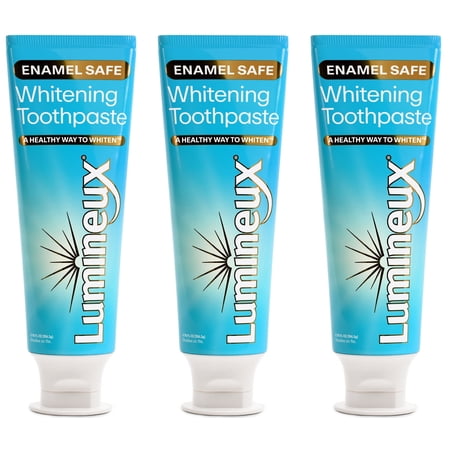

Lumineux Teeth Whitening Toothpaste 3 Pack Peroxide Free Enamel Safe for Sensitive Whiter Teeth Fluoride Free No Alcohol Artificial Colors SLS Free Dentist Formulated - 3.75 Oz
Analysis updated August 2026 · How Scout scores
At a glance
Summary
This toothpaste features a clean formula with beneficial ingredients like xylitol, aloe vera, and coconut oil, which are known for their oral health benefits. It avoids harmful substances such as fluoride, SLS, and alcohol, making it suitable for sensitive teeth. The inclusion of natural oils for flavor and antimicrobial properties further enhances its appeal, although the presence of titanium dioxide and its processed nature slightly limit its maximum potential score.
Key ingredients 18
XylitolVery Good
Xylitol is a natural sweetener that reduces cavity-causing bacteria in the mouth. It helps maintain a neutral pH level in the mouth, reducing the risk of tooth decay. It is often used in oral care products for its dental benefits.
Risks
Excessive consumption of xylitol can cause digestive issues, but this is not a concern in toothpaste.
Benefits
Xylitol reduces cavity-causing bacteria and helps prevent tooth decay.
Organic Aloe Barbadensis (Aloe Vera) Leaf JuiceGood
Aloe vera is known for its soothing properties, making it beneficial for oral tissues. It can help reduce inflammation and promote healing in the mouth. Its natural antibacterial properties can also contribute to oral health.
Risks
There are minimal risks associated with aloe vera when used in oral care products.
Benefits
Aloe vera can soothe oral tissues and reduce inflammation, promoting overall oral health.
Vegetable GlycerinGood
Beneficial ingredient — whole-food or functional value in this product class.
Risks
There are no significant risks associated with vegetable glycerin in oral care products.
Benefits
It helps maintain moisture and consistency in the toothpaste.
Cocos Nucifera (Coconut) OilGood
Coconut oil is known for its natural antibacterial properties, which can help reduce harmful bacteria in the mouth. It is also used for oil pulling, a traditional practice believed to improve oral health. Its inclusion in toothpaste can contribute to overall oral hygiene.
Risks
There are minimal risks associated with coconut oil in oral care products.
Benefits
Coconut oil has natural antibacterial properties that can improve oral hygiene.
Mentha Viridis (Spearmint) Leaf OilGood
Spearmint leaf oil is used for its flavoring properties and provides a fresh, minty taste. It also has natural antimicrobial properties that can help maintain oral hygiene. Its inclusion in toothpaste contributes to fresh breath and oral health.
Risks
There are minimal risks associated with spearmint oil in oral care products.
Benefits
It provides a fresh, minty taste and has natural antimicrobial properties.
Organic Mentha Piperita (Peppermint) Leaf OilGood
Peppermint leaf oil is used for its flavoring properties and provides a refreshing minty taste. It also has natural antimicrobial properties that can help reduce oral bacteria. Its inclusion in toothpaste contributes to fresh breath and oral health.
Risks
There are minimal risks associated with peppermint oil in oral care products.
Benefits
It provides a refreshing minty taste and has natural antimicrobial properties.
Hydrated SilicaNeutral
Hydrated silica is used as a mild abrasive to help remove plaque and surface stains from teeth. It is effective in polishing teeth without being overly abrasive. However, it does not provide any direct health benefits.
Risks
Overuse of abrasive agents can potentially wear down enamel over time.
Benefits
It helps in removing plaque and surface stains from teeth.
Purified Water (Aqua)Neutral
Purified water is used as a solvent in toothpaste formulations. It helps dissolve other ingredients and maintain the desired consistency. It is a neutral ingredient with no direct health effects.
Risks
There are no risks associated with purified water in oral care products.
Benefits
It acts as a solvent and helps maintain the consistency of the toothpaste.
Dead Sea Salt (Maris Sal)Neutral
Dead Sea salt is included for its mineral content, which can support oral health. It may help in maintaining the mineral balance in the mouth. However, its direct benefits in toothpaste are not well-documented.
Risks
Excessive salt can be irritating, but this is unlikely in toothpaste formulations.
Benefits
It provides minerals that may support oral health.
Sodium Methyl Cocoyl TaurateNeutral
Sodium methyl cocoyl taurate is a mild surfactant used to create foam and improve the texture of toothpaste. It is derived from coconut oil and is considered gentle on the skin and mucous membranes. It is generally regarded as safe for use in oral care products.
Risks
There are minimal risks associated with this ingredient in oral care products.
Benefits
It helps create foam and improves the texture of the toothpaste.
Xanthan GumNeutral
Xanthan gum is used as a thickening agent to stabilize toothpaste formulations. It helps maintain the product's consistency and prevents separation of ingredients. It is considered safe for use in oral care products.
Risks
There are no significant risks associated with xanthan gum in oral care products.
Benefits
It stabilizes the toothpaste and maintains its consistency.
Gaultheria Procumbens (Wintergreen) Leaf OilNeutral
Wintergreen leaf oil is used for its flavoring properties and provides a fresh, minty taste. It may also have mild antimicrobial properties. However, its primary function in toothpaste is for flavor.
Risks
There are minimal risks associated with wintergreen oil in oral care products.
Benefits
It provides a fresh, minty taste and may have mild antimicrobial properties.
Citrus Limon (Lemon) Peel OilNeutral
Lemon peel oil is used for its flavoring properties, providing a fresh citrus taste. It may also have mild antimicrobial properties. However, its primary function in toothpaste is for flavor.
Risks
There are minimal risks associated with lemon peel oil in oral care products.
Benefits
It provides a fresh citrus taste and may have mild antimicrobial properties.
Salvia Officinalis (Sage) OilNeutral
Sage oil is included for its potential antimicrobial properties and flavoring. It may help in reducing oral bacteria and providing a pleasant taste. However, its primary function in toothpaste is for flavor.
Risks
There are minimal risks associated with sage oil in oral care products.
Benefits
It may help reduce oral bacteria and provides a pleasant taste.
Ocimum Basilicum (Basil) OilNeutral
Basil oil is included for its potential antimicrobial properties and flavoring. It may help in reducing oral bacteria and providing a pleasant taste. However, its primary function in toothpaste is for flavor.
Risks
There are minimal risks associated with basil oil in oral care products.
Benefits
It may help reduce oral bacteria and provides a pleasant taste.
Eugenia Caryophyllus (Clove) Flower OilNeutral
Clove flower oil is known for its analgesic and antimicrobial properties, which can help in reducing oral bacteria and soothing toothaches. It is often used in oral care products for its potential benefits in maintaining oral health.
Risks
There are minimal risks associated with clove oil in oral care products.
Benefits
It has analgesic and antimicrobial properties that can help maintain oral health.
CarrageenanBad
Processed additive flagged under Scout's ingredient doctrine.
Risks
There are some concerns about carrageenan causing inflammation, but these are primarily associated with its degraded form.
Benefits
It stabilizes the toothpaste and maintains its consistency.
Titanium DioxideVery Bad
Titanium dioxide is used as a whitening agent to give toothpaste a bright, white appearance. However, there are concerns about its safety, particularly in nanoparticle form, as it may pose health risks if ingested. Its use in oral care products is controversial due to potential health concerns.
Risks
There are concerns about its safety, particularly in nanoparticle form, which may pose health risks if ingested.
Benefits
It provides a bright, white appearance to the toothpaste.
Processing
Processed Culinary Ingredients
Get the full breakdown in the Scout appTake Scout shopping
Scan any product to see lab results, healthy alternatives, and your personalized analysis.
Download on theApp Store GET IT ONGoogle PlayAmazon pricing & content
Amazon price as of . Product prices and availability are accurate as of the date/time indicated and are subject to change. Any price and availability information displayed on Amazon.com at the time of purchase will apply to the purchase of this product.
CERTAIN CONTENT THAT APPEARS ON THIS SITE COMES FROM AMAZON. THIS CONTENT IS PROVIDED “AS IS” AND IS SUBJECT TO CHANGE OR REMOVAL AT ANY TIME.