
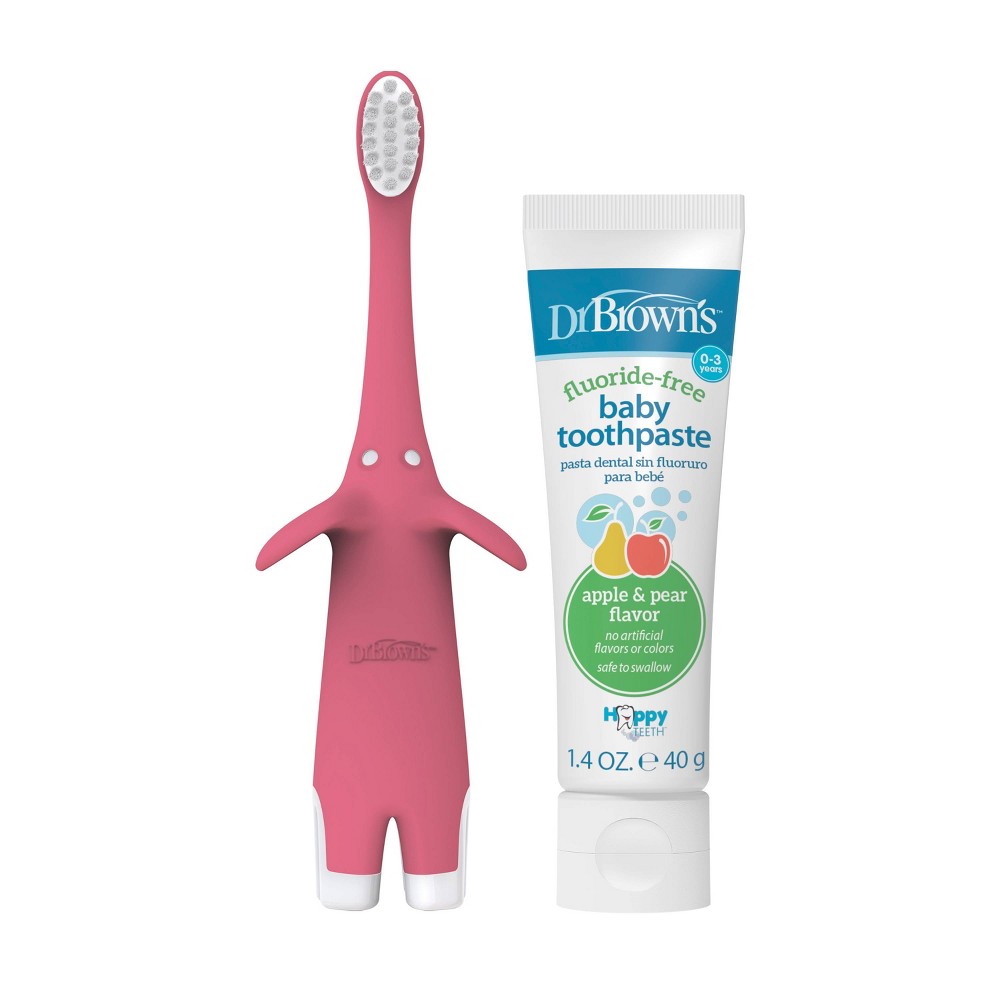


Dr. Brown's Infant-to-Toddler Training Toothbrush & Fluoride-Free Baby Toothpaste Pear & Apple Flavor - 0-3 years - Pink Elephant
Analysis updated August 2026 · How Scout scores
At a glance
Summary
This product contains xylitol, which is beneficial for reducing cavity-causing bacteria, and lacks harmful ingredients like fluoride, SLS, or alcohol. The formula is relatively clean with no major irritants, though it is processed, which limits the maximum score. The inclusion of natural flavors and absence of harsh chemicals make it suitable for young children.
Key ingredients 11
XylitolVery Good
Xylitol is a natural sweetener that has been shown to reduce cavity-causing bacteria in the mouth. It helps to maintain oral health by inhibiting the growth of harmful bacteria. Xylitol is well-regarded for its positive impact on dental health.
Risks
In excessive amounts, xylitol can cause digestive upset, but this is unlikely in toothpaste use.
Benefits
Xylitol helps to reduce the risk of cavities and promotes a healthier oral environment.
GlycerinGood
Beneficial ingredient — whole-food or functional value in this product class.
Risks
There are no significant risks associated with glycerin in oral care products.
Benefits
Glycerin helps to maintain the moisture content of the toothpaste, preventing it from drying out.
Aqua/WaterNeutral
Water is used as a solvent in toothpaste formulations. It helps to dissolve other ingredients and create a smooth texture. It does not have any direct oral health benefits or risks.
Risks
There are no risks associated with water in oral care products.
Benefits
Water acts as a carrier for other ingredients, ensuring even distribution in the product.
PropanediolNeutral
Propanediol is used as a solvent and humectant in toothpaste. It helps to maintain moisture and improve texture. It is generally considered safe for use in oral care products.
Risks
There are no significant risks associated with propanediol in oral care products.
Benefits
Propanediol helps to keep the toothpaste moist and improves its consistency.
SorbitolNeutral
Sorbitol is a sugar alcohol used as a sweetener and humectant in toothpaste. It helps to retain moisture and provide a pleasant taste. Sorbitol is generally safe for oral care use.
Risks
Excessive ingestion of sorbitol can cause digestive upset, but this is not a concern in toothpaste use.
Benefits
Sorbitol helps to maintain the moisture content and sweetness of the toothpaste.
PectinNeutral
Pectin is a natural thickening agent used to improve the texture of toothpaste. It is derived from fruits and is safe for use in oral care products. Pectin does not have direct oral health benefits.
Risks
There are no significant risks associated with pectin in oral care products.
Benefits
Pectin helps to stabilize the toothpaste and improve its texture.
Xanthan GumNeutral
Xanthan gum is a thickening agent used to stabilize toothpaste formulations. It is widely used in food and oral care products for its ability to improve texture. Xanthan gum is considered safe for use in toothpaste.
Risks
There are no significant risks associated with xanthan gum in oral care products.
Benefits
Xanthan gum helps to maintain the consistency and stability of the toothpaste.
SilicaNeutral
Silica is used as a mild abrasive in toothpaste to help remove plaque and surface stains. It is considered safe and effective for this purpose. Silica does not pose significant health risks when used in toothpaste.
Risks
Excessive abrasiveness can damage enamel, but silica is generally mild.
Benefits
Silica helps to clean teeth by gently removing plaque and surface stains.
Calcium LactateNeutral
Calcium lactate is used in toothpaste to provide a source of calcium, which may support enamel health. It is generally considered safe for use in oral care products. However, its effectiveness in remineralizing enamel is not as well-established as other compounds.
Risks
There are no significant risks associated with calcium lactate in oral care products.
Benefits
Calcium lactate may contribute to enamel health by providing calcium ions.
Aroma/FlavorBad
Processed additive flagged under Scout's ingredient doctrine.
Risks
Undisclosed flavor components may cause allergic reactions in sensitive individuals.
Benefits
Flavor improves the sensory experience of using the toothpaste, encouraging regular use.
Sorbic AcidBad
Processed additive flagged under Scout's ingredient doctrine.
Risks
There are no significant risks associated with sorbic acid in oral care products.
Benefits
Sorbic acid helps to preserve the toothpaste, extending its shelf life.
Processing
Processed Culinary Ingredients
Get the full breakdown in the Scout appTake Scout shopping
Scan any product to see lab results, healthy alternatives, and your personalized analysis.
Download on theApp Store GET IT ONGoogle PlayAmazon pricing & content
Amazon price as of . Product prices and availability are accurate as of the date/time indicated and are subject to change. Any price and availability information displayed on Amazon.com at the time of purchase will apply to the purchase of this product.
CERTAIN CONTENT THAT APPEARS ON THIS SITE COMES FROM AMAZON. THIS CONTENT IS PROVIDED “AS IS” AND IS SUBJECT TO CHANGE OR REMOVAL AT ANY TIME.