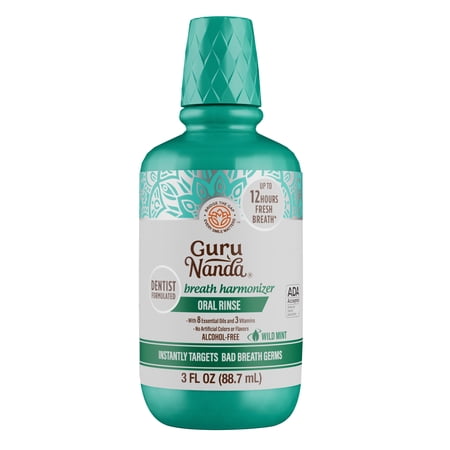
GuruNanda Fresh Breath Mouthwash ADA-Accepted Alcohol-Free & Fluoride-Free with Essential Oils & Vitamins Wild Mint 3 oz
At a glance
Summary
This mouthwash features a clean formula with beneficial essential oils like spearmint, peppermint, and clove, which provide antimicrobial benefits and freshen breath. It is free from harmful ingredients such as alcohol, fluoride, and SLS, making it a safe choice for oral care. The inclusion of vitamins and natural oils further enhances its effectiveness and appeal. Its plastic packaging can shed microplastics into the product and lowers its score.
Key ingredients 11
Essential OilsGood
Essential oils in oral care products can provide antimicrobial benefits and contribute to fresh breath. They are often derived from natural sources and can enhance the overall effectiveness of the product. The specific blend of essential oils can vary, but they generally support oral health.
Risks
Some individuals may experience allergic reactions to certain essential oils.
Benefits
They offer natural antimicrobial properties and can improve breath freshness.
SpearmintGood
Spearmint oil is commonly used in oral care products for its freshening properties and pleasant taste. It has natural antimicrobial properties that can help reduce oral bacteria. Its inclusion in mouthwash contributes to a refreshing and clean feeling.
Risks
Some individuals may experience allergic reactions to mint oils.
Benefits
It provides a refreshing taste and has antimicrobial properties.
PeppermintGood
Peppermint oil is valued in oral care for its strong antimicrobial properties and ability to freshen breath. It is a natural ingredient that enhances the effectiveness of mouthwash. Its cooling sensation also contributes to a pleasant mouthfeel.
Risks
Allergic reactions can occur in sensitive individuals.
Benefits
It offers antimicrobial benefits and a refreshing taste.
CardamomGood
Cardamom is used in oral care for its aromatic properties and potential antimicrobial effects. It can help in reducing bad breath and improving oral hygiene. Its natural origin makes it a favorable ingredient in mouthwash formulations.
Risks
Allergic reactions are possible but rare.
Benefits
It contributes to fresh breath and may have antimicrobial effects.
FennelGood
Fennel is known for its sweet, aromatic flavor and potential antimicrobial properties. In oral care, it can help freshen breath and support oral hygiene. Its natural composition makes it a beneficial addition to mouthwash.
Risks
Allergic reactions can occur in some individuals.
Benefits
It helps freshen breath and may reduce oral bacteria.
CloveGood
Clove oil is recognized for its strong antimicrobial and analgesic properties. It is often used in oral care to reduce bacteria and provide relief from minor oral discomfort. Its natural origin and effectiveness make it a valuable ingredient in mouthwash.
Risks
Clove oil can cause irritation if used in high concentrations.
Benefits
It offers antimicrobial benefits and can soothe oral discomfort.
OreganoGood
Oregano oil is known for its potent antimicrobial properties, making it effective in reducing oral bacteria. It is a natural ingredient that supports oral hygiene and freshens breath. Its inclusion in mouthwash enhances its antimicrobial effectiveness.
Risks
Oregano oil can cause irritation in sensitive individuals.
Benefits
It provides strong antimicrobial effects and helps freshen breath.
Sodium ChloriteNeutral
Sodium chlorite is often used in oral care products for its antimicrobial properties. It helps in reducing bacteria in the mouth, which can improve oral hygiene. However, it is not considered beneficial or harmful in small concentrations used in mouthwash.
Risks
In high concentrations, sodium chlorite can be irritating to mucous membranes.
Benefits
It can help in reducing oral bacteria, contributing to fresher breath.
Vitamins DNeutral
Vitamin D is important for overall health, including bone health, but its direct benefits in oral care products are less clear. It may support oral health indirectly by contributing to bone and tooth health. However, its presence in mouthwash does not directly impact oral hygiene.
Risks
Excessive intake of vitamin D can lead to toxicity, but this is unlikely in topical applications.
Benefits
It supports bone health, which is indirectly beneficial for teeth.
Vitamins ENeutral
Vitamin E is known for its antioxidant properties, which can help protect cells from damage. In oral care, it may help soothe and protect oral tissues. However, its direct impact in a mouthwash is minimal.
Risks
There are minimal risks associated with topical use of vitamin E.
Benefits
It may help soothe oral tissues and provide antioxidant protection.
Vitamins K2Neutral
Vitamin K2 is important for bone health and may play a role in oral health by supporting tooth mineralization. However, its direct benefits in a mouthwash are not well-established. It is more beneficial when ingested rather than applied topically.
Risks
There are minimal risks associated with topical use of vitamin K2.
Benefits
It supports bone and tooth health, which is indirectly beneficial for oral health.
Processing
Processed Culinary Ingredients
Get the full breakdown in the Scout appTake Scout shopping
Scan any product to see lab results, healthy alternatives, and your personalized analysis.
Amazon pricing & content
Amazon price as of . Product prices and availability are accurate as of the date/time indicated and are subject to change. Any price and availability information displayed on Amazon.com at the time of purchase will apply to the purchase of this product.
CERTAIN CONTENT THAT APPEARS ON THIS SITE COMES FROM AMAZON. THIS CONTENT IS PROVIDED “AS IS” AND IS SUBJECT TO CHANGE OR REMOVAL AT ANY TIME.